short story
World problems no one knows about
There are many global problems that the world is facing today, including: 1. Climate change: The Earth's climate is changing due to the increasing levels of greenhouse gases in the atmosphere, caused by human activities such as the burning of fossil fuels. This is leading to rising temperatures, more extreme weather events, and other impacts that threaten the planet and its inhabitants.
By pravinkumar sathliya3 years ago in Earth
Coronavirus Outbreak in US: All you need to know!
Phase 1. The coronavirus outbreak in the United States has been an ongoing health crisis and pandemic. The first U.S. case was reported on Jan. 21, 2020, and since then, the virus has spread rapidly, resulting in more than 28 million infections and more than 500,000 deaths.
By Yinusa Jamiu3 years ago in Earth
Mother Earth
Mother Earth Our mother earth is a beautiful and diverse place, filled with an incredible variety of plant and animal life, stunning landscapes, and diverse cultures. From the icy poles to the equatorial regions, earth is home to a wide range of ecosystems that support an amazing array of life.
By Ram Praveen3 years ago in Earth
Myths and Legends: The Five Most Mysterious Volcanoes in the World
I. Introduction Volcanoes are some of the most awe-inspiring and mysterious natural phenomena on Earth. These powerful forces of nature have shaped the landscapes of our planet, created new islands, and even altered the climate. Volcanoes have also inspired myths and legends throughout history, as people have tried to understand and explain their often-unpredictable behavior. In this post, we will explore the five most mysterious volcanoes in the world, delving into their unique histories, myths, and scientific mysteries. We will learn about Mount Etna in Italy, Krakatoa in Indonesia, Mount Fuji in Japan, Popocatépetl in Mexico, and Kīlauea in Hawaii. Each of these volcanoes has its own intriguing story and secrets to reveal.
By Aravind 17073 years ago in Earth
The World's Most Dangerous Forests.
Forests are larger than woodlands and comprise dense uncultivated tracts of trees and undergrowth. They are sizable areas of land with trees covering them. The types of forests include planted, boreal, temperate, and tropical. Positive effects of forests on the ecosystem, way of life, and output. Wildlife also lives in forests. As a result, access to and usage of most woods are strictly controlled. Forests open up opportunities for tourism and adventure. As a result, it also has recreational uses.
By Fruits And Plants Diary - Get Insight 3 years ago in Earth
The ten craziest scientific breakthroughs of 2022
The ten craziest scientific breakthroughs of 2022 It's been a terrible year, 2022. It was the first year after the lockdown that things properly began to open up for the majority of the world, giving us the chance to resume our lives as usual. And that meant an opportunity for scientists and researchers all across the world to return to the lab full-time. Yes, science has had a busy year in 2022. In the last 12 months, immunology research has made enormous strides, space flight has made enormous strides, and in the last few weeks, intriguing evidence has emerged suggesting that nuclear fusion might be feasible on Earth. However, it's also been a year for the bizarre and unexpected, like turtles the size of rhinos and monkeys that pick their noses. Here are some of the strangest and most fascinating discoveries that grabbed media attention this year.
By Paul Smith3 years ago in Earth
The Power of Nature: The Five Strongest Volcanic Eruptions in Recorded History
I. Introduction Volcanic eruptions are some of the most powerful and destructive natural events on earth. These explosive events can cause widespread damage and loss of life, and their impacts can be felt around the globe. In this post, we will take a look at the five strongest volcanic eruptions in recorded history, based on their volcanic explosivity index (VEI). From the devastating eruption of Mount Tambora in 1815 to the catastrophic eruption of Krakatoa in 1883, these events demonstrate the incredible power of nature and serve as a reminder of the importance of studying and monitoring volcanic activity.
By Aravind 17073 years ago in Earth
Charlie
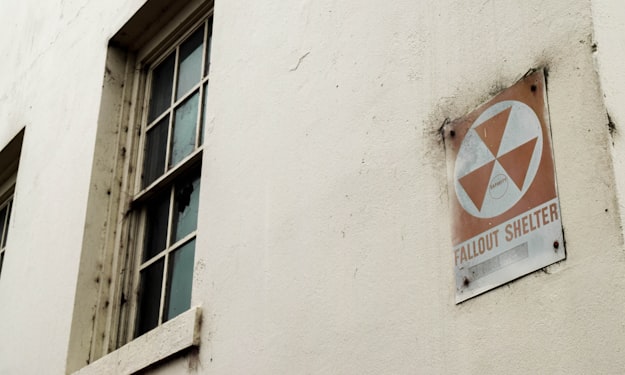
The outside world was unknown to her, but she could see a glimpse of it through the window in his room. The shelter controlled what they wanted to see. The world was cold and grey with something that was also agitated and unknown. Sam and Gene were about to find out what they were always searching for...
By Alex Jennett3 years ago in Earth
Facts About The Moon
The moon is a celestial body that orbits the Earth and is the Earth's only permanent natural satellite. It is the fifth-largest satellite in the solar system and the largest among planetary satellites relative to the size of the planet it orbits. The moon is a rocky, dusty, airless world that has a unique and fascinating history.
By Julio Villatoro3 years ago in Earth