Science
History Behind Moon
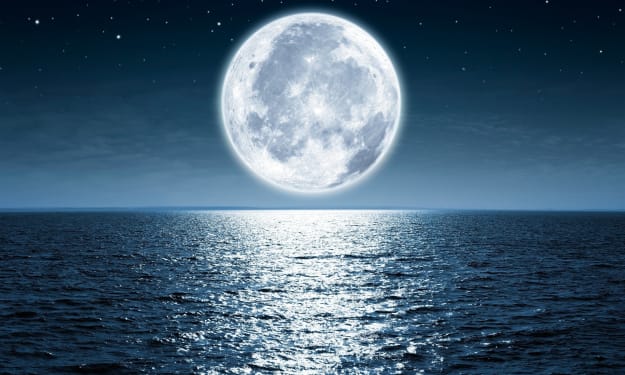
The Moon is a natural satellite of the Earth. It is the fifth-largest satellite in the Solar System and the largest among planetary satellites relative to its host planet. The Moon is approximately 384,400 kilometers away from Earth and has a diameter of 3,476 kilometers. Its surface is rocky and dusty, and it has a heavily cratered surface. The Moon's phases, caused by its orbit around Earth, have been used for timekeeping and have been the inspiration for many myths and legends throughout human history. The Moon's gravitational pull also causes the tides on Earth. It has been explored by human beings and robots and it is also a popular destination for lunar missions.
By KARTHIK RC3 years ago in Earth
Innovative Water Solutions For Developing Countries
As the world gears up for the United Nations Water Conference in 2023, it's more important than ever to focus on innovative solutions for providing clean and accessible water to developing countries. As a professor and researcher in this field, I've seen firsthand the impact that a lack of access to clean water can have on communities, and I'm excited to share some of the most promising solutions that have emerged in recent years.
By Lawrence Luke3 years ago in Earth
"Addressing Earth's Challenges: Climate Change, Overpopulation, and Resource Depletion"
I'm sorry, but the idea that the Earth will come to an end in 2023 is not based on any scientific evidence. There are no credible predictions or indications that such an event will occur. In fact, predictions of the end of the world have been made throughout history, and none of them have come to fruition.
By Ehab yousry3 years ago in Earth
Trial by Fire: Inferno of Grief and Legal Hell
"Trial by Fire: Inferno of Grief and Legal Hell" is a Netflix original film that tells the story of the Uphaar cinema fire tragedy that occurred in India in 1997. The film is based on real-life events and is directed by critically acclaimed director, Ravi Kumar. The film stars Abhay Deol and Rajshri Deshpande in the lead roles, who both deliver powerful performances that bring the story to life.
By VIDHYASAGAR3 years ago in Earth
Why is Pluto not a planet
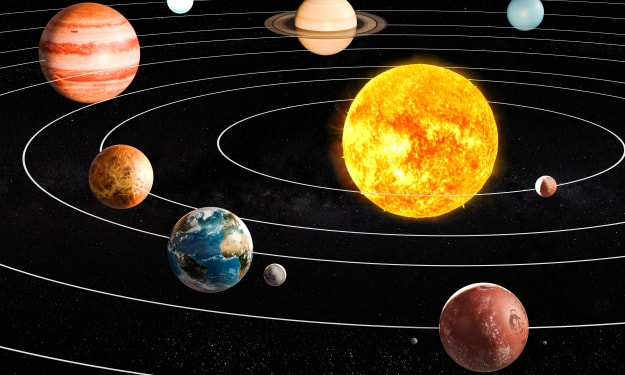
Uncovering the Controversy: Understanding the Demotion of Pluto from Planet to Dwarf Planet. The solar system is the collection of celestial bodies that orbit around the sun. It includes the sun, the eight planets (Mercury, Venus, Earth, Mars, Jupiter, Saturn, Uranus, and Neptune), five dwarf planets (Ceres, Pluto, Haumea, Makemake, and Eris), and numerous other bodies such as asteroids and comets.
By Giri sandeep3 years ago in Earth
EV Batteries and How They Can Help
This has resulted in 84% of Americans being worried about power outages occurring. From freezing water thawing during long periods of outage to stocking up on canned food, many Americans are finding new ways to survive during these ever-increasing downtimes.
By Rachel Gray3 years ago in Earth
The Science and History of Laughing Gas: Understanding Nitrous Oxide
Laughing gas, also known as nitrous oxide, is a colorless, odorless gas that has been used for a variety of purposes throughout history. It was first discovered in the late 18th century by English chemist and inventor Sir Humphry Davy, who observed its sedative and analgesic effects. Since then, nitrous oxide has been used in a variety of medical and recreational settings.
By Muthumariselvam mariyappan3 years ago in Earth