Science
History of amazon forest
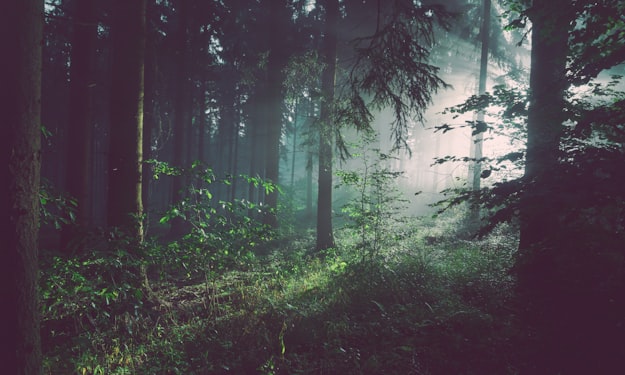
History of amazon forest The Amazon rainforest, otherwise called the Amazon bowl, is a huge locale of tropical rainforest situated in South America, covering an area of around 6.7 million square kilometers. It is home to perhaps of the most different biological system on earth, with an expected 390 billion individual trees and over 2.5 million types of bugs, plants, and creatures. The historical backdrop of the Amazon backwoods traverses millennia, from its development to the current day. The native people groups of the Amazon have lived in the district for north of 12,000 years, creating perplexing and reasonable social orders. In any case, the area has additionally been affected by colonization, deforestation, and other ecological dangers. In this layout, we will investigate the historical backdrop of the Amazon backwoods, including its topographical development, the native societies that have occupied the locale, and the effect of human action on the woods over the long haul.
By xis-kaab123 years ago in Earth
What if we lived in a world with no gravity?
Gravity is a fundamental force of nature that governs the motion of objects in the universe. It is what keeps us grounded on the Earth and holds the planets in their orbits around the Sun. But what if we lived in a world with no gravity? How would it affect the way we live, work, and play? In this article, we will explore the hypothetical scenario of a world without gravity and discuss its potential consequences.
By Subin @vocal3 years ago in Earth
What Will Be The Situation Of Earth In 2050?
As we move towards the year 2050, the world's population is expected to reach 9.7 billion. With this staggering number of people, there are many concerns about the impact on the environment, natural resources, and quality of life for people around the world. In this blog, we will explore what the world might look like in 2050 due to the population increase.
By Malik Idrees3 years ago in Earth
THE BEAUTY OF NATURE
Introduction: Nature has always been a source of inspiration, wonder, and beauty for humans. From the towering mountains to the vast oceans, the natural world is full of breathtaking landscapes that leave us in awe. However, our modern lifestyles often leave us disconnected from nature, spending most of our time indoors in front of screens. But research shows that spending time outdoors is not just good for our physical health, but also for our mental and emotional well-being. In this essay, we will explore the benefits of spending time in nature and why it is important to make it a part of our daily lives.
By Sukriti gupta3 years ago in Earth
The Mystery of the Dancing Forest: Exploring Unusual Natural Wonders in Russia and Poland
The Dancing Forest is Located in Russia's remote region of Kaliningrad Oblast, this forest is shrouded in mystery and intrigue, as the trees appear to move and dance in a way that defies explanation. In this essay, we will explore the details and mysteries of the Dancing Forest, including its unique geological features, scientific theories behind the phenomenon, and the legends and folklore that have arisen around this magical place.
By Pro Writer3 years ago in Earth
Got my eyesight back!
Eyesight is a gift we all possess. But some do not possess this gift, we take eyesight for granted but for blind people, all they want is to get their eyesight back, to see things, to experience things, to watch sun rise, to watch sun set, to watch rain-droplets falling down. In this article, I am going to share some people's reaction on seeing nature's beauty for the first time! At the end, comment down which one was your favorite reaction!
By Rohith Pailey 3 years ago in Earth
Impossible: This Rocks are really moving
Introduction: The Mystery of Walking Rocks Walking Rock is the one of the most mysterious natural wonder of the world. The unique occurrence of these rocks that seemingly move on their own without any visible external force has left many people curious and fascinated. This article explores the mystery behind walking rocks, their formation, the possible of their movement, and the scientific research that has been carried out to solve this intriguing mystery.
By Pro Writer3 years ago in Earth
The Last Days of Earth
It is the year 2050, and the world is a very different place than it once was. The effects of climate change have taken their toll on the planet, and many parts of the world are uninhabitable. Natural disasters are a regular occurrence, and resources are scarce. Governments around the world are struggling to provide for their citizens, and tensions are high.
By prabha karan3 years ago in Earth