Science
The Impact of Meat Consumption on the Environment - The Case for Plant-Based Diets
Meat consumption has significant environmental implications that are often overlooked. The production and consumption of meat, particularly from livestock such as cows, pigs, and chickens, contribute to a range of environmental issues, including deforestation, greenhouse gas emissions, water pollution, and biodiversity loss. In this article, we will explore the impact of meat consumption on the environment and make a compelling case for adopting plant-based diets as a sustainable and environmentally responsible choice.
By Gokhan Polard3 years ago in Earth
Embracing Tranquility: The Journey to Inner Peace and Balance
Introduction: In our fast-paced and chaotic world, finding moments of tranquility and balance has become increasingly important for our well-being. In this blog post, we will explore the significance of embracing tranquility in our lives and the journey to attaining inner peace. Along the way, we will encounter three words that perfectly encapsulate this quest: "serenity," "harmony," and "mindfulness."
By Vikas Shingala3 years ago in Earth
"The Transformative Impact: How Technology is Shaping the Future"
INTRODUCTION: By affecting all elements of our life, technology plays a critical role in determining the future. Automation and artificial intelligence drive economic development and productivity. Communication and connectivity have been transformed, bringing individuals closer together and cultivating a global community. Through digital learning platforms, education has become more accessible and personalized. Technology also fosters innovation in industries such as healthcare, transportation, and energy, resulting in better outcomes and sustainability. However, issues like as data security, privacy, and employment displacement must be addressed. We can create a brighter and more inclusive future by wisely utilising the power of technology.
By Prathyusha Vasantala3 years ago in Earth
BRICS
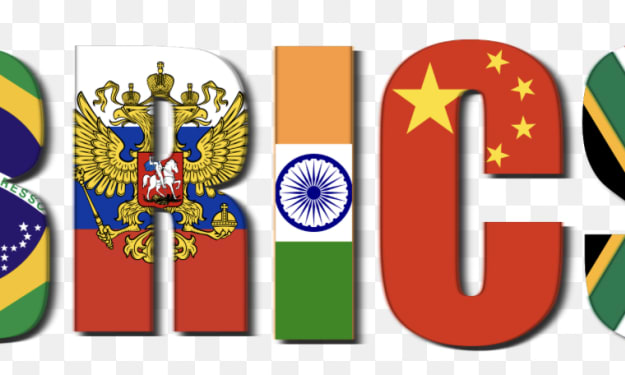
Introduction BRICS is an acronym for Brazil, Russia, India, China, and South Africa. These countries are considered as the emerging economies that are expected to play a significant role in the global economy in the 21st century. The idea of BRICS was first introduced by Jim O’Neill, a Goldman Sachs economist, in 2001. He predicted that these countries would become the world's largest economies by 2050. The first BRIC Summit was held in 2009 in Russia, and South Africa joined the group in 2010, making it BRICS. In this essay, we will discuss the formation, objectives, and achievements of the BRICS.
By Mahendrarajah Mithusharan3 years ago in Earth
There Is Water on Mars, But Can We Drink It?
This planet appears devoid of life, with a brick red and extremely dry surface reminiscent of a desert. However, upon reaching one of its poles, you encounter an seemingly endless ice cap. So, if you have been envisioning Mars as an exceedingly dry place, it may be time to reconsider. Scientists believe that Mars might have harbored abundant water in the past. They base this hypothesis on the discovery of ancient river valley networks, lake beds, and minerals and rocks that could have only formed in liquid water. It is even possible that Mars experienced catastrophic floods 3.5 billion years ago.
By Habeeb Abiodun3 years ago in Earth
The Divine Origins of Humanity and Extraterrestrial Influences
T0bbyz theory presents a unique perspective on the nature of humanity and its relationship with the cosmos. According to this theory, humans are divine beings, and their existence is rooted in extraterrestrial influences that have shaped human evolution throughout history. While this may sound like a far-fetched concept, it brings forth an intriguing interpretation of ancient mysteries and spiritual beliefs, which have puzzled humanity for centuries.
By Tobenna Ike3 years ago in Earth
The World Bank choses a Wallstreet CEO to address climate and development challenges
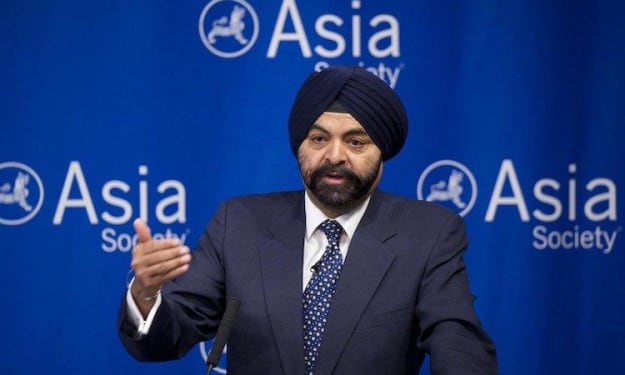
As we learn that Ajay Banga, the former CEO of Mastercard was chosen as the World Bank new President, it will be interesting to learn more about the process for this selection as well as the positive implications for such a bold move. The Bank’s President (this is what practitioners call the Bretton Woods Organization) is chosen by the United States which is the Bretton Woods largest shareholder, while the Bank’s sister organization, the IMF is normally led by a European Managing Director. The second largest shareholder is Europe followed by China.
By Andrea Zanon3 years ago in Earth