
There Is Water on Mars, But Can We Drink It?
Planet Mars
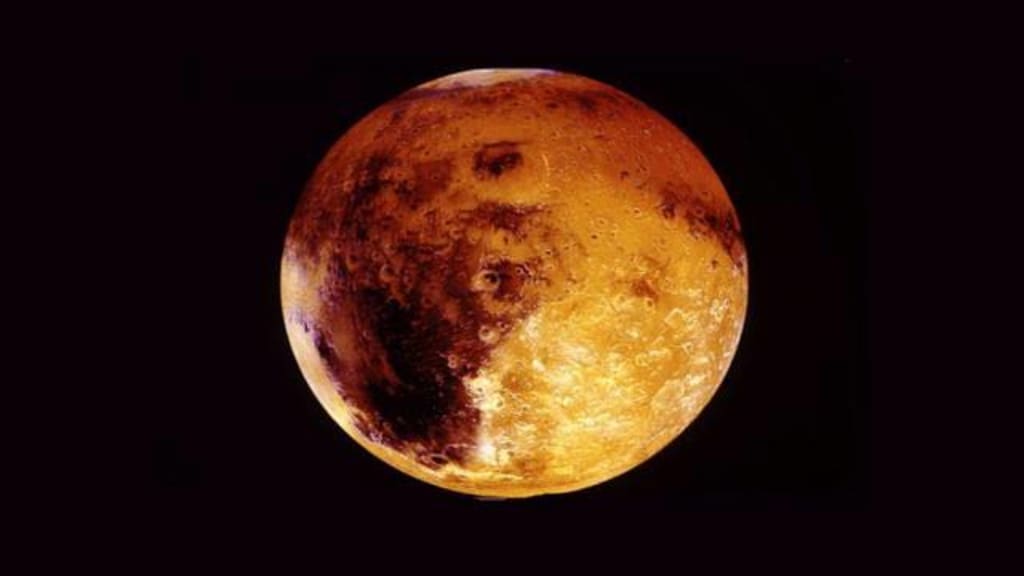
This planet appears devoid of life, with a brick red and extremely dry surface reminiscent of a desert. However, upon reaching one of its poles, you encounter an seemingly endless ice cap. So, if you have been envisioning Mars as an exceedingly dry place, it may be time to reconsider. Scientists believe that Mars might have harbored abundant water in the past. They base this hypothesis on the discovery of ancient river valley networks, lake beds, and minerals and rocks that could have only formed in liquid water. It is even possible that Mars experienced catastrophic floods 3.5 billion years ago.
Although Mars' atmosphere is too thin for water to exist in its liquid form on the surface, water can be found beneath the planet's surface, particularly in its polar regions. The north polar ice cap is the only visible location of this water. Additionally, small quantities of salty water flow down crater walls and hillsides, and there is some water vapor in the planet's atmosphere. Knowing that there is liquid water on Mars raises the question of whether we could utilize it during future human missions to the red planet. If we can access this water, it would significantly reduce the amount of water we need to transport from Earth, decreasing mission costs. Astronauts would simply need to bring equipment to filter and purify Martian water for consumption.
However, there are challenges to overcome. The main issue is that the water on Mars is salty, potentially as salty as Earth's oceans, but with different types of salts. Consuming these salts in certain amounts would be highly toxic to the human body. These salts are formed as byproducts of rocket fuel, as well as in road flares and fireworks on Earth. In naturally dry areas where there are no specific bacteria to break them down, these substances accumulate over time, increasing their concentration in water.
Nevertheless, in theory, it is possible to purify such water. Filtration processes could eliminate approximately 90% of harmful substances, followed by the use of UV disinfection units to remove any potential foreign microbes. These measures not only protect the astronauts but also prevent them from bringing dormant Martian microbes back to Earth.
In conclusion, future travelers to Mars should not face significant challenges in obtaining drinking water, as long as they bring the appropriate purification equipment capable of dealing with varying water quality. Running out of water in the middle of a desert on Earth is daunting enough, but experiencing it on another planet amplifies the level of terror.
Now, let's explore the possibility of finding water on other worlds within our solar system. One such place is Europa, one of Jupiter's largest moons. Astronomers consider Europa one of the most promising locations in the solar system to search for new life forms. It boasts a massive saltwater ocean estimated to have a depth of 40 to 100 miles, hidden beneath a layer of ice ranging from 10 to 20 miles thick. Plumes of water erupt from cracks in the ice shell, releasing the moon's ocean contents into space. There is also evidence of warm water radiating from Europa's equator, suggesting the potential for complex life.
Moving on to Enceladus, one of Saturn's moons, this small celestial body has intrigued scientists since its discovery in 1789. Despite its size of just 310 miles in diameter, it is believed to harbor a warm and salty liquid ocean. Enceladus regularly emits watery eruptions from its ice geysers, releasing over a thousand tons of water mixed with organic molecules, salt, and other substances into space. The moon's ocean may owe its warmth to the tidal influence of Saturn, which causes hydrothermal activity, effectively warming the oceans.
There are other places in the solar system that show potential signs of water on their surfaces, although confirmation is still pending. Ganym
About the Creator
Habeeb Abiodun
Creative writer who loves the paranormal, fiction, mystery, articles, take a chance, you'll be thoroughly enterted.
Keep reading
More stories from Habeeb Abiodun and writers in Earth and other communities.
Think Twice Before Eating a Wrapped Burger, Here's Why
Today, we will uncover some secrets about fast food. By now, we have all learned that the food we receive never looks exactly like what we see in ads. But there is more to know about how fast food companies entice us to make purchases. They have a way of manipulating our brains and making us crave their products. Imagine walking into a food court and being greeted by the enticing smell of fresh-baked Cinnabon. While Cinnabon does bake their goods, the aroma that reaches your nose is not solely from the oven. Cinnabon bakeries strategically place their ovens near the front door to attract customers. In addition to the oven, the staff spreads baking sheets with sprinkled cinnamon and brown sugar, creating a sweet aroma that lingers in the air all day. These smells can make you feel hungry even when your stomach is not empty. This is an example of aroma marketing, where scents are used to make products irresistible.
By Habeeb Abiodun3 years ago in The Chain
Astonishing Snow Leopard Hunt Filmed in Pakistan’s Remote Mountains
High in the jagged peaks of northern Pakistan, where icy winds carve through barren rock and human presence is scarce, a rare and astonishing moment has been captured on camera: a snow leopard executing a powerful hunt in the wild. The footage, filmed in Pakistan’s remote mountainous regions, has stunned wildlife experts, conservationists, and nature lovers around the world. More than just a dramatic spectacle, the video offers a rare window into the secretive life of one of Earth’s most elusive big cats.
By Fiaz Ahmed Brohi2 days ago in Earth



Comments
There are no comments for this story
Be the first to respond and start the conversation.