Science
Embracing Peace:
Introduction: In a world often plagued by conflicts and divisions, the pursuit of peace becomes an essential and noble endeavor. Peace is not merely the absence of war; it is a state of harmony, mutual respect, and understanding among individuals, communities, and nations. In this article, we explore the importance of peace, the challenges we face, and the steps we can take as individuals to foster peace in our lives and contribute to a more peaceful world.
By Roston Obligacion3 years ago in Earth
A.I. Summarized Unclassified Documents!
CIA-RDP96-00788R001100290005-5 29 JUNE 1982 This document is a transcription of a briefing about a governmental or military remote viewing program. Remote viewing is a process where individuals, referred to as remote viewers, attempt to gather intelligence about unseen or distant targets through perceived extrasensory perception.
By Snap Snook3 years ago in Earth
How are stars born?
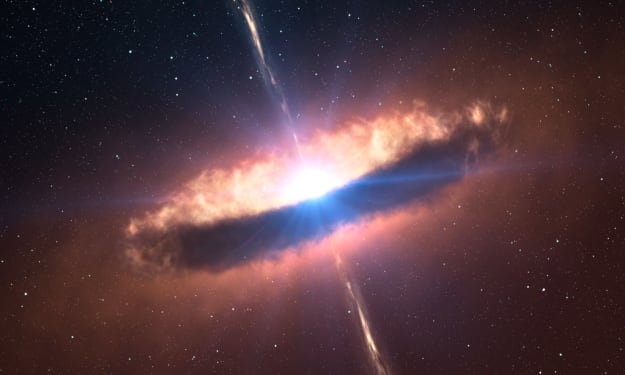
Stars are gigantic balls of fire holding planets asteroids and meteorites in their firm gravitational grip, and their fire sends light into the farthest reaches of their galaxies. But, how did they get here? I mean these incredible orbs must have come from somewhere right . What would it be like to witness this epic birth? What would it feel like at the center of the action, and why would this beautiful event have a funny smell. What if you saw a star being born. The Milky Way galaxy, spans about 100 000 light years across and it contains somewhere around 200 billion stars. If there are that many stars in our little section of space real estate, imagine how many there are in the entire universe! Now depending on where you look in the night sky you could see around 5000 Stars just with your naked eye. The brightest ones have melodic names like, Polaris, Alpha, Centauri, and Beetlejuice . Looking further out into the universe with the help of telescopes there are simply too many stars to name. That's the North Star well what is that, that's why many of these are now identified more generically like wasp 50 hd28678 and hat p23. But today you're not just going to look into a telescope and name some baby Stars, you're going to be in the thick of it, the hot dense thick of it. Every year seven new stars are born in the Milky Way alone. Now that might not sound like a whole lot but keep in mind that our galaxy is already used up 90 of its star making material over the billions of years of its existence, and yet new stars are still being born all the time. Now to witness their birth you need to travel to one of the many Star nurseries in the universe. These are known as nebulas . Nebulas are huge clouds of gas and dust that can span light years across. So hop into your Interstellar spacecraft and set your coordinates for one of the most famous Stellar nurseries of our galaxy. Okay so, I'm here 1344 light years away the Orion Nebula, yeah it's here that you'd find the necessary ingredients for a Star to be born. Gas dust, gravity, and turbulence sounds like my car being in the middle of a nebula would feel like being in the clouds. You'd be surrounded by over 200 different kinds of molecules. There would be hydrogen and helium gas as well as microscopic grains of silicon and iron, and I hope you packed some warm clothes because conditions In This Cloud would be frigid. You'd need a spacesuit thick enough to withstand temperatures as low as minus 270 degrees Celsius. But don't worry things are about to heat up suddenly. You'd be hit by a blast! This would be a ripple effect from an exploding nearby star and it would cause the nebula to become turbulent . All it means is that the gases around you would start to mix and swirl together, it would be the beginning of the Epic event you're here for. First dust particles would begin to Clump together these clumps would become denser and denser forming knots . Once these knots gain enough Mass they'd start to collapse under their own gravity , and their internal pressure and temperature would increase . Yeah at around 2200 degrees Celsius these high pressure knots would emit a dull red glow. You wouldn't be able to see it because that light would be infrared. Oh, but you would be uncomfortably aware of the temperatures starting to rise, and things would keep heating up. Eventually the Proto star before your eyes would emit its first rays of visible light wait, do you smell that? Well no of course you don't you're wearing a heat resistant spacesuit but , if you could you'd learn that this hot mass of dust and gas would also smell . It's disgusting but not necessarily in a bad way depending on the mixture of compounds around you, you could detect hints of sweetness lemon or even alcohol. But be careful your baby star wouldn't only be pulling things inward every now and then it would shoot powerful Jets from its poles at supersonic speeds. These would flash brightly as they come into contact with the surrounding gases . All the while the protostar would simultaneously grow and collapse under its own weight . This would make the core continue to heat up. Yeah once it reached the scorching hot temperature of 5 million degrees Celsius, you'd witness your baby star's first nuclear fusion deep within the center of the star, four hydrogen atoms would fuse together to form helium . This would release a ton of energy and with all that energy the protostar's pulsations would come to a halt. It would finally become a star. Now during the excitement of witnessing a star being born you'd have seriously lost track of the time. If the star that formed in front of your eyes was similar to our sun well you'd have just watched 50 million years fly right by you , and you might want to get your hearing checked. After experiencing all this of course there's no sound in the vacuum of space we all know that, but in the Stellar Nursery filled with gas and dust sound waves may have a medium to travel through and if you were wondering what the birth of a star sounds like well it would be deafening . If we could hear our own son it would be a lot like Earth was, covered and constantly wailing Sirens except multiplied by ten thousand . A new star created by a series of violent contractions of superheated gas forget about it . Okay now that your baby star is all stabilized it could burn bright for another 10 billion years maybe you'd also want to stick around for an extended vacation to see the end of its life?
By Michelle Hagen3 years ago in Earth
Area 51
Area 51: Unveiling the Secrets of America's Most Mysterious Military Base Deep in the heart of the Nevada desert, nestled between the barren landscapes, lies a place shrouded in secrecy and intrigue. Area 51, also known as Groom Lake, has captured the imagination of conspiracy theorists, UFO enthusiasts, and curious minds for decades. This highly classified United States Air Force facility has become synonymous with mystery and the unknown, fueling countless speculations and theories about what truly lies behind its heavily guarded gates. In this article, we will delve into the history, legends, and controversies surrounding Area 51, attempting to shed light on one of the world's most enigmatic places.
By Malik Hady3 years ago in Earth
If Dinosaurs Had Not Become Extinct, How Could They Have Evolved?
Some of the most fascinating creatures to have ever walked the earth are dinosaurs. It's a shame that we won't be able to see some of the coolest creatures come to life in Jurassic Park, but we are actually living with some creatures that are just as old as dinosaurs- like crocodiles and sharks. They haven't changed much since they appeared millions of years ago, but most dinosaurs didn't make it when the asteroids struck Earth.
By Michelle Shiro3 years ago in Earth
EMERGENCY: Global Temperatures Set to SKYROCKET!
Ever wondered what would happen if the Earth's climate took a catastrophic turn? Brace yourself, because the answer is terrifying. In a startling revelation that sends shivers down our spines, the World Meteorological Organization has released its latest findings, predicting an unprecedented surge in global temperatures.
By Iman Kamran3 years ago in Earth
Parrots as Pets
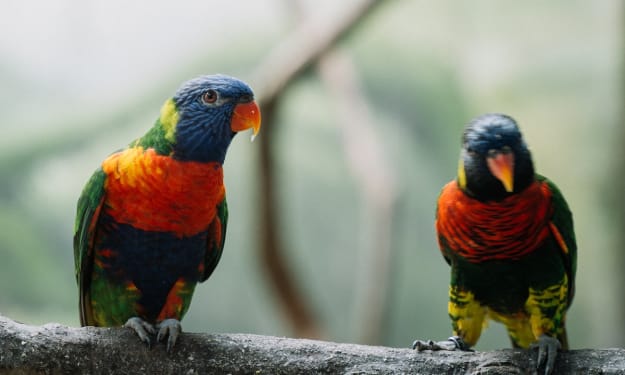
Parrots as Pets: Pros and Cons of Having a Feathered Friend Introduction : Parrots have captivated human fascination for centuries with their vibrant plumage, intelligence, and ability to mimic speech. As pets, they can bring joy and companionship, but they also require significant care and attention. In this article, we will explore the pros and cons of having a parrot as a feathered friend.
By Ayaanahamed3 years ago in Earth
The Fascinating World of Parrots
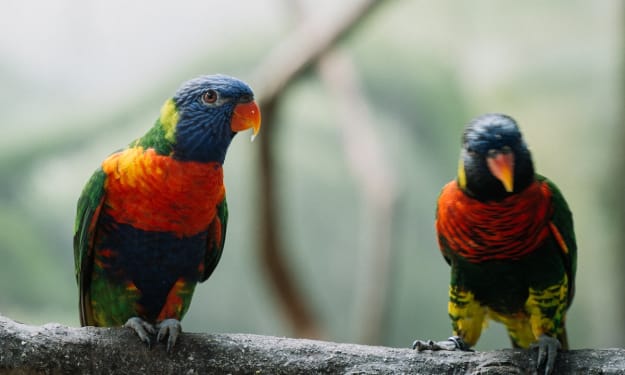
The Fascinating World of Parrots: A Comprehensive Overview Parrots are one of the most captivating and intelligent creatures on Earth. With their vibrant plumage, remarkable ability to mimic human speech, and unique behaviors, they have become popular pets and subjects of study for researchers. In this comprehensive overview, we will delve into the fascinating world of parrots, exploring their diversity, behavior, communication, and conservation efforts.
By Ayaanahamed3 years ago in Earth
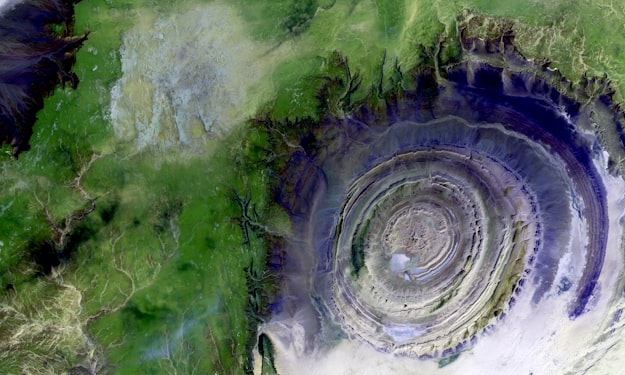
The Richat Structure: A Natural Wonder in the Sahara Desert
The world is adorned with countless marvels of nature, each possessing its unique charm and captivating allure. One such extraordinary wonder is the Richat Structure, also known as the "Eye of the Sahara." Nestled within the vast expanse of the Sahara Desert in Mauritania, this enigmatic geological formation has fascinated scientists, geologists, and adventurers alike for centuries. In this article, we will delve into the mesmerising details of the Richat Structure, exploring its origin, composition, and the enduring mysteries that shroud this natural spectacle.
By Beyourself3 years ago in Earth