
How are stars born?
What if you were able to watch a star being born?

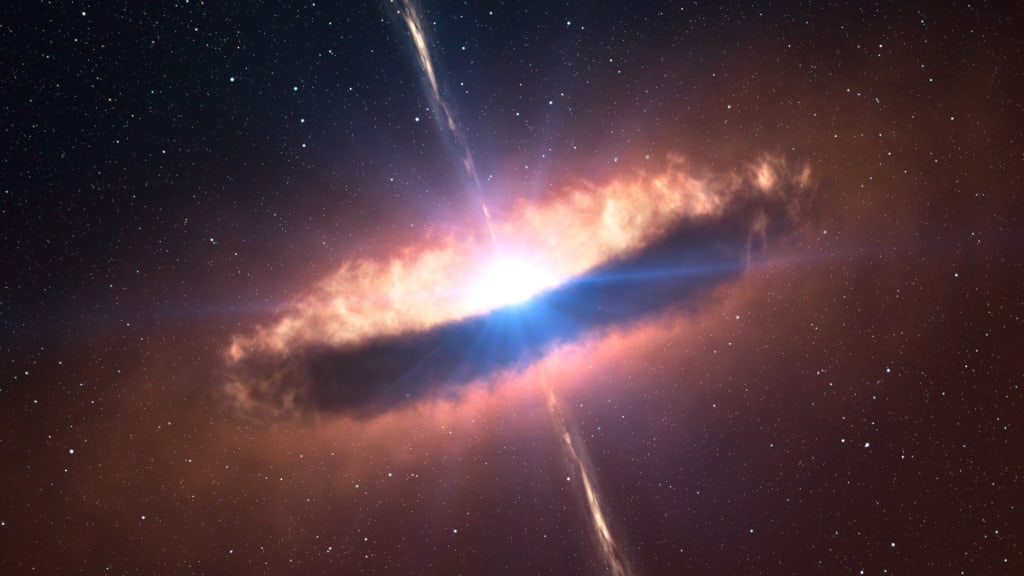
Stars are gigantic balls of fire holding planets asteroids and meteorites in their firm gravitational grip, and their fire sends light into the farthest reaches of their galaxies. But, how did they get here? I mean these incredible orbs must have come from somewhere right . What would it be like to witness this epic birth? What would it feel like at the center of the action, and why would this beautiful event have a funny smell. What if you saw a star being born. The Milky Way galaxy, spans about 100 000 light years across and it contains somewhere around 200 billion stars. If there are that many stars in our little section of space real estate, imagine how many there are in the entire universe! Now depending on where you look in the night sky you could see around 5000 Stars just with your naked eye. The brightest ones have melodic names like, Polaris, Alpha, Centauri, and Beetlejuice . Looking further out into the universe with the help of telescopes there are simply too many stars to name. That's the North Star well what is that, that's why many of these are now identified more generically like wasp 50 hd28678 and hat p23. But today you're not just going to look into a telescope and name some baby Stars, you're going to be in the thick of it, the hot dense thick of it. Every year seven new stars are born in the Milky Way alone. Now that might not sound like a whole lot but keep in mind that our galaxy is already used up 90 of its star making material over the billions of years of its existence, and yet new stars are still being born all the time. Now to witness their birth you need to travel to one of the many Star nurseries in the universe. These are known as nebulas . Nebulas are huge clouds of gas and dust that can span light years across. So hop into your Interstellar spacecraft and set your coordinates for one of the most famous Stellar nurseries of our galaxy. Okay so, I'm here 1344 light years away the Orion Nebula, yeah it's here that you'd find the necessary ingredients for a Star to be born. Gas dust, gravity, and turbulence sounds like my car being in the middle of a nebula would feel like being in the clouds. You'd be surrounded by over 200 different kinds of molecules. There would be hydrogen and helium gas as well as microscopic grains of silicon and iron, and I hope you packed some warm clothes because conditions In This Cloud would be frigid. You'd need a spacesuit thick enough to withstand temperatures as low as minus 270 degrees Celsius. But don't worry things are about to heat up suddenly. You'd be hit by a blast! This would be a ripple effect from an exploding nearby star and it would cause the nebula to become turbulent . All it means is that the gases around you would start to mix and swirl together, it would be the beginning of the Epic event you're here for. First dust particles would begin to Clump together these clumps would become denser and denser forming knots . Once these knots gain enough Mass they'd start to collapse under their own gravity , and their internal pressure and temperature would increase . Yeah at around 2200 degrees Celsius these high pressure knots would emit a dull red glow. You wouldn't be able to see it because that light would be infrared. Oh, but you would be uncomfortably aware of the temperatures starting to rise, and things would keep heating up. Eventually the Proto star before your eyes would emit its first rays of visible light wait, do you smell that? Well no of course you don't you're wearing a heat resistant spacesuit but , if you could you'd learn that this hot mass of dust and gas would also smell . It's disgusting but not necessarily in a bad way depending on the mixture of compounds around you, you could detect hints of sweetness lemon or even alcohol. But be careful your baby star wouldn't only be pulling things inward every now and then it would shoot powerful Jets from its poles at supersonic speeds. These would flash brightly as they come into contact with the surrounding gases . All the while the protostar would simultaneously grow and collapse under its own weight . This would make the core continue to heat up. Yeah once it reached the scorching hot temperature of 5 million degrees Celsius, you'd witness your baby star's first nuclear fusion deep within the center of the star, four hydrogen atoms would fuse together to form helium . This would release a ton of energy and with all that energy the protostar's pulsations would come to a halt. It would finally become a star. Now during the excitement of witnessing a star being born you'd have seriously lost track of the time. If the star that formed in front of your eyes was similar to our sun well you'd have just watched 50 million years fly right by you , and you might want to get your hearing checked. After experiencing all this of course there's no sound in the vacuum of space we all know that, but in the Stellar Nursery filled with gas and dust sound waves may have a medium to travel through and if you were wondering what the birth of a star sounds like well it would be deafening . If we could hear our own son it would be a lot like Earth was, covered and constantly wailing Sirens except multiplied by ten thousand . A new star created by a series of violent contractions of superheated gas forget about it . Okay now that your baby star is all stabilized it could burn bright for another 10 billion years maybe you'd also want to stick around for an extended vacation to see the end of its life?
About the Creator
Michelle Hagen
Hi all! Blogger here! I use to love to blog all the time and have moved over to wanting to write articles! Follow me along on my journey here!
Keep reading
More stories from Michelle Hagen and writers in Earth and other communities.
What If the World Lost Oxygen for Five Seconds?
Imagine if all the Earth's oxygen disappeared, not forever lets just for say five seconds, would we just hold our breath? What would happen to the atmosphere, what would happen to the environment just everything surrounding us? Here's what would happen if the world lost oxygen for just five seconds. Take a nice deep breath, are you holding it, feel how satisfying that is. What you're breathing in is oxygen and it takes up to roughly 21% of our atmosphere with 78% being nitrogen, although it's not the most abundant gas in our atmosphere it is the most important I would say. But, without oxygen plants animals water and us humans wouldn't be where we are today . Five seconds may not sound like a whole lot, even ten seconds of time to be without oxygen. Most of us can go at least thirty seconds without taking a breath so it would happen too fast for your body to even notice. Some of us even hold our breath with out even knowing it at times. Your breathing would actually remain normal, but as for everything else not so much. In just five seconds the earth would look completely different without oxygen. You can say goodbye to the Hoover Dam the Pantheon dome and anything else made of concrete these structures would instantly collapse. Crazy to think right? Oxygen acts as a special binding agent to concrete. Without it concrete is just dust in the wind. Speaking of buildings, any untreated metal would instantly be fused together, this is because there's a layer of oxidation on metals that prevents them from welding together. Without that layer metals would instantly bind to each other! All I can imagine is being in something metal at the time, who knows the out come that would bring! And If you happen to be relaxing at the beach at the time, hope you brought your sunscreen! Expect a severe sunburn, the ozone layer our protection against the sun's UV rays is made of oxygen, take away the oxygen and the earth would become extremely dangerous. There would be nothing protecting us from the sun's UV rays. Talk about a real day in the sun. In addition to a sunburn our inner ear would explode! Losing oxygen means losing 21% of our air pressure, a change in air pressure that drastic is equivalent to being at sea level and dropping down 2,000 meters instantly. Our ears wouldn't have enough time to adapt, and all that pressure would be very uncomfortable! Having a good time yet? well, don't expect it to last long without oxygen there's no fire. The combustion process and vehicles wouldn't be able to occur , any mode of transport that isn't electric will automatically fail. And watch out, because planes will fall from the sky and millions of cars will be stopped in their tracks. The sky would be completely dark before it hits the earth, light from the Sun bounces off multiple particles in the air, without oxygen in the atmosphere there are less things to bounce off and the sky will appear dark. Oh yeah, and while all this is happening the Earth's crust would completely crumble that's because Earth's crust is made up of 45% oxygen the crust would crumble and continue to crumble until there's nothing left! Sending you and everyone on the planet into a freefall. I guess its safe to say that it is not a survivable situation. Sound like fun? Probably not, but luckily you can take a deep breath of 21% oxygen knowing this will never happen.
By Michelle Hagen3 years ago in Earth
Forecasters Warn of ‘Potentially Catastrophic’ Storm Threatening Texas to the Carolinas
A massive storm system is on the horizon, and forecasters are raising the alarm for communities stretching from Texas to the Carolinas. Officials are warning that this could be a “potentially catastrophic” weather event, with heavy rainfall, hurricane-force winds, and dangerous flooding expected across multiple states. As residents prepare for what could be a historic storm, experts are urging vigilance and proactive measures to minimize risk. A Storm Unlike Any in Recent Memory Meteorologists describe this storm as unusually powerful, with characteristics of both a tropical system and a winter storm. The National Weather Service (NWS) has issued alerts across a wide swath of the southern and eastern United States, highlighting the potential for flash flooding, tornadoes, and prolonged power outages. According to Dr. Karen Whitfield, a senior meteorologist with the NWS, “The size and intensity of this system are alarming. The combination of warm Gulf moisture and high-pressure systems in the north is creating conditions that could make this one of the most destructive storms in recent history.” Rainfall totals could reach 10 to 15 inches in some areas, particularly in low-lying regions along the Gulf Coast and parts of the Carolinas. Rivers already swollen from recent precipitation could overflow, putting communities at immediate risk. States on High Alert From Houston to Charlotte, emergency management teams are mobilizing resources. Texas officials have activated disaster response units and are advising residents in flood-prone areas to consider evacuation plans. In Louisiana, emergency shelters are being readied for potentially thousands of displaced residents. The Carolinas, which were hit by flooding last year, are preparing for similar challenges. Local governments are emphasizing the importance of early warning systems, urging citizens to monitor weather updates and heed evacuation notices promptly. Governor Laura Jenkins of North Carolina stated, “We cannot stress enough the importance of taking these warnings seriously. This storm has the potential to cause catastrophic damage, and the safety of our residents is our top priority.” The Human and Economic Toll Beyond the immediate threat to life and property, experts predict that the storm could have significant economic consequences. Power outages could disrupt businesses, transportation, and supply chains. Schools and public services may face closures, further complicating recovery efforts. Insurance companies are already warning of increased claims due to property damage. According to industry analysts, this storm could rival some of the costliest weather events in U.S. history if rainfall and wind speeds reach projected levels. Preparing for the Worst Meteorologists emphasize that preparation is key. Residents in affected areas are advised to: Secure property: Bring outdoor furniture, garbage bins, and other loose objects indoors to prevent them from becoming projectiles. Stock up on essentials: Water, non-perishable food, medications, and batteries should be readily available. Plan evacuation routes: Know multiple routes out of flood-prone areas and identify local shelters. Stay informed: Monitor official channels for updates from the NWS, FEMA, and local authorities. Emergency management teams are also using social media and local news outlets to reach residents quickly, providing real-time information on evacuation orders, shelter openings, and weather updates. The Role of Climate Change While no single storm can be directly attributed to climate change, scientists note that warming ocean temperatures and shifting weather patterns increase the likelihood of extreme storms. The Gulf of Mexico, for instance, has been experiencing above-average sea surface temperatures, fueling the energy of storms forming over its waters. Dr. Whitfield explains, “Warmer waters mean more moisture and stronger winds in storms. This doesn’t happen in isolation — it’s part of a larger trend where extreme weather events are becoming more frequent and more severe.” Looking Ahead Forecasters say that the storm’s trajectory could shift as it moves inland, and residents should remain alert for updates. While initial predictions suggest the greatest impact will be felt along the Gulf Coast and southeastern states, heavy rain and gusty winds could affect areas as far north as Virginia and Tennessee. Meteorologists stress that preparation now can save lives later. “It’s better to be over-prepared than under-prepared,” said Whitfield. “Even if the storm shifts slightly, the risks remain very real.” Communities across Texas, Louisiana, Mississippi, Georgia, and the Carolinas are bracing for what could be a defining weather event of the year. Authorities, residents, and businesses are mobilizing to minimize damage and ensure safety, hoping that early action will prevent loss of life and property. As the storm approaches, officials urge calm but firm action. From evacuations to emergency supplies, the steps taken in the coming hours could make all the difference.
By Muhammad Hassan4 days ago in Earth
The New Gold Rush is Happening at Wastewater Treatment Plants
I never thought much about where wastewater goes after it leaves my house until I read a study from Arizona State University. Researchers tested sewage sludge from cities across America and found something remarkable.
By Marcus Briggs5 days ago in Earth


Comments
There are no comments for this story
Be the first to respond and start the conversation.