Science
Suspected to have been smashed by a UFO
There are a huge number of small objects in our solar system. They are very small in mass, usually very fast, and their orbits can easily become unstable due to the influence of other celestial bodies, so there are often small objects that crash into the Earth.
By Karen Gillanah4 years ago in Earth
"One day in heaven, one year on earth"
"A day in heaven and a year on earth", meaning that a day spent in heaven and a year spent on earth, we generally think that such a situation will only appear in those ancient legends, but in reality, this is not the case, because according to the theory of relativity proposed by Einstein, the passage of time is not constant.
By Robert Jack4 years ago in Earth
The solar system is falling towards the black hole at the center of the galaxy
The Sun has accompanied the evolution and development of mankind since the dawn of time. In the limited history of cognition, there are various statements about the Sun and the Earth, among which the geocentric theory dominates again. It was not until Copernicus proposed the heliocentric theory in the early sixteenth century that a new phase of knowledge about the Earth and the Sun was initiated.
By Karen Gillanah4 years ago in Earth
A planet of 1 light year
Does a planet with a diameter of 1 light year exist in the universe? One of the more common thoughts on this question is that it is not impossible to form a planet with a diameter of 1 light year if there is enough matter, however, according to the laws of the universe as we know it, such a thing is simply not possible.
By Robert Jack4 years ago in Earth
Be careful what you say when you say goodbye at the end of life
For all people, death is an inescapable end. Perhaps from the moment, we come into the world, we are destined to accept the end of death. Even though we have a different processes of life, the end station of our life is the same.
By Karen Gillanah4 years ago in Earth
Between atomic nucleus and electron
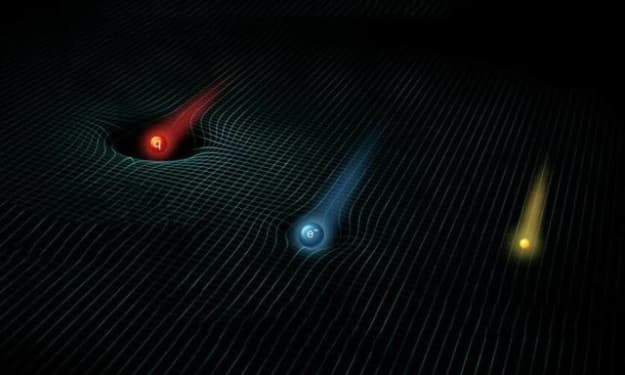
Atoms were once thought to be the fundamental particles of everything in the world, but it has since been discovered that atoms are composed of a nucleus and electrons and that there is a vast space between the nucleus and the electrons - how vast is it? Let's take the simplest atom in the universe, the hydrogen atom, as an example.
By Robert Jack4 years ago in Earth
The law of conservation of energy
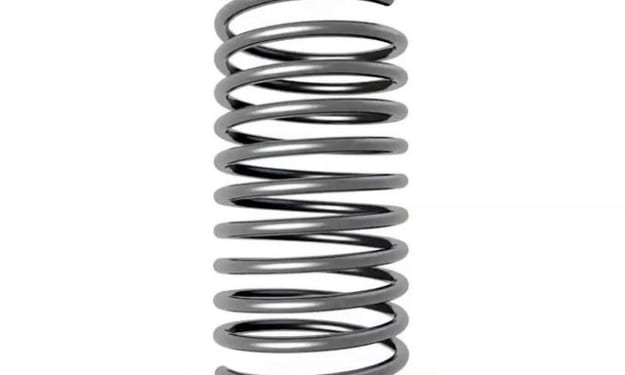
The spring itself is elastic, after being compressed, the spring will have the tendency to return to its initial state, and therefore has elastic potential energy, which can be seen as the energy stored in the spring as a whole system, so the question arises: if the spring is compressed into a strong acid, then after the spring dissolves, where does the energy of the spring go?
By Robert Jack4 years ago in Earth