Nature
Toucan You Can
You too can see a toucan! But you have to be in the right place at the right time or see them here through my lens. I did it by catching a flight to the lush jungles of Manuel Antonio, Costa Rica, and then took up residence in 2014. I remember the first time I visited Costa Rica; I fell in love with the lush landscape and the exotic wildlife it had to offer.
By TammyRenee5 years ago in Earth
Wild about you
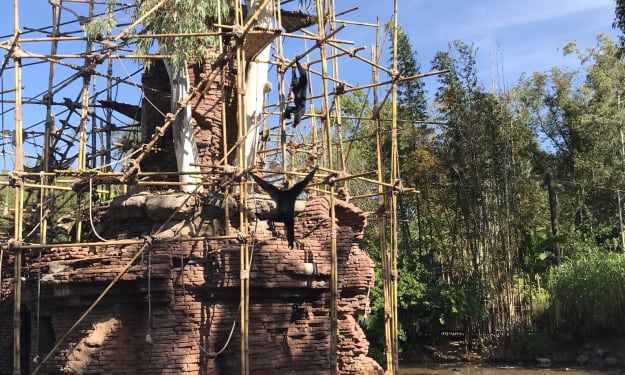
I spent hours just to see these beautiful Monkeys swing from branch to branch. One of the monkeys striked a pose. I took this picture while walking around Animal kingdom in Orlando Florida. They are very happy animals. The way they interact with each other is in a very playful manner. I watched them pick bugs off of one another. One minute they are having fun and playing tag with each other and the next minute they seem like they are yelling at each other. The Monkeys are a crowd pleaser, and the main event. They know how to stick together. They are very smart and have some human like qualities.
By Dominique Gray5 years ago in Earth
A Picnic with a Honey Bee
A Picnic with a Honey Bee An uninvited but welcome guest While walking beside my favorite pond, I could see ripples in the water about 15 feet from shore, but they seemed to never stop. Taking a closer look I expected to see a water spider spinning in circles as I’ve seen them do, but today it was not a spider. It looked like a honey bee.
By Debbie Powell5 years ago in Earth
A day in the life.
“I think I’m safe here, she can’t see me…I bet your wondering who I am, You can call me Noah; as you can see I am a bee.. I’m trying to escape from Mrs. Clarey’s house. She has some kind of underlying problem with me, every time she see’s me, she tries to squat me. Why? I haven’t got a damn clue, your gonna have to ask her. Sometimes It’s like she thinks I’m a killer bee, I don’t know how everyone says we all look alike. I don’t sting Mrs Clary… I’m flying around minding my business, fixing YOUR flowers and you still chase me. Honestly, she’s so un-grateful she doesn-!
By Shelby Clarke5 years ago in Earth
Life of the Sparrow
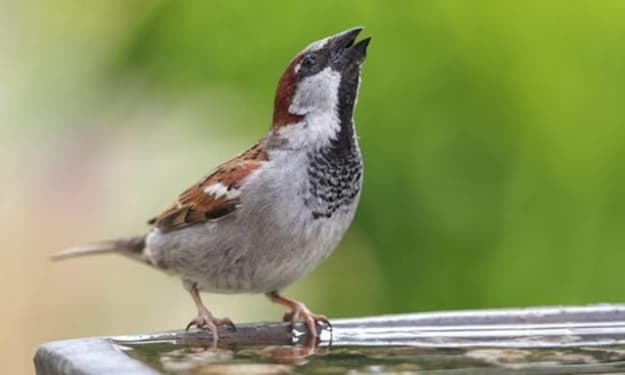
Shocking information has emerged that 60 percent of the sparrow species have become extinct in the last 25 years alone.World Sparrow Day is commemorated on March 20, 2010, to raise awareness of the daily struggle of sparrows and their problems, thereby raising awareness and protecting them from extinction.If there is one species of bird that has transformed the human habitat into its own habitat, connecting our family with ours, intertwined with human life, and living as one in our home, it is the sparrow that is the refuge.Dr. Salim Ali, a world-renowned ornithologist, was fascinated by the beauty of sparrow chicks that fell from a sparrow nest in his home when he was a boy, and later dedicated his life to bird research. It was these sparrows that brought that ornithological grandfather to India and introduced it to the world.These sparrows are known to have spread throughout the world and originated in the Mediterranean.These were first introduced in North America. These were subsequently introduced from England to Brooklyn and New York in the United States in 1851 and 1952, respectively.The main reason for this is in the hope that they will catch and eat insects and protect food plants from pests. While this is somewhat true, they are actually catching insects only to feed the young chicks.Unlike other birds, sparrows are not usually found in dense jungles or deserts. They usually set up their habitat in human habitats, especially houses and the fields that depend on it.In the driveway of the driveway in the villages, the back of the photos of the house will live in an irregularly set up location with straw and dry grass. However, neither the sleeper's nest building ability nor the elegance of its design are present in these nests.Nesting is often done by males. In winter, nests can be seen nesting in street lights. This is because they build their nests in light bulbs to protect themselves from the extreme cold. These birds lay 3 to 5 eggs. The main food of sparrows is the seeds and grasses of the grain.Sparrows, known to be close to humans, flock together to form a semi-circular groove in the dust and bathe in it. During the rainy season, it is common for them to bathe in the stagnant water on the street or whenever water is available. After that, the feathers are gothic and dried to thrill the viewer. The main reason for this is that if there are any parasites on its feathers, they do this to keep it out and keep its feathers clean.Scattered grains are the main food of these sparrows. As a result of modernization today, all grains have come in polythene bags for cooking immediately after removing the stone and soil from the mills.The grandmother of the day used to sit in front of the door and put the rice in the yard before cooking and help to remove the stone and cook the food. Grandmothers are no more today because today’s grandmothers took refuge in charities. Not at all. Grains also do not shed much. Sparrows have no food.Second, although their main food is grains and seeds, they rely entirely on garden insects and worms to feed on sparrow chicks.These garden worms and insects are the first food for the hatchlings. In our village houses the mother bird often flies outside and catches the insects and feeds them. Where can we find shrubs and living fences in an urban environment where all the plants in our backyard have been destroyed and turned into concrete compounds? In particular, the absence of our native plants and grasses has made the worms and insects that depend on it rare.Most importantly as a result of the overuse of chemical pesticides in agriculture, we are not only killing the pests that benefit us. Instead, we destroyed the offspring of sparrows as well. Yes, there is a permanent famine for the insects and worms that we feed on the pet children of the sparrows because they look like pesticides. To whom do sparrows appeal?.Third, if such a struggle is for food, where can sparrows go and build a house when they have become concrete forests as a result of man's short-sightedness? Houses that have been converted into apartments will always be closed. How can these newcomers live in a fully enclosed home?. Fourth, the tragedy awaits the sparrows if they think they can find a way out of all this and build their little nest there and start life.The mobile phone has become a major part of human civilization. Without these, no work can be done. As a result of the increasing number of cell towers in cities and towns, the number of birds and bees is beginning to decline dramatically due to the electromagnetic vibrations emitted from cell towers.Research has sounded the alarm bell that "electromagnetic" radiation emitted from cell phone towers is being used to term bird eggs in its embryo.The lowest radiation emitted by cell phone towers is 900 to 1,800 mega hrs. These are called electromagnetic waves.These completely affect the hardness of the top layer of the egg and form a thin membrane-like structure. As cell phone towers increase they become the death knell for birds and bees.Because birds are so intelligent. These electromagnetic waves affect the birds' sense of ability, misleading them and making it difficult for them to find food, making it easier for other creatures to feed.Sparrows play a vital role in controlling pests in the food chain. With the help of birds like sparrows, nature keeps the growth of insects under control so that the insects do not breed naturally and cause damage to the crops at no cost. But we are poisoning our soil and our lives without realizing it and misunderstanding that chemical pesticides are the only solution.Do not be indifferent as extinction sparrows. Today, we will use the extinction of sparrows as a threat to the destruction of humanity and highlight the need to protect sparrows for our children and make every effort to protect them.In a small bowl add a few grains, a little water. They are a small box to stay in your home. Our native plants in your home garden. Do not plant trees elsewhere for forgotten beauty or other reasons while planting the tree. We will avoid pesticides and herbicides altogether. Let's try to cultivate naturally. Let’s switch to organic farming. We will take the need for sparrow protection to our house children and involve them in it.In the villages, when sparrows begin to build nests in their homes, adults will happily welcome them. They will take care of the building partnership without any danger from the children.These iconic spirits firmly believed that sparrows would bring a bright future to their home. It is summer so sparrows and other birds are desperate for food and water. This is the refuge where birds knock on the door of our house to seek refuge with man. In the midst of so much hardship these pet cats beg us to do nothing but trivial little things.All we have to do is get some grain, some water, a little space to stay, and if possible a small natural vegetable garden, then look at these iconic lionesses knocking on your door. As well as bringing a brighter future to your family.
By Zarinabanu Zarinabanu5 years ago in Earth
Metamorphosis
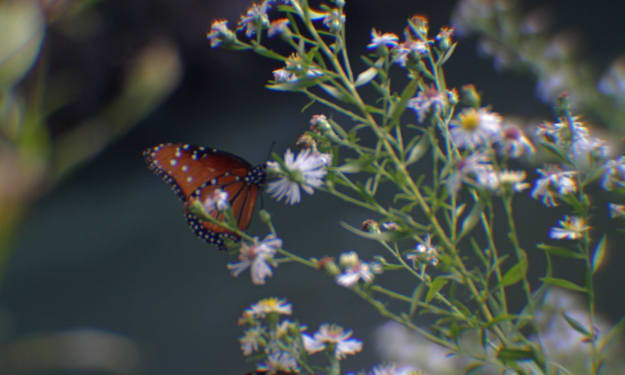
The inexplicable grandeur of watching a new spring season bloom before your eyes is unlike anything else. There is something very fragile and fleeting about the moment a butterfly decides to land in front of you. The beautiful splendor of watching the insect floating effortlessly, pollen jettisoned into the air around it. You start to notice the ways in which you mirror it. Each move seemingly unconscious yet purposeful. Your life is lived in cycles, much like the metamorphosis of a butterfly, each new phase restoring you a brand new body. The truth is that life operates in cycles within you and without you, and those cycles transcend the mortal body. When you die, your body becomes an effigy for what is contained within. When you are gone, you return to the Earth to feed and support its' new life. You exist as a breath of fresh life in this world, individual, yet supporting the whole.
By Hayley Buzek5 years ago in Earth
Sunset, Playtime, & Bobcats
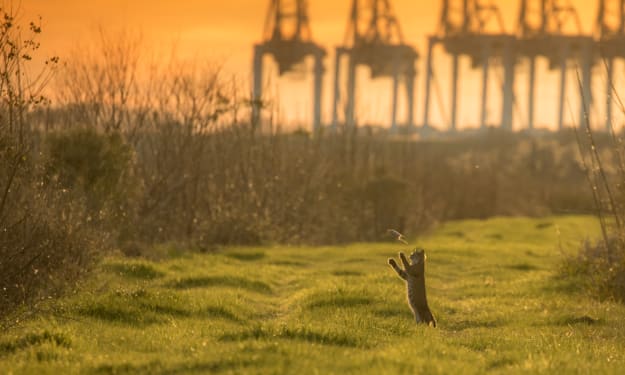
Ever been in a funk? As a wildlife photographer there are times when you begin to feel like you are not seeing anything new or exciting to photograph. Then there is social media . . . these lulls can cause a great deal of anxiety and/or depression, especially when you get on social media sites and view the amazing images other photographers are capturing. It can be tough to break through these times and emerge with a fresh perspective and positive outlook. I could see and feel this beginning in me, so one weekend my husband and I decided to take a trip south to the Savannah National Wildlife Refuge in search of wintering and resident birds. The mild temperatures and freshwater impoundments of the refuge provide habitats that support a diverse wildlife population, as well as many photography opportunities.
By Deborah Roy5 years ago in Earth