Humanity
Sustainability, Nature and Planet Earth
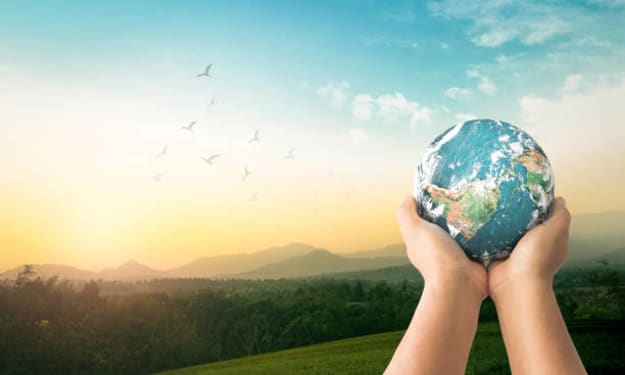
Once upon a time, in a lush green forest, there lived a community of animals. They lived in harmony with nature and had everything they needed to survive. The trees provided shelter, the river gave them water, and the forest floor provided food.
By Muhammad Adil3 years ago in Earth
ARE WE ALONE?
Are we alone in the universe? This is a question that has fascinated humanity for centuries. The idea of life beyond our planet has captured the imagination of people from all walks of life, and many scientists have dedicated their careers to searching for evidence of extraterrestrial life. While we have yet to find concrete evidence of intelligent life beyond our planet, recent studies suggest that the universe may be teeming with life, and the implications of this are both exciting and sobering.
By TimeTrails3 years ago in Earth
João and the Visitors from Beyond: A Farmer's Encounter with Aliens
Once upon a time, in the heart of Brazil, there lived a farmer named João. João had lived on his farm for his entire life, tending to his crops and animals with great care and dedication. His family had been farmers for generations, and he was proud to carry on their legacy.
By Ihtisham Ul Haq 3 years ago in Earth
437 Days Alone at Sea: The Incredible Survival Story of Steven Callahan
lahan was a man who had a deep passion for sailing. He had been sailing since he was a young boy and had become a skilled sailor as he grew older. In 1982, Steven set out on a solo voyage across the Atlantic Ocean, from the Canary Islands to the Caribbean. However, what was supposed to be an adventure of a lifetime turned into a nightmare that would test his survival skills like never before.
By Ihtisham Ul Haq 3 years ago in Earth
What is life
Life is a complex and multifaceted concept that has been explored by philosophers, scientists, and theologians for centuries. It is a characteristic that distinguishes living organisms from non-living matter and is characterized by various phenomena such as growth, reproduction, adaptation, and evolution. In this essay, I will attempt to provide a comprehensive definition of life and explore its various dimensions.
By Abdullah jan3 years ago in Earth
ATTACK ON AL AQSA MASJID
The Al-Aqsa Mosque, located in the Old City of Jerusalem, is one of the most revered sites in Islam. It is the third holiest site in the religion, and is considered to be the place where Prophet Muhammad (peace be upon him) ascended to heaven. In recent years, the site has been the scene of numerous violent incidents, with clashes between Israeli police and Palestinian worshippers becoming increasingly common.
By M.Hasan Ashraf3 years ago in Earth
What is a Tsunami called and how does it come?
India has also seen this tsunami very closely and there was a lot of destruction in the coastal parts of South India. Since then people talk a lot about this natural disaster and that’s why today we will know through this post what is called tsunami, what is its reason i.e. how it comes and what is meant by tsunami?
By Nityanshu Ranawat3 years ago in Earth
Alone in the wilderness
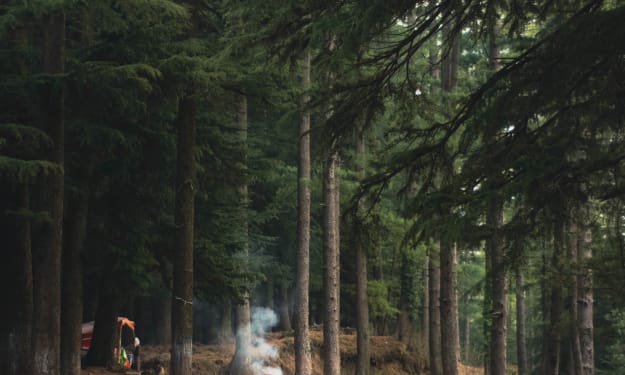
In the heart of the Murree hills lies a serene and tranquil setting, where the beauty of nature is on full display. The air is crisp and fresh, and the silence is only broken by the sound of the crackling campfire. Smoke rises from between the trees, adding to the mystique and allure of the location. The Murree hills are a popular tourist destination in Pakistan, known for their stunning natural beauty and scenic vistas. Located in the north of Pakistan, these hills are a perfect destination for those who love adventure and the great outdoors. They offer a range of activities, including hiking, camping, and sightseeing. The Murree hills are particularly popular in the summer months, when the weather is pleasant and mild.
By Faizan Raza3 years ago in Earth
What is the geologic history of the Earth and how have past events such as mass extinctions shaped the planet we know today?
The Earth is a dynamic and ever-changing planet that has undergone significant geological and biological changes over its 4.5 billion years of existence. These changes have been driven by a variety of natural processes, such as plate tectonics, volcanic activity, climate fluctuations, and biological evolution. Throughout its history, the Earth has experienced several mass extinctions, which have profoundly influenced the planet's biodiversity and shaped the course of evolution.
By Aniket Kumar3 years ago in Earth
How have human activities impacted the Earth's climate and what steps can be taken to mitigate these impacts?
The Earth's climate is changing at an unprecedented rate, and scientists agree that human activities are a significant contributing factor. The burning of fossil fuels, deforestation, and industrial activities have led to a significant increase in greenhouse gases in the atmosphere, trapping heat and causing global temperatures to rise. These changes in the Earth's climate have significant implications for the planet, including rising sea levels, more frequent and severe weather events, and disruptions to ecosystems and human societies.
By Aniket Kumar3 years ago in Earth
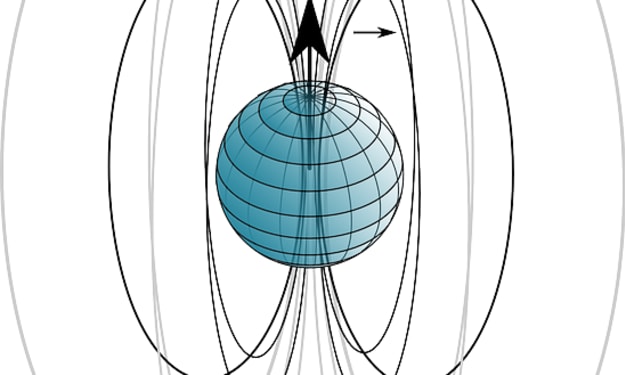
What is the role of the Earth's magnetic field and how does it protect us from harmful solar radiation?
The Earth's magnetic field is an invisible force that plays a vital role in protecting life on our planet. It surrounds the Earth and acts as a shield against the harmful radiation emitted by the sun, preventing it from reaching the surface and potentially causing significant damage to living organisms.
By Aniket Kumar3 years ago in Earth