Climate
Harnessing the Influence of Business to Fight Climate Change
Coming out of lockdown and returning to normal, small- and medium-sized businesses (SMBs) need to play their part in helping the UK achieve net-zero emissions. However, a report carried out by a coalition of top business groups, energy networks, and expert bodies reported that many don’t know how they can cut their carbon emissions, are unsure where to start, don’t know where they can get help, and don’t have time to research a net-zero strategy. Furthermore, SMBs need such a strategy to be financially viable.
By James Patefield5 years ago in Earth
Seashells To Plastic
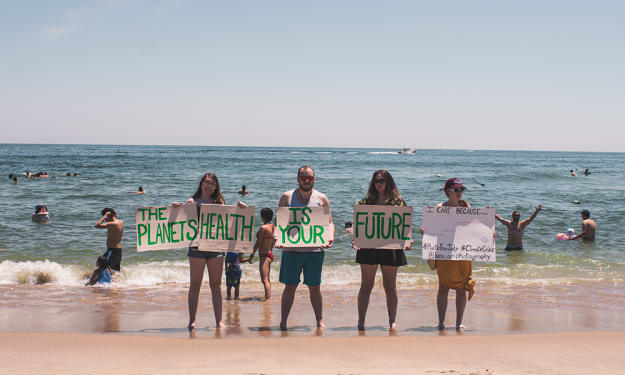
As summer quickly approaches, we will all flock to the beaches to watch waves, dip our toes in the seafoam, and hid our fries from the seagulls. This year, the beach may look a bit different, but why? Has something about the sea change? In terms of plastic, 8.3 million tons are discarded in the sea yearly. Here's the big shocker - it's catching up to us.
By Angelica Pasquali5 years ago in Earth
Why I'm Quitting Avocados. First Place in Wave Makers Challenge. Top Story - May 2021.
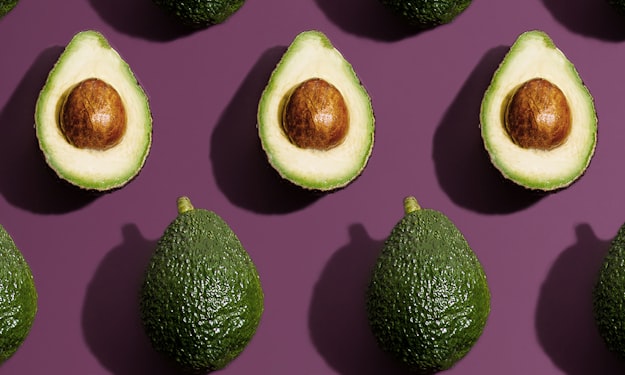
Millennial woman loves avocados: sounds like a headline from the Onion. But I really, really do love them. I didn’t eat avocados every day, but on the days when I didn’t, they were sitting in my fruit bowl waiting to ripen. Just thinking of them makes my mouth water; the buttery taste, the squishy green flesh, the creamy splendour of the really good ones. And yet, despite what could perhaps be described as an obsession with the little green beauty, last year I concluded that I have to give them up. Yes, with a very heavy heart, I cancelled avocados.
By Jenifer Nim5 years ago in Earth
Broken Heart Balloon
When you live half of your life on a sailboat, you develop a healthy respect for nature and climate. In 2014, it was the coldest winter in 200 years. The Great Lakes froze almost entirely over. That's the year my partner decided to start living on his boat at a dock on Lake Ontario. While he had it set up to be cozy inside, it became clear that climate change was happening around us, and we needed to pay attention. The following year I helped moved the boat down the Erie Canal system, into the Hudson River, and out on the ocean. We later continued our travels on the Inter Coastal Waterway to West Palm Beach, Florida.
By Mary Haynes5 years ago in Earth
Our Oceans and Landfills Are Under Attack
Earth's oceans protect our sacred atmosphere. The five major and secondary layers of the atmosphere start from the closest to Earth to the highest of our climate, where space rockets cannot reach. The Troposphere is nearest to Earth that outspreads 7.5 miles, which support photosynthesis for plants and animals' respiratory system. The next layer is Stratosphere, which is the ozone layer that guards species from the Sun's ultraviolet radiation and extends 7.5-31 miles. The atmospheric layer that expands 31-50 miles beyond Earth is Mesosphere. Noctilucent clouds within the Mesosphere are created by water vapor and are the last layer of clouds that the human eye can see; moreover, meteors collapse in this layer. Sedentary from 50-440 miles above Earth's surface is the Thermosphere layer. Within the Thermosphere, temperatures rise in elevation because of the minimal molecular habitat. The furthest layer from Earth, Exosphere, ranging from 440-6,200 miles is comprised with low density molecules, and as a result, particles outpour into space.
By Danny Recht5 years ago in Earth
Paving the Way
Paving the Way In 2018 alone there was almost 36,000 tons of plastic produced in the United States alone, of that 3000 tons were recycled and 27000 tons went to the landfill. Almost inevitably that plastic that goes to the landfill ends up in our rivers, our lakes, and our oceans. It is in the air we breathe and the water we drink it is poison and even though almost every expert will tell you that using plastic is bad for you and the wrong kind of exposure can cause cancer and get you seriously ill, we will not do anything about it. We choose to ignore it and hope it will one day just magically fix itself, the rivers and oceans will become magickly free of this toxin, and the world will be a better place. Unfortunately, the truth is, plastic is not going anywhere, people refuse to see it or see its harms not only to us but to every living being on this planet. I honestly do not know how to fix that. I wish I did. We do our part and do our best not to buy single-use plastics, not use plastic garbage bags or the little produce plastic bags in the grocery store but frankly, that’s hardly going to male any kind of significant change or affect the overall pollution factor in our country and the world. So what can we do?
By Tony Blankenship5 years ago in Earth
Making Waves
I am one of those people born in the early 1960’s. Life sure seemed a lot simpler back then and I believe we had a greater appreciation for the things we had. We had not yet become a “throw it away” society, but that was on the horizon as technology and knowledge advanced us as human beings.
By Christine McPherson5 years ago in Earth
“That’s Just The Wave”
“The number one contributor to climate change is greed.” - CC There is an inversion to every aspect of life. Represented by the yin and yang. The wave that divides the Light from the Dark of the ancient Chinese symbol, is balance. Like all things in life the inanimate symbol is a concept of dynamics. That wave of division, the balance presents the solutions to the push and pull mechanics between the contrasting effects between the Light and the Dark.
By Ciaran Clay5 years ago in Earth
Our Oceans, Our Lives
The earth's oceans are the largest carbon sink on the planet, storing some 93 percent of all greenhouse gases and 30 percent of carbon dioxide. Due to increased human activity and acidification, our oceans and much of the sealife the oceans support are struggling to survive.
By Michael Trigg5 years ago in Earth