Climate
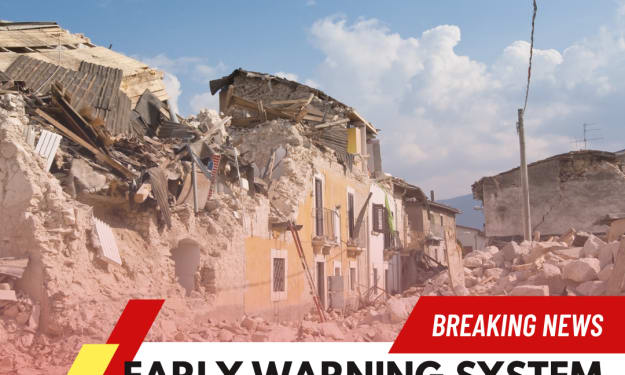
Shaking Up Disaster Response: The Power of Early Warning Systems in Earthquake Mitigation
Earthquakes are a constant threat to many communities around the world, with the potential to cause widespread destruction and loss of life. In recent years, there has been a growing recognition of the role that technology can play in improving earthquake response and mitigation efforts. One important area of focus has been the development of early warning systems, which can provide advance notice of an incoming earthquake and allow communities to take protective measures. In this blog post, we will explore the role of technology in earthquake response and mitigation, with a particular focus on the importance of early warning systems. We will discuss the different types of early warning systems that are currently in use or under development, as well as their advantages and limitations. Finally, we will offer some analysis on the future of early warning systems and how they might evolve in the years to come.
By Muhammad Rafee3 years ago in Earth
From Bakelite to Bioplastics
Introduction Plastic is an ubiquitous material in our modern world, used in everything from packaging to household items, from clothing to electronics. However, plastic's history is relatively short, spanning just over a century. This article will provide a brief history of plastic, from the invention of Bakelite to the development of bioplastics.
By Keerthana Thirumalairaj3 years ago in Earth
Dangers of EMFs radiation from your phone
EMF radiation defense stickers for phones are becoming increasingly popular as people become more aware of the potential dangers of electromagnetic radiation emitted by electronic devices. These stickers are small adhesive strips that you can place on the back of your phone to help protect you from EMF radiation.
By Buhle Khuzwayo3 years ago in Earth
"The Future of Birds in 2040: The Impact of High Frequency Towers on Bird Populations"
Introduction Birds are an integral part of our ecosystem. They play a critical role in pollination, seed dispersal, and insect control. But in recent years, there has been a growing concern about the impact of high frequency towers on birds. These towers emit electromagnetic radiation that may disrupt the migratory patterns of birds and cause long-term damage to their health. As we approach the year 2040, the number of high frequency towers is expected to increase significantly. In this blog, we will explore the future of birds due to the proliferation of high frequency towers in 2040.
By Malik Idrees3 years ago in Earth
Turkey-Magnitude Earthquake Could hit Uttarakhand
Uttarakhand is located in the foothills of the Himalayas and is surrounded by mountainous terrain, which makes it susceptible to landslides and other geohazards. The region lies in a zone of high seismicity, which means that it is vulnerable to earthquakes. The Himalayas are formed due to the collision of the Indian and Eurasian plates, which has resulted in a highly active tectonic regime. The Indian Plate is moving northward and is being forced beneath the Eurasian Plate, leading to the formation of the Himalayas and frequent seismic activity.
By Mandeep Sokhal3 years ago in Earth
Are Solar Panels Worth It
Solar energy is becoming increasingly popular as a sustainable and cost-effective way to power homes and businesses. Solar panels are a common method of harnessing this energy, but many people still wonder if the cost of installing solar panels is worth it in the short term and long term. In this article, we will explore the benefits and negatives of solar panels, provide examples of their use, and discuss their average cost in US dollars.
By Wayne Hoyte3 years ago in Earth