Climate
The Benefits of Community Gardens for Local Food Systems and Sustainability
Community gardens are vibrant hubs where individuals come together to cultivate and nurture plants, sharing the joys of gardening and reaping the benefits of fresh, locally grown produce. Beyond their aesthetic appeal, community gardens play a vital role in promoting sustainable and resilient local food systems. In this article, we will explore the numerous benefits of community gardens, from enhancing food security and fostering community connections to promoting environmental sustainability and improving public health.
By Gokhan Polard3 years ago in Earth
The Pros and Cons of Nuclear Energy as a Solution to Climate Change
As the world faces the urgent need to address climate change, the search for clean and sustainable energy sources becomes paramount. Nuclear energy has emerged as a potential solution, touted for its low greenhouse gas emissions and ability to generate large amounts of electricity. However, it also raises concerns regarding safety, waste management, and the potential for nuclear accidents. In this article, we will explore the pros and cons of nuclear energy as a solution to climate change, weighing its benefits against the associated risks and challenges.
By Gokhan Polard3 years ago in Earth
The World’s Most Grueling Race Journeys 1,000 Miles Down the Yukon
It’s not clear who first discovered the gold. Even that word “discovered” is a misnomer. The local Tlingit and Tagish tribes were both well aware of its presence along the river decades before Westerners started drawing it from the ground; they’d simply had no use for the stuff. Perhaps it’s better to say it’s not clear who first exploited the gold—who helped inspire some 100,000 prospectors to make the arduous trip to the Yukon Territory in northwest Canada, a migration that became known as the Klondike Gold Rush.
By Mark Xavier3 years ago in Earth
Early Apes Lived on Savannahs, Not in Forests
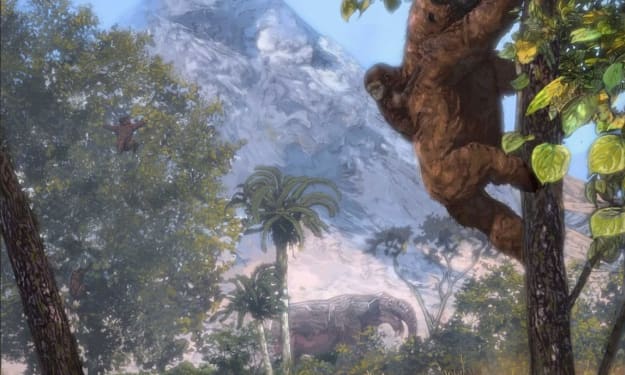
Apes were supposed to be tied to the trees. Around 21 million years ago, during a time paleontologists know as the Miocene, what’s now Uganda was thought to be a lush, humid forest where early apes clambered over canopy branches in search of fruit. But a pair of new studies have overturned the established view, changing the setting in which paleontologists think the first apes evolved.
By Mark Xavier3 years ago in Earth
‘Hard to be homeless in this heat’: India’s brutal summer is here
New Delhi, India- India has started experiencing what could be another extremely hot summer, similar to last year when the country saw a devastating heatwave that led to widespread human suffering and affected workplaces, informal workers, landless labourers, marginalised communities, agriculture, and the overall economy.
By Mark Xavier3 years ago in Earth
Discover the Astonishing "Door to Hell": Enormous Desert Abyss Engulfed in Flames for Four Decades
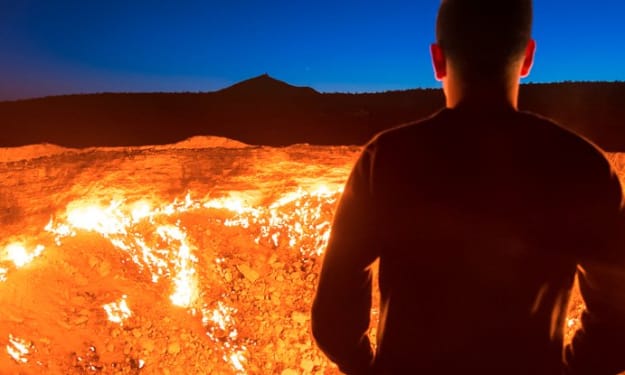
Greetings, everyone! Today, I want to share an extraordinary tale that revolves around a remarkable natural phenomenon known as the "Door to Hell." This colossal hole, located in a desert region, has been engulfed in relentless flames for over 40 years, defying all odds and expectations.
By Mark Albert Navacilla (Mark)3 years ago in Earth
Climate Change:
Climate change is one of the most significant challenges facing our planet today. As the Earth's climate patterns undergo substantial shifts, it is essential to separate fact from fiction and gain a comprehensive understanding of the science behind climate change. In this article, we will explore common misconceptions, delve into the causes of climate change, and examine its potential consequences. By dispelling myths and promoting scientific literacy, we can take meaningful action to mitigate climate change's impact on our planet and future generations.
By Batholomew Okeke 3 years ago in Earth
Climate Change:
Climate change is one of the most significant challenges facing our planet today. As the Earth's climate patterns undergo substantial shifts, it is essential to separate fact from fiction and gain a comprehensive understanding of the science behind climate change. In this article, we will explore common misconceptions, delve into the causes of climate change, and examine its potential consequences. By dispelling myths and promoting scientific literacy, we can take meaningful action to mitigate climate change's impact on our planet and future generations.
By Batholomew Okeke 3 years ago in Earth
PAKISTAN
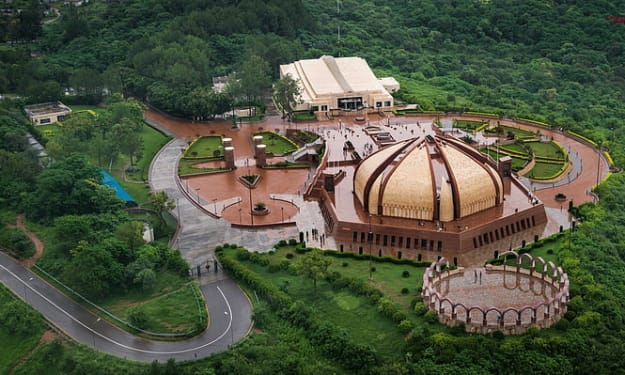
Once upon a time, in the heart of South Asia, there was a land of enchantment and beauty called Pakistan. Nestled between the towering peaks of the Himalayas and the serene Arabian Sea, this magical country was blessed with a diverse landscape that left visitors in awe.
By TAHA HUSSAIN3 years ago in Earth
Timberline Vegetation on Mountains
Introduction of transition of forest into treeless tundra: Sometimes you observe a forest suddenly turns into a treeless tundra on the top of the mountain slope. This change seems a totally unrealistic. But it happens. About a ten meters distance from the normal forest, the tress starts disappearing and converts into a small herbs, grasses and stemless plants. This action of typical transition is known as upper timberline or a tree line. That separates a tree area from the rest of the treeless area. Sometimes we notice another area called lower timberline. This is the area where the forest turns into a desert. No traces of tree life. This happens due to the lack of moisture in that area.
By Fatima Jamil3 years ago in Earth
BETWEEN ADAM'S CREATION AND FALL—WAS IT LONG?
The timing of Adam and Eve's fall from grace is not explicitly mentioned in any biblical text, leaving us with no precise indication of how long after their creation it occurred. However, a closer examination of the events surrounding the fall suggests that it likely happened shortly after their creation.
By Dreamson Shylla3 years ago in Earth