Advocacy
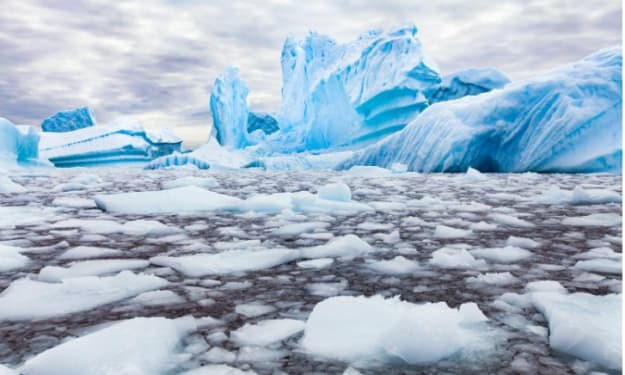
Rethinking the "Doomsday Glacier": Researchers Question Alarming Predictions of Antarctic Ice Collapse
Positive news concerning Earth's climate has been scarce in recent years due to the prevalence of frightening occurrences such as strong heat waves, destructive floods, powerful hurricanes, and blazing wildfires.
By Francis Damiabout a year ago in Earth
The Unbearable Heat
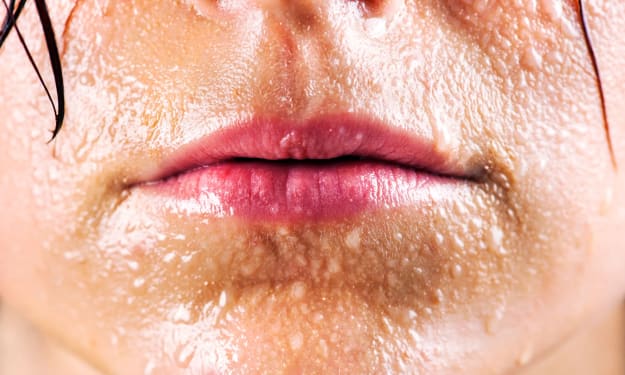
Elena paced the small living room of her apartment, the air thick with heat. It was mid-August, and the city was sweltering under a relentless heatwave. The thermostat read 88°F, but it felt much hotter, the humidity adding a stifling weight to the air. Elena had always been a fighter, juggling multiple jobs to support her young son, Leo. But today, the heat felt like an insurmountable challenge. Leo was curled up on the couch, his face flushed and damp. At just eight years old, he was already a sensitive soul, and the oppressive heat made him irritable and uncomfortable. Elena had done everything she could to keep him cool—she’d set up a fan in front of the open window, kept the blinds drawn, and ensured he drank plenty of water. But the apartment was old, with poor insulation and no air conditioning. It felt like an oven, and Elena’s efforts seemed futile against the scorching temperatures. She glanced at the stack of bills on the kitchen counter. The electricity bill was due, and it was already higher than usual due to her trying to cool the apartment. Elena had been forced to make tough choices, cutting back on essentials like groceries to manage the extra costs. Her paycheck, stretched thin from her two part-time jobs, barely covered the basics. The thought of having to choose between paying the rent and keeping her son safe was a constant source of stress. Elena's concern for Leo's well-being was compounded by her own health. She had a history of asthma, and the heat made her breathing difficult. She tried to keep her condition in check with her inhaler, but the constant struggle to stay cool took its toll. The thought of being unable to care for Leo properly while managing her own health was deeply distressing. As the sun dipped lower in the sky, the heat showed no signs of letting up. Elena sat down next to Leo, brushing the sweat from his forehead. He looked up at her with tired, big eyes and whispered, “Mom, is it going to be this hot forever. Elena’s heart ached at his question. She had always promised to protect him from hardship, but right now, she felt powerless. She forced a reassuring smile and said, “No, honey. It won’t last forever. We just have to hang in there a little longer.” Later that evening, Elena went outside to grab some ice from the local corner store, a small luxury she hoped would help. As she walked, she saw her neighbors in similar straits, sweating and trying to stay cool. There was a shared sense of struggle in the air, and for a moment, Elena felt a glimmer of solidarity with her community. When she returned, she put the ice in a basin of water and used it to cool Leo’s feet, hoping to bring him some relief. They sat together, playing cards by the dim light of a single lamp, making the best of their situation. Despite the heat and discomfort, they managed to share a few laughs, and Elena’s heart warmed at the sight of Leo’s smile. But as she lay down to sleep that night, the heat was unbearable. Elena tossed and turned, drenched in sweat, her mind racing with worries about the coming days. The oppressive heat was more than just uncomfortable; it was a constant reminder of her vulnerabilities and the challenges she faced. In the dark, Elena made a silent promise to herself and to Leo. She vowed to keep fighting, to find ways to protect him, and to keep moving forward despite the overwhelming odds. She knew that this heatwave would pass, but the experience had underscored her vulnerability and the need for broader support systems. The next morning, a brief cool front brought a welcome relief, and the temperatures dropped slightly. Elena took a deep breath, grateful for the break, and hoped it was a sign of better days ahead. She knew there would be more challenges, but for now, she focused on taking care of her son and finding strength in the small victories, knowing that, in the end, their resilience would see them through. Elena's experience during the heatwave was a poignant reminder of the daily struggles faced by many, balancing health, finances, and the well-being of loved ones under extreme conditions. Her story illustrated the emotional and practical difficulties of coping with extreme heat and the powerful determination of a mother striving to keep her family safe and secure.
By Excellent Amechiabout a year ago in Earth
AGENDA 21: A Guide To Ensure Global Sustainable Living
Agenda 21, a comprehensive action plan adopted by the United Nations in 1992 during the Earth Summit in Rio de Janeiro, represents a global blueprint for achieving sustainable development. Its primary objective is to promote environmental sustainability while improving the quality of life for current and future generations. This article will help explain the specifics of Agenda 21 and explores what its principles could mean for residents of the United States.
By ernest womackabout a year ago in Earth
The Hidden Cost
In a small coastal town, nestled between the forest and the sea, lived a young environmental scientist named Elena. She had dedicated her life to studying the impacts of climate change, focusing on the well-known issues of rising sea levels and melting polar ice caps. But as she delved deeper into her research, she began to uncover a series of environmental realities that few talked about—truths that, while not as headline-grabbing, were just as critical.
By Kingsley Egekeabout a year ago in Earth
The origin story of a new superhero or supervillain.
In the clamoring city of Verenthia, a splendid researcher named Dr. Elara Voss devoted her life to concentrating on the universe. Her energy was powered by the baffling vanishing of her dad, a space traveler lost during a mission to investigate a far off dark opening. One pivotal evening, while at the same time exploring different avenues regarding a model energy gadget intended to bridle infinite energy, an oddity mishap happened. A flood of force wrapped her, consolidating her embodiment with the actual texture of room time.
By Work Rahatabout a year ago in Earth
Frozen Heart, Melting Fast: The Devastating Reality in Switzerland. Content Warning.
Introduction: Switzerland, which has a reputation for its picturesque Alps, is today facing an unprecedented environmental crisis as its glaciers are melting at an alarming rate. The country's glaciers, which cover about 1% of its land area, are an important source of freshwater, hydroelectricity and tourism revenue. However, due to rising temperatures and changing rainfall patterns, these glaciers have declined by 30% since the 1950s.
By umar khalidabout a year ago in Earth
**Whispers of the Earth: A Tale of Hope and Resilience in a Changing Climate**. Content Warning.
Amid the shifting tides of a world unraveling, there was a small village nestled in the embrace of a verdant valley. This village, named Veridia, had long been a sanctuary where people lived in harmony with the land. The fields were lush with crops, the rivers clear and flowing, and the forests teemed with wildlife. But beneath this tranquil surface, whispers of change had begun to stir. The land was speaking, but few knew how to listen.
By Akinyemi Oluwayemisiabout a year ago in Earth
The three strangest border on earth
Intro - I want to show you three borders that are very peculiar. Here they are. (dramatic music) One, two and three. And not just because they look weird on a map, but because of how they look in real life. (dramatic music) Us map nerds love looking at things that look weird on a map. Like this town that is cut up by a bunch of Dutch and Belgian enclaves. Looks really weird on a map, but in reality, the people living here aren't deeply affected right now by these strange borders. I'm interested in borders that look interesting on a map and that are connected to real world things, real people. There are a lot of these out there, trust me, but there are three in particular that I want to talk about today. Three borders that blow my mind and that help us learn about how far countries will go to control land and water, so let's do this. - [Announcer] ISIS continues to lose ground in Syria. - [Reporter] Artificial islands under construction could become military bases. - [Australian Reporter] Deal reached makes the US the only Western country to recognize Moroccan sovereignty over Western Sahara. (dramatic music) Morocco - [Johnny] The first border is the Moroccan Berm Wall. Morocco is this country in Northern Africa that claims all of this land, but if you look at Google Maps, you'll see this dashed line and that there's another country underneath it that isn't Morocco, it's Western Sahara. This dash line is not the border I want to talk about, but let me explain. The line is dashed because Morocco doesn't want all of this to be a country, doesn't want these people to have independence. Morocco thinks it's theirs, so since 1975 when Spain left this land, Morocco has been fighting to keep the people down here from controlling the land. They took this pretty far. In the 1980s, when they got out the bulldozers and started building a wall, and after a decade of digging, they created the border that I want to talk about. This is what it looks like on a map. - [Reporter] You know Morocco's-- - [Annoucer] Build a wall-- - [Reporter] To 1700 mile Berm in occupied Western Sahara. - [Johnny] It is a nearly 3000 kilometer wall of sand and dirt. I mean, that's a huge, huge wall. This wall is meant to keep the local people who want Western Sahara to be a free and independent country on this side of the line and allows Morocco to occupy the other 80% of what would be Western Sahara, and that 80%, by the way, is the more resource rich part of the country, and it is not just a wall. It is a bunch of Moroccan troops who load it up with weaponry, radar, and underground bunkers. Oh, and landmines. Tons and tons of landmines. (dramatic music) This is widely accepted as the longest landmine field on earth. (dramatic music) When I was in Morocco, I learned that it is literally illegal to show a map that contains this border or anything that is not this. Many countries don't recognize Morocco's claim to all of this land. In fact, the United States didn't recognize the claim until last year when the Trump administration said that they would recognize it in exchange for Morocco becoming friends with Israel again. Sort of a weird love triangle. It's just, it's so weird how this stuff works. It's like, you're not real, but if you like my friend, you're real now. Meanwhile, the people who live here in this little strip, they run their own country, but it's under the militant eye of the Moroccan military who patrol this wall to keep them out of the rest of their country. These locals have been in a decades long struggle to fight for the day when they can break down this sand barrier and actually build their own country. But the powers that be aren't letting that happen anytime soon. Syria Okay, okay, so that is the Moroccan Berm Wall, 3000 kilometers of sand and dirt. Crazy. Next up, let's go over to Syria. (dramatic music) Sometimes borders can embody history, religion, energy, dictators, and modern day guerrilla warfare all in one, and that's what's happening over here in Syria. (dramatic music) Okay, wait, before we get into this, we need to pause and I need to thank today's sponsor who allows me to make these videos. Thank you NordVPN for sponsoring this video. Okay, so if you don't know what a VPN is, it is a thing that allows you to connect to a secure server sometimes outside of your country so that you can browse the internet anonymously and securely and from whatever country you want. I use this all of the time, especially when I'm traveling. NordVPN is like an industry leader in the VPN space. They have a very good product that allows you to go in, choose the country you want to connect from, and quickly have a secure, anonymous connection to the internet. You can connect up to six devices and on every major platform, Windows, Android, iOS, Mac, Linux, et cetera. You could even do this on like an Android TV. I use Nord VPN for two reasons. Number one is because when I'm traveling, I'm often connecting to a wifi router inside of like a coffee shop or like a public area. With a VPN, you can do this more securely, and when I'm traveling my computer kind of freaks out and thinks that like, I'm someone else so I get kicked out of my Gmail, I can't watch like the Netflix shows I'm used to. With NordVPN, I can just connect to an American server, and now, as far as my computer knows, I'm still in the US. I have access to all my favorite content. I can choose from over 5,000 servers in 60 different countries and all of this is lightning fast so you don't notice any difference. It is an incredibly helpful service. You don't have to take my word for it. There's a link in my description. When you go click that link, you will get a really good price on a two year plan that you can get your money back if you don't like after 30 days. Plus this comes with a huge discount, so that link is in my description. It is NordVPN.com/JohnnyHarris. Thank you NordVPN for sponsoring my video and my channel and allowing me to do this work. We are now ready to get back to the maps. Let's go to Syria. (dramatic music) Okay, so we're in this part of the world, the Middle East. We have Syria, and up here, you have Turkey. There's this one really famous guy in Turkey. He was like the grandpa of the guy who started Turkey's big empire the Ottoman Empire. Anyway, this guy may or may not have died by drowning in the Euphrates river, like right here, and so to honor him, they decided to bury him right on the banks of the Euphrates River, right here on this like really famous hill. Sort of seems like an interesting decision to bury the person like right on the banks of the river that killed them. Anyway, not my decision. They buried him on this famous hill, and this again was like a long time ago. This was back when this region was just one big empire, it was Turkey's big Ottoman Empire. But of course the Europeans wouldn't let this last for long, so they show up in the early 1900s and they cut this region up. Like they literally like divvy it up, it's like you Britain, you get this part, France, you get this part, Russia, you get this little bit up here, Italy, you get this bit over here. Like they just like cut the lines up. It's just, it's madness, and eventually France took their little plot of the Middle East, and like, these are now two countries. We have Turkey up here and we have Syria down here, and they drew this line separating these two countries. "Wait, wait, wait," said the new Turkey, "The tomb of our really important guy is like now in the new Syria," and France was like, we're not going to redraw the line so like Turkey, you can control this little circle of land where the tomb is. That little bit of land is officially Turkey, but we're not going to redraw the whole line. Turkey was like, sweet, that works. So it's the 1920s and Turkey looks like this, plus this little tiny dot in Syria where the tomb of Suleyman is, and like Turkish guards could be there and guard the tomb, and it was fine. Fast forward 50 years and things are going fine at the tomb. Syria is now run by this dictator, and he's like, Hey, we want to build a dam right here on the Euphrates. You know, hydro electricity. But then Turkey freaks out because all they see in all of this is a dam that is going to fill this whole valley full of water, this valley where the hill is where their guy is buried is gonna be underwater soon and their special grave could soon be totally destroyed. So what did they do? They move the grave. Meaning they move their little bit of sovereignty from right here all the way up here, 85 kilometers north, still inside Syria. Why didn't they just move it into Turkey? So this border, this little conclave of Turkey just moved up. Okay, so now it has a new location. It doesn't stop there, so the dam is built, the tomb is safe, there is now a lake called Lake Assad after the dictator. Fast forward another half century, and now the dictator's son is in power, and guess what's happening in Syria? - The Islamic state Now controls more than half of Syrian territory. This morning that includes some of the most important cultural treasures. - The ISIS fighters has now entered the archeological ruins. - We're talking the capital of ISIS. - ISIS took over a lot of Syria in 2014 and 2015, including where the new Turkish tomb was, where this little speck of Turkey was, and if you don't know anything about ISIS, you should know that in addition to being awful in every way, they also love to destroy sacred old things. - This morning ISIS claimed to have destroyed priceless pieces of history. - [Reporter] What they didn't blow up with explosives, they literally tore apart by hand. - So Turkey is freaking out now. They're like, dude, ISIS is going to destroy the tomb, so they moved it again. This time, right up to the Turkish border, still in Syria though, but like within a few hundred meters of the border. So now you have Turkey, Syria, and a little bit of Turkey in Syria. There's this clip of the prime minister of Turkey visiting the newly moved tomb. He prays to it and then as he walks out, you get a little reminder that this dot on the map is still a border. It still has borders. These fences separate this prime minister from Turkish sovereign territory on one side, and then a fence, and then Syria, where all these kids are. No, but seriously, like why didn't they move it into Turkey? Like if you're going to move it all that way for the second time, like, just move the thing into Turkey where it's not surrounded by a country that is devolving into a civil war. You know what I think it is? I think it's that Turkey is like one of the few big, powerful countries that doesn't have an exclave meaning a little island of themselves in a different country. I think they literally just want to be like, oh yeah, we have one of those. Like, we've got one of those weird things on the map. It's 200 meters off our border, but like, we have it. We can move it whenever we want, but whatever. That is how this sacred site exclave border thing moved around, and eventually it's supposed to move back to its second location, but the details are fuzzy on how that's going to happen. Okay, so that's Turkey and Syria, let's go to our final border, which has to do with the ocean. South China Sea (dramatic music) - [Reporter] China's military buildup has angered the Obama administration. - [Johnny] So we're over here in Southeast Asia, just under China. This body of water, the South China sea. This place is home to vital trade routes, tons of oil and gas, tons of fish, strategic military posts. I mean, this sea has it all, which is why everybody wants it. Look at all of these lines. These are the claims from all of these different countries on the South China sea. It's like a total nightmare, right? Okay, okay, hold on. Let's unpack all of these. First let's remember that every country that borders an ocean gets 200 nautical miles into the ocean to be their economic waters, where they can fish and mine and whatever. That's their economic waters. So that's how you get a lot of these borders. So like Vietnam by default can have all of this water. It's their exclusive economic zone, their EEZ. Malaysia's looks like this, and if you're going to claim any more water than this default EEZ, you sort of have to like justify yourself. You have to be like, we claim more than our EEZ because X, Y, and Z. So yeah, it's looking a little bit messy, but then wait till China, the big dog in the neighborhood, swoops in and says the UN, Shmoo-N, I'm not into the UN and whatever. We've been here for like 5,000 years on these waters. Our claim to this ocean is this. Like, they literally didn't do any sort of scientific claim here. It was literally guy with map draws a dashed line through 90% of the South China sea, and is like, this is China's. And everyone's like, whoa, how, how does that make sense? And they're like, 'cause we're freaking China. And everyone's like, okay? And that is how you get this, a total mess of lines, and it's not just in the water. There are islands down here. Like this set of islands down here is claimed by like five countries. So yeah, there's international law for this stuff, but in reality, it's a total free for all, and guess who's winning in the free for all. You guessed it. Chinas Plan (dramatic music) China's not waiting for a diplomatic solution here. What they do instead is just like show up to these islands and build military bases and landing strips, but then there's big parts of this body of water that have no islands so what does China do? They show up and dig up a bunch of sand from under the ocean and build islands and then build military bases and landing strips. Like, look at these boats. These boats are making islands. They've created 1300 acres worth of new land in the South China Sea. - [Announcer] Overall China is adding to its islands at the rate of at least three and a half acres a day. - And they populate it with military assets. Okay so that's what it looks like on a map. It's wild. So as always, we have the lines on the map that look a certain way, but then the facts on the ground often say something totally different. This whole sea is controlled by China. In addition to building islands, they also will chase down fishermen from like the Philippines and Vietnam who are fishing in their own waters, totally legal, and they will show up and just attack them. They'll capture them, they'll intimidate them, and they'll make sure that they know who's boss, and no one can really do anything about it. So all these lines can look all complicated, but in reality, it's pretty simple what it should look like.
By Jariatu Kallonabout a year ago in Earth
Sustainable Living
In moment's world, where environmental challenges are enhancing, the conception of sustainable living has come decreasingly pivotal. Sustainable living focuses on reducing our environmental footmark, making it not just a choice, but a necessary step toward a more flexible future. As we grapple with issues like climate change, resource reduction, and pollution, new and innovative results are arising to help us move towards a more sustainable and greener hereafter.
By Joseph Balamiabout a year ago in Earth