Advocacy
Benefits Of Camping
In Part 1, I explained how campers are a benefit to our environment because they help to Keep Nature Natural. In Part 2, we will see how campers continue to help the environment by Reducing, Reusing, & Recycling, not only at camp but in their everyday lives.
By Taufik Olu3 years ago in Earth
THE RATIONAL MORAL STATUS OF NON
The survival of the human being, which is known as a being of consciousness depends in the healthy interaction and interrelation of variety of living and non-living organisms, empirical and supra-empirical realities in the Universe. These interactions calls for a unified coexistence of these realities. Hence, in some degree, the human person feels he has no direct moral obligations to non-rational, non-human nature, only rational beings are worth of moral considerability as Kant affirms. This will be argued as an excessively anthropocentric, and excludes the non-human natural world from the sphere of moral considerability. Conceding to the fact that non- human nature is instrumentally valuable to some extent, to some inevitable existential, ontological consideration.
By Rachel Caspari3 years ago in Earth
How scientists predict famine before it hits
For several weeks back in 2018, Yadira Martínez González suddenly had to feed 15 additional mouths. Her husband's relatives, who had emigrated from Colombia to Venezuela decades ago, returned as part of an exodus of millions leaving a crumbling country.
By Gu Wei Di Qi3 years ago in Earth
The genetic power of ancient trees
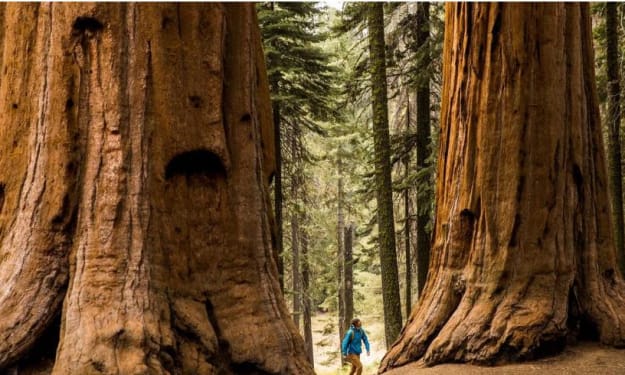
In 2005, several of the centuries-old ponderosa pine trees on my 15 acres (0.06 sq km) of forest in the northern Rocky Mountains in Montana suddenly died. I soon discovered they were being brought down by mountain pine beetles, pernicious killers the size of the eraser on a pencil that burrow into the tree.
By Gu Wei Di Qi3 years ago in Earth
How to store data for 1,000 years
"You know you're a nerd when you store DNA in your fridge." At her home in Paris, Dina Zielinski, a senior scientist in human genomics at the French National Institute of Health and Medical Research, holds up a tiny vial to her laptop camera for me to see on our video call. It's hard to make out, but she tells me that I should be able to see a mostly clear, light film on the bottom of the vial – this is the DNA.
By Gu Wei Di Qi3 years ago in Earth
The school that created a city for the blind
At the age of eight, Leon Portz was gradually losing his eyesight due to a congenital condition when he was given his first computer. By the age of nine, he had figured out how to speed up the machine-generated voice that read out websites and other electronic texts, allowing him to grasp the information faster. He now listens to texts at five times the standard speed, which is unintelligible to an untrained ear.
By Turnell Feliu3 years ago in Earth