Advocacy
10 Strangest Defense Mechanisms In Nature
10. Flying Fish Click Here for your $750 PayPal Gift Card!! Although many organisms possess the ability to fly, fish are typically not thought to possess this trait. Fish that can fly can leap out of the water and travel great distances by flying or gliding. This is a defensive strategy to get away from predators. The flying fish's body is streamlined and torpedo-shaped, which aids in its ability to gather enough energy to break through the water's surface. The fish can swim as fast as 37 miles per hour (60 kilometers per hour) in order to escape the sea. The pectoral fins of fish have evolved into sizable wings that enable flight. When it emerges from the water, it can soar up to 656 feet (200 meters),using the fin on its tail as a kind of propeller. A flying fish was seen gliding for a record-breaking 45 seconds in 2008 in Japan.
By Ahmed Noer3 years ago in Earth
Approaches to Social Change
There are two very common approaches to social change bottom-up and top-down. The biggest difference between the two is who starts the programs. Top-down programs have experts, professionals, or elite citizens who form the programs with the best intentions but never really truly understanding just what needs to be done due to a lack of firsthand experience with the intended target of change (Kloos, B., Hill, J., Thomas, E., Wandersman, A., Elias, M. J., and Dalton, J. H., 2012). Bottom-up is the opposite. Bottom-up designs start with people who have experienced or are experiencing the social problems that they seek to change and have an inside look into what needs to be done and the most effective ways to do so (Kloos et al., 2012).
By Cobe Wilson3 years ago in Earth
Sense of Community, Citizen Participation, and Empowerment
Sense of community, citizen participation, and empowerment. Three concepts that are inarguably tied together. A successful community shows signs of all three concepts. What are these concepts though? How are they defined? Well, these three concepts are important aspects if community psychology. Sense of community, as defined by Sarason (1990, as cited in Kloos et al, 2012), is the sense that you are not alone in the world. An individual receives benefits, such as a neighborhood watch or emotional support, from being a part of a community, such as a religious or geographic community.
By Cobe Wilson3 years ago in Earth
10 Common Myths and Misconceptions About Our Universe
10 Common Myths and Misconceptions About Our Universe Almost everyone was amazed at the night sky's vastness and wondered about the secrets of the final frontier. Nevertheless, certain erroneous beliefs about the world around us have been spread by films, television shows, and literature. Therefore, let's use science to dispel ten of the most widespread fallacies and false beliefs about our universe.
By Paul Smith3 years ago in Earth
Anthropocentrism vs. Ecocentrism
When looking at the environment, human beings generally take one of two major viewpoints. These two viewpoints are anthropocentrism, also known as homocentrism (Merchant, 1992; Oelschlaeger, 1991) and Ecocentrism, also known as biocentrism (Leopold, 1949) and each is different from the other.
By Cobe Wilson3 years ago in Earth
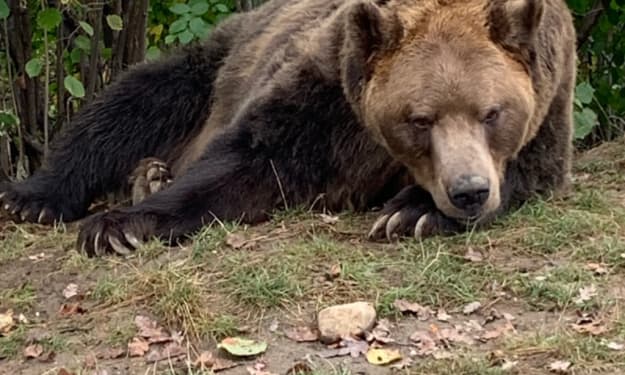
The bears of Transylvania
As the train gained speed out of the station, the architecture transformed from ancient stone walls with russet clay tiles on steep gabled rooflines to what her Austrian friend coined as brutalistic socialist architecture: Dull grey cement apartment buildings, not high enough to be called skyscrapers, but loomingly overbearing, small glass windows, rounded edges and deep overhangs at the entryways that prevent the light from getting in. The damp cold stained the structures so it looked like the buildings were weeping. The train continued to build speed and departed from the city in haste. She was on her way to Brasov, Romania in the Region of Transylvania ringed by The Carpthian Mountains.
By Sweethome Teacup3 years ago in Earth
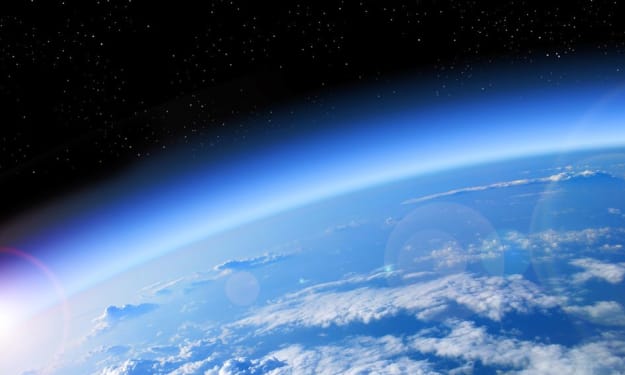
WHERE DID EARTH’S OXYGEN COME FROM? A NEW STUDY HINTS AT AN UNEXPECTED SOURCE
Our research, published in Nature Geoscience, adds a tantalizing new possibility: that at least some of the Earth’s early oxygen came from a tectonic source via the movement and destruction of the Earth’s crust.
By Maxwell Kamanika3 years ago in Earth
The Top 10 Weirdest Things in the Alps
The Top 10 Weirdest Things in the Alps The majestic and amazing European Alps are a sight to see. What's not to love about this stunning region of the world, with its gleaming white peaks, bustling ski resorts, and small and endearing alpine towns? Nevertheless, the Alps can be a really strange—and occasionally creepy—place beneath the charm and fondue. There is more to the Alps than just hiking, skiing, and natural beauty. There are oddball festivals, eerie ghost and folk tales, and horrifying tourist sites. The peculiarities are so fascinating that they just keep coming! Consequently, what are the top ten wackiest things to encounter in the Alps, and where can you find them? Let's get started and learn more!
By Paul Smith3 years ago in Earth
10 Strangest Defense Mechanisms In Nature
10 Strangest Defense Mechanisms In Nature We are all familiar with the biological concept of "fight or flight," according to which an animal would either turn its back on an aggressor or flee from one. Nature responds to these dangers in some fascinating ways. The top 10 animals (plus one extra) with the most unusual defenses are listed below.
By Paul Smith3 years ago in Earth
The Masked Naturalist
Hello! During the early days of the pandemic, I had the idea of doing a project called "The Masked Naturalist". For a little background, I have worked as naturalist and environmental educator for the past five years, working primarily in Minnesota, but also spending a lot of time on the West Coast as well as the desert Southwest. I was laid off for the first six months of 2020, which meant a lot of down time, and a lot of time to go out and explore in nature. During this time I had the idea of starting a blog, a website, or something to document cool nature things I have found, noticed, or seen as I have more of an experts eye, spotting things that others may not notice when walking through the woods. I decided this would be a good idea because I often feel like outdoor education and environmental education are sometimes considered a luxury and I think all people have interest in nature, and especially in light of fake news, climate crises world wide, and many of us left wondering what will become of our wild spaces, I would start putting out cool information. I want to do this because I would like to help cultivate peoples love of nature, and to see the extremely cool side of the mundane, the things we take for granted, the things you might walk past and not notice if you were hiking through your neighborhood woods.
By Michael Harrison3 years ago in Earth