
Sweet Harvest in the Valley of Kings
Exploring the Plum Harvest Season in Swat: Tradition, Taste, and Transformation

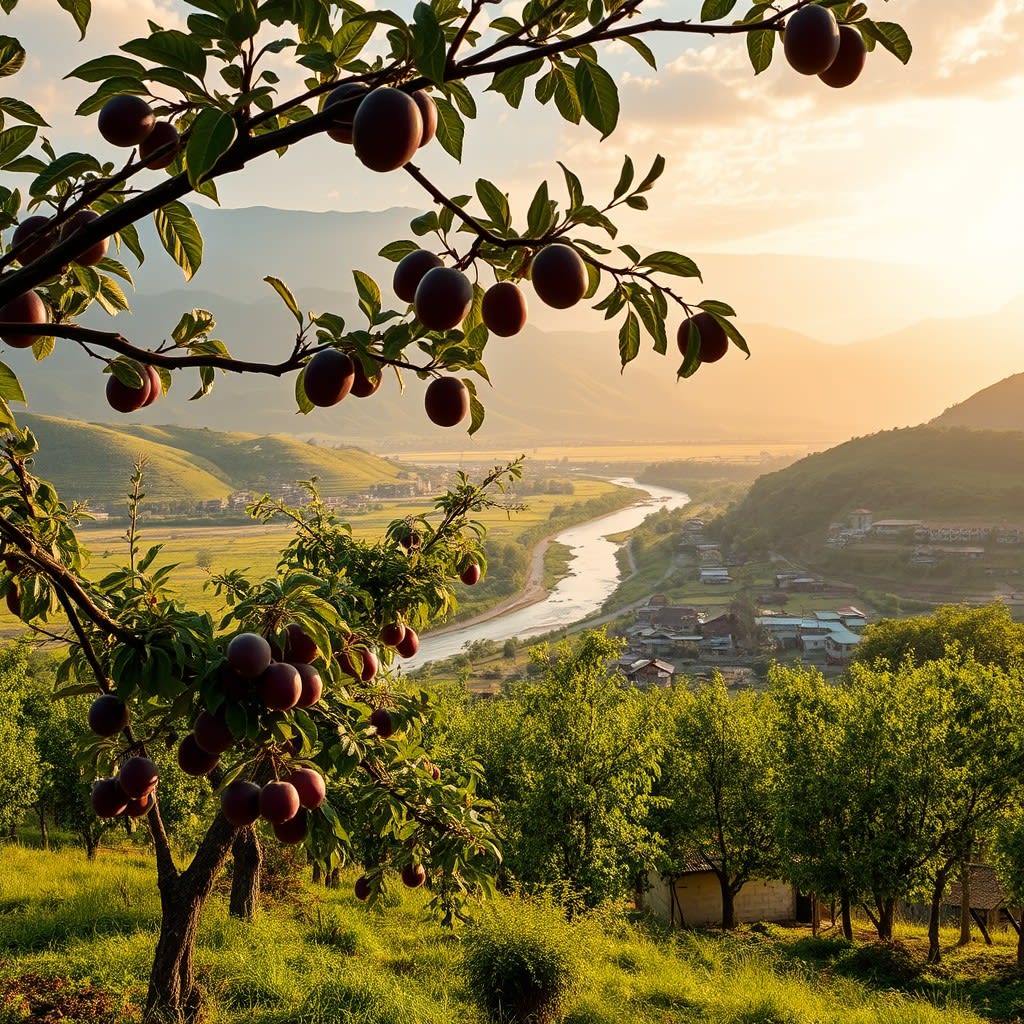
Nestled among the majestic mountains of northern Pakistan, the Swat Valley has long been celebrated for its breathtaking landscapes, rich cultural heritage, and fertile soil. Known as the "Switzerland of the East," this serene valley is home to orchards that burst into life each summer with a bounty of fruit. Among these treasures, the plum stands out—not only as a symbol of seasonal abundance but also as a lifeline for thousands of families. The plum session in Swat, which takes place from late June to early August, is more than a harvest—it's a festival of color, taste, labor, and community.
The Arrival of Plum Season
As spring fades into early summer, the Swat Valley slowly transforms. The snow retreats from mountaintops, revealing slopes of green, while the orchards—silent through winter—start to hum with anticipation. By mid-June, the plum trees, heavy with fruit, display shades of green and purple that ripple through the valley. Farmers wake earlier, markets begin to swell, and the scent of ripening plums fills the air.
Plum trees thrive in Swat’s unique geography. The blend of cool nights, warm days, and mineral-rich soil creates the perfect conditions for producing sweet, juicy fruit. The varieties grown here—most notably the Swati Aalu Bukhara—are renowned throughout Pakistan and even beyond. With their soft texture and balanced flavor, Swat plums have become a household name in fruit markets across the country.
Harvesting the Gold
The harvest is a meticulous process that requires patience, timing, and teamwork. The fruit must be picked at just the right moment—too early, and it lacks flavor; too late, and it bruises easily. The farmers, often working with family members, begin harvesting at dawn to avoid the harsh midday heat. Children, elders, and laborers all play a part.
The plum trees are climbed or gently shaken to release ripe fruit into hand-held nets or soft tarps. Every piece is examined, sorted, and carefully packed into crates. It’s a labor-intensive operation that lasts for several weeks. For many families, it is the most important economic activity of the year.
Women often play a vital, though less visible, role—sorting fruit, preparing food for the workers, and helping manage accounts. In some villages, women also take part in packing and short-distance marketing, especially when fruit is sold directly to nearby markets.
From Orchards to Markets
Once packed, the plums begin their journey. Trucks filled with crates weave their way down the narrow mountain roads to regional and national markets. The largest trading centers, such as Mingora, Fruits & Vegetable Market Swat, and Peshawar, become hubs of activity during this time. Buyers from as far as Lahore and Karachi arrive to purchase the fresh produce.
Middlemen and contractors often play a central role, buying entire orchard harvests in advance from small farmers, sometimes at low fixed prices. While this guarantees the farmer a lump sum, it can also prevent them from profiting fully from market price fluctuations. Still, for many, the system provides essential liquidity and stability.
In recent years, however, a shift has begun. With better access to transportation and digital communication, some farmers are beginning to bypass intermediaries and sell directly to urban markets or even online platforms. This is slowly increasing their share of the profits and giving them more control over their livelihoods.
Plums and the Local Economy
Swat’s plum harvest contributes significantly to the valley’s economy. According to local agricultural offices, thousands of tons of plums are produced each season, generating employment for seasonal laborers, transporters, packers, and market vendors. The income from plum sales supports families, pays for education, funds home repairs, and even contributes to wedding dowries.
Many young people who had once migrated to cities for work return home during plum season to help with the harvest. For some, it becomes a seasonal reunion and a chance to reconnect with family traditions and their ancestral land.
In areas where tourism has declined due to instability or climate impacts, fruit farming—particularly plums—has become a crucial fallback. It’s not just an economic crop; it’s a social safety net.
Cultural Significance and Celebrations
While the plum session is not marked by a formal festival, it is a time of quiet celebration. The mood in the villages is uplifted, the days are filled with work but also laughter and storytelling. After long hours in the orchards, families gather to share meals featuring local dishes made with fresh plums or dried variants.
In traditional Swati households, dried plums are used in chutneys, pickles, and desserts. Some are sun-dried and stored for winter, while others are sold as a preserved delicacy. The fruit also features in herbal medicine and traditional remedies, believed to aid digestion and cool the body during the intense summer heat.
Challenges and the Future
Despite its success, the plum industry in Swat faces challenges. Climate change has begun to affect flowering and fruiting seasons, sometimes leading to lower yields or unexpected frosts. Lack of cold storage facilities means much of the fruit must be sold quickly, often at lower prices. Furthermore, inadequate access to agricultural training and credit limits how much small farmers can invest in improving their orchards.
However, there's hope. Agricultural extension programs, NGOs, and local cooperatives are working to introduce better irrigation methods, pest control, and high-yielding varieties. Training sessions on pruning, organic farming, and direct marketing are empowering farmers to view their orchards not just as heritage but as businesses.
More recently, agri-tourism has also begun to stir interest. Some guesthouses now offer “orchard stays” during plum season, inviting visitors to experience life in the valley, participate in harvesting, and enjoy traditional meals made from the fresh produce. This blending of tourism and agriculture presents a promising path forward for a region blessed with natural beauty and cultural depth.
A Season of Sweet Rewards
As the plum season draws to a close by August, a quiet satisfaction settles over the valley. The crates are emptied, the trucks move on, and the trees rest once more. The orchards that buzzed with life will soon return to silence, waiting for another cycle. But the impact of the harvest will linger—in school fees paid, roofs repaired, debts settled, and dreams seeded for the future.
In Swat, the plum is more than a fruit. It is a symbol of resilience, renewal, and reward. It binds generations through shared labor and pride. And each year, when the plums ripen and the valley turns purple and green, the people of Swat are reminded of nature’s gift—and their own enduring spirit.
About the Creator
Keep reading
More stories from Zain Ul Abedin Khan and writers in Earth and other communities.
The Haber Process: A Scientific Revolution in Agriculture
The Haber Process, also known as the Haber-Bosch process, is one of the most significant scientific and industrial achievements in human history. It enabled the mass production of artificial fertilizer by synthesizing ammonia from atmospheric nitrogen, laying the foundation for modern agriculture and feeding billions of people. Without this process, the rapid population growth and food production of the 20th and 21st centuries would have been impossible.
By Zain Ul Abedin Khan8 months ago in Earth
The Reality of the Illusion of Time
Recently, as I strolled along the short stretch to my strength training session, I aimlessly took in the row of tatty shops and shabby buildings along the route and passed an off-street, in which one of my sisters used to live, around thirteen years ago.
By Chantal Christie Weiss4 days ago in Earth
Why Putin Went Quiet When Challenged by Trump Over Venezuela
When U.S. forces captured Venezuelan President Nicolás Maduro in early January 2026, the world was stunned. Venezuela has long been a Russian ally, yet Russian President Vladimir Putin remained almost completely silent when challenged directly by U.S. President Donald Trump. Why would a leader so often outspoken on the world stage hold back in such a dramatic moment? Let’s unpack the story and explore what it means for global politics. A Bold Move That Shocked the World On January 3, U.S. forces executed a daring operation in Venezuela, taking Maduro into custody in New York to face charges including drug trafficking and narco‑terrorism. The operation was framed by the U.S. as a step to enforce justice, but critics saw it as an extraordinary overreach of power. Venezuela is no ordinary country for Russia. Since the days of Hugo Chávez, Moscow has cultivated close ties with Caracas, offering military support, energy deals, and diplomatic backing on the global stage. Past actions included Russian bombers visiting Venezuela and high-profile defense agreements. Given this history, many expected a fiery response from Putin. Yet, the Kremlin remained calm, issuing measured statements rather than sharp threats. Why Silence Was Strategic Experts suggest there are several reasons for Putin’s muted reaction, each revealing the careful calculation behind the Kremlin’s foreign policy. 1. Focus on the War in Ukraine Russia’s primary priority remains Ukraine. Engaged in a high-stakes military and diplomatic battle, Putin cannot afford distractions or new confrontations far from home. Escalating tensions with the United States over Venezuela could jeopardize Moscow’s position in Europe. A New York Times report highlighted that Russia is “subordinating all other interests to the war in Ukraine,” suggesting that even a high-profile ally like Venezuela takes a back seat to Moscow’s strategic goals. 2. Limited Military Options While Russia’s alliance with Venezuela is longstanding, much of the support has been symbolic rather than operational. Defense systems and military cooperation exist on paper, but Russia lacks the immediate ability to counter a U.S. operation thousands of miles away. Putin may have recognized that responding aggressively would be both ineffective and costly, potentially risking military and economic consequences that Moscow cannot afford. 3. Maintaining Diplomatic Channels with Washington With Donald Trump back in the White House since 2025, there has been cautious optimism in Moscow about recalibrating U.S.–Russia relations. Avoiding a dramatic confrontation over Venezuela keeps diplomatic channels open, allowing Russia to negotiate on other high-priority issues like Ukraine and sanctions relief. In other words, silence can be a calculated strategy, signaling restraint rather than weakness. 4. Russia’s Global Influence Is Waning The Maduro episode also highlights a broader geopolitical reality: Russia’s global reach has limits. Since the 2022 invasion of Ukraine, Moscow’s influence in regions like the Middle East and parts of the former Soviet Union has weakened. Venezuela remains one of its few high-profile allies outside Europe, but even there, Russia’s power is largely symbolic. By not escalating, Putin is acknowledging a practical truth: Russia cannot be everywhere at once, and some battles are not worth fighting. 5. Choosing Battles Wisely Some analysts emphasize that Putin’s quiet response is more about strategic prioritization than capitulation. In a world dominated by nuclear powers and volatile global politics, direct confrontation with the United States over Venezuela could spiral into a far larger crisis. By staying silent, the Kremlin may be signaling that it picks its battles carefully, focusing resources on Ukraine, where the stakes are highest. What This Means for the World Putin’s silence sends several messages: Russia is currently stretched, economically and militarily. Moscow is prioritizing Ukraine over symbolic allies. Strategic restraint is sometimes more powerful than public confrontation. The limits of Russian influence are becoming more visible to the world. This episode reflects a new reality in geopolitics: power is as much about choosing when not to act as when to assert force. The Bigger Picture The capture of Maduro is a defining moment not just for Venezuela, but for global politics. It shows the United States asserting power in a way not seen for decades, while Russia’s quiet reaction underscores its current limits and priorities. For observers, Putin’s silence is a lesson in modern geopolitics: even the most assertive leaders exercise restraint when stakes are high and risks are global. In the end, the Maduro affair reminds us that in today’s world, the loudest response is not always the most effective one — sometimes, quiet calculation speaks volumes. Sources and Further Reading The US capture of Maduro reveals Russia’s weakness – Atlantic Council ‘It sends a horrible signal’: US politicians react to capture of Nicolás Maduro – The Guardian Russia slams 'neocolonial threats' against Venezuela – Reuters
By Muhammad Hassan7 days ago in Earth
The Devil's Cut
“Comrade, finally you’re awake.” The voice was smooth, sensual. A flickering incandescent bar was all that lit the white, sterile room. All Vladimir remembered was everything going black. He tried to move his arms and found them strapped to the gurney.
By Matthew J. Fromm4 days ago in Fiction



Comments (1)
The Swat Valley's plum harvest sounds amazing. I've seen how important timing is in harvesting. It's great that the whole community comes together for this seasonal bounty.