
Swallows fly to the south for winter every year, so where is the south? It's just that we're small.
Different migratory birds have different "south"

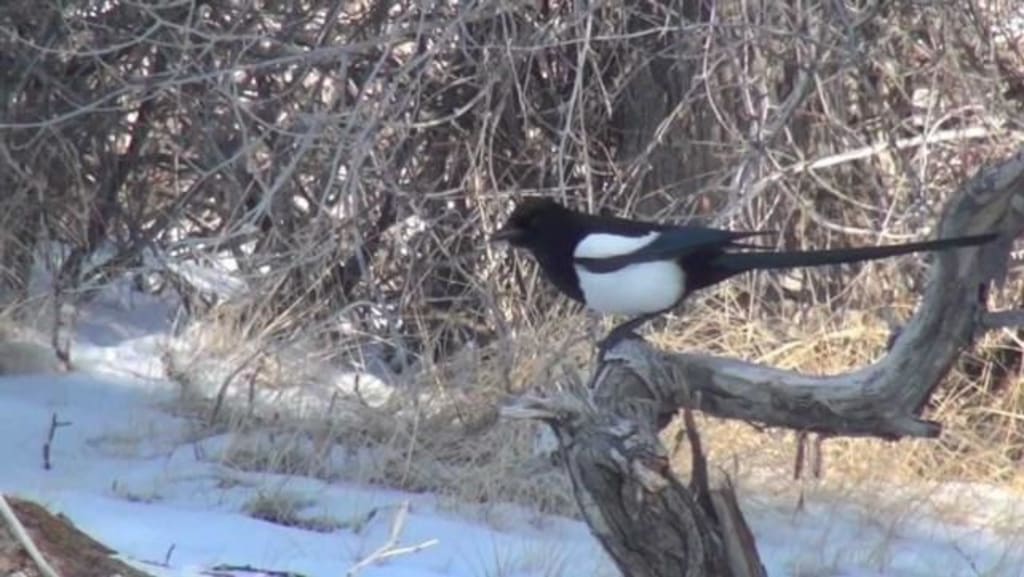
The weather is getting cooler, and many birds have already flown south to prepare for winter.
Most people know that some birds fly to the warmer South in winter, but few people know where and how far this South is.
Where is the south of the bird migration?
We often associate cold with migration, but in fact, warm-blooded animals like birds are very adaptable to cold, so they are not simply repelled by cold. The real reason is mainly food.
When the weather gets colder, some birds have less food such as insects, so they choose to migrate to an area where food is more abundant.
These seasonally migrating birds are called migratory birds. Most of the time, migratory birds have high requirements for food, and they are usually birds that completely prey on insects; the counterpart to migratory birds is resident birds, which, as the name suggests, are birds that stay in place for the winter. These birds tend to be less picky eaters.
The so-called south of the migration of migratory birds does not refer to a specific place. Different migratory birds have different "south".
The migration of some migratory birds can be very short movements, such as moving from the top of the mountain to the foot of the mountain, so the temperature will change, the biome will change accordingly, and they can eat their favorite food again.
At this time, it may not be called the south, it should be upward or downward migration.
Some migratory birds migrate in the middle distance. These birds just move a thousand kilometers to the south, and they will stop when they find an area with sufficient food. In the spring, they will continue to go north to complete their breeding career.
For migratory birds that migrate in the middle distance, their south is basically a relatively warm area, and it is not fixed. Basically, the weather continues to turn cold, and the food continues to migrate south.
What's really interesting are those migratory birds that cross continental plates and travel tens of thousands of kilometers over several months. These migratory birds we can call long-distance migration.
They migrate from areas with cold winters to tropical regions with no apparent seasonal changes, which are the south of these migratory birds.
In addition to the differences in the south, the migration of migratory birds is not achieved overnight. They basically stop and go. After reaching the destination, they will stop for a long time and then start to return.
From 2014 to 2018, a Chinese research team tracked the migration of Beijing swifts [1], and the results were unexpected.
Beijing Swift is a relatively well-known migratory bird in China, and it is also the only migratory bird named after "Beijing", but they do not only live in Beijing, but they are found in many Eurasian continents around 40° north latitude.
Beijing swifts generally start to migrate at the end of July and early August each year. From 2014 to 2018, researchers put a total of 66 migrating Beijing swifts with micro-photo-locators to track their migration routes. .
Among them, the data of 25 Swifts were recovered. These data show that Beijing Swifts did not fly directly to the south from Beijing, but first entered Mongolia in the northwest direction, then entered northern Xinjiang of my country, and then crossed the Junggar Basin in northern Xinjiang. Entering the Middle East, the journey of thousands of kilometers took them almost half a month.
In mid-August, it crossed the Red Sea and entered Africa, and went all the way south in Africa, and finally arrived at the destination - South Africa in early November. The whole flight was 14,733 kilometers and took 111 days.
All Swifts are capable of flying, but they don't fly to South Africa all the time as rumored, which can be judged by their flight time.
When Beijing Swifts migrate seasonally, they will stop 2-6 times on the way, the rest time is 71 days, and the rest time is about 64% of the total migration time, and the rest places mainly include the periphery of the Congo Basin and the western Red Sea. South Bank and Caspian South Bank.
Although the migratory routes, distances, and timings of some migratory birds are amazing, compared to the winter migration of migratory birds, the return of migratory birds in spring is the strangest behavior of these birds.
They ditched a wintering location with less significant seasonal changes—food changes—and chose to spend a long time flying to a place with significant seasonal changes.
What's even more interesting is that compared with overwintering migration, migratory birds returning home are more hasty, with an obvious meaning to go straight to their destination.
Take Beijing Swifts for example. They start their return journey in February of the following year, and the return migration time is only 64 days. They only stop 1-2 times in the middle, and they only stay for 36 days at most.
So the question arises, why do migratory birds take so much trouble back and forth?
Migration brings more offspring
Before continuing to discuss this issue, we first need to understand a premise, that is, where are these long-distance migratory birds, where are their original homes, such as the Beijing Swift, which first evolved in Beijing or in South Africa.
In fact, as far as the existing evidence is concerned, most of the migratory birds that migrate to the tropics for wintering originated in the tropics, and then migrate to other places seasonally, and they just return home in winter.
Now, let's think about what the migratory birds are doing after they return, and we can clearly understand why they are running back and forth like this.
Like all migratory animals, migratory birds have the purpose of reproduction. You will find that the first thing migratory birds do when they come back is to build nests, and then they will produce offspring, raise them and leave.
So, they don't stay in overwintering tropical areas to breed for only one reason, and that is because the survival rate of offspring is lower if they breed in these places.
In this regard, researchers with birds have looked at the number of migratory birds and their non-migratory relatives. In general, migratory birds can raise 4-6 offspring at a time, while their tropical relatives can only raise 2-3 offspring [2].
It is not difficult to find that although there are relatively sufficient resources in the tropics all year round, the competition is also fierce, so it is impossible to raise more offspring;
And those places that get colder seasonally, have occasional harsh conditions, but also less competition, and most importantly, those places have a period of sudden bursts of food—spring and summer, which is an opportunity to breed more offspring .
All of this drives the long-distance migration of migratory birds, even if they need to fly 30,000 kilometers a year, across different continents, and the road is full of dangerous "migration traps", they have to complete this feat.
Finally: How do birds complete their migrations?
There is also a more interesting question, how do birds know the road for a distance of tens of thousands of kilometers?
Well, this problem is still unsolved, only a few assumptions.
The migration of short and medium distances is very simple. These migratory birds just move their positions according to the abundance of food and the fierce competition.
But with long-distance migrations like the Beijing Swift, it's hard for them to keep the same route every year if they just follow food and competition.
Some studies have pointed out that these long-distance migratory birds, their migration is an instinct written in genes, and the factors that motivate them to migrate include the length of sunshine, the position of the sun, the moon, the stars, and the induction of the earth's magnetic field.
Either way, these migratory birds are a miracle of nature.
About the Creator
crudden elle
Partagez un peu de science chaque jour
Keep reading
More stories from crudden elle and writers in Earth and other communities.
Turtle swelled into a ball after being bitten by mosquitoes, and the woman punctured it with a needle for treatment! Do turtles die from mosquito bites?
Recently, a woman in Fujian posted a video on the Internet. In the video, the head of a turtle was swollen like a ball. It was listless but very cute, which attracted widespread attention.
By crudden elle3 years ago in Earth
History of The Three Stooges (Part I: The Beginnings and Columbia Pictures - 1920s-1936)
I have been itching to write about The Three Stooges on Vocal for close to two years, but I couldn't figure out how to do it. I wanted to do it by third Stooge, but that's a bit complicated. I know this much. I was about eight or nine years old when I first saw The Three Stooges. I remember one of my local channels had the Stooges on for hours, and I tried my damnedest to be up for those shorts. I remember that the Family Channel actually had an hour of the Stooges on from 11PM to midnight, and it was the entire library on during that time.
By Clyde E. Dawkins4 days ago in Geeks



Comments
There are no comments for this story
Be the first to respond and start the conversation.