
Sustainable Agriculture in Zambia: Practices and Programs Making a Difference
Sustainable Agriculture in Zambia
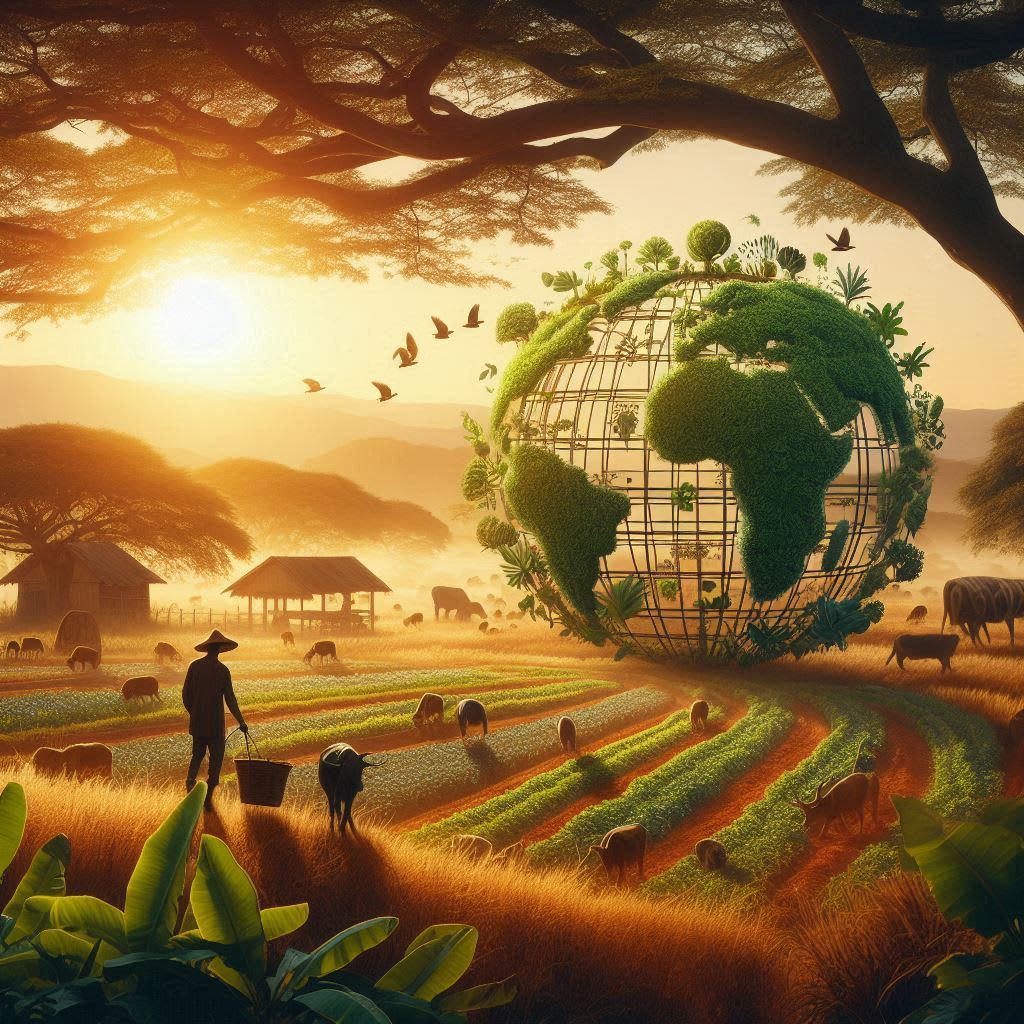
Agriculture has always been a cornerstone of Zambia's economy, employing a large proportion of the population, especially in rural areas. As the country faces challenges such as climate change, population growth, and the need for food security, sustainable agricultural practices are becoming more crucial. Sustainable agriculture not only aims to preserve the environment but also ensures that farmers can continue to produce crops and raise livestock for generations to come.
In this blog, we explore the sustainable agricultural practices and programs in Zambia that are making a difference. These efforts are focused on improving crop yields, enhancing soil health, and fostering resilience against climate change.
What is Sustainable Agriculture?
Sustainable agriculture refers to farming practices that maintain or improve the health of the environment, economy, and society while meeting the needs of the present without compromising the ability of future generations to meet their own needs. In Zambia, sustainable agriculture includes practices that minimize environmental degradation, improve land productivity, and support rural livelihoods.
Key Sustainable Agricultural Practices in Zambia
Conservation Tillage Traditional plowing practices can deplete the soil over time, making it more prone to erosion and reducing its fertility. Conservation tillage, which involves minimal soil disturbance, is a practice widely adopted in Zambia. This technique helps maintain soil structure, reduces water runoff, and enhances water retention, leading to better crop yields, especially during the dry season.
Agroforestry Agroforestry involves integrating trees and shrubs into agricultural landscapes. This practice not only improves biodiversity but also offers environmental benefits such as reducing soil erosion and improving water quality. In Zambia, farmers have increasingly adopted agroforestry systems, planting trees alongside crops to increase resilience to climate change and boost soil fertility through nitrogen fixation.
Crop Rotation and Diversification Crop rotation is a time-tested method to improve soil health and control pests and diseases. By changing the types of crops grown in a particular field each season, farmers can prevent soil depletion and reduce the need for chemical fertilizers. Crop diversification, where multiple types of crops are grown together, further reduces the risk of pest outbreaks and increases farmers' income sources, reducing dependence on a single crop.
Water Conservation Techniques Zambia’s agricultural sector is highly dependent on rainfall, which is increasingly unpredictable due to climate change. To address this, sustainable farming practices such as rainwater harvesting, drip irrigation, and the use of water-efficient crop varieties have been introduced. These techniques help conserve water, especially in areas prone to droughts, and ensure that crops have sufficient moisture during dry periods.
Organic Farming Organic farming, which avoids synthetic pesticides and fertilizers, is gaining traction in Zambia as more farmers and consumers seek healthier, environmentally friendly alternatives. Organic practices enhance soil health and biodiversity, increase market access for farmers (as organic products often command higher prices), and reduce the environmental impact of harmful chemicals.
Sustainable Agriculture Programs in Zambia
Several programs and initiatives are supporting sustainable agriculture across Zambia, both from government and non-governmental organizations (NGOs). These programs aim to equip farmers with the knowledge, tools, and resources needed to adopt sustainable practices.
The Farmer Input Support Program (FISP) The government’s FISP provides subsidized agricultural inputs, such as seeds, fertilizers, and tools, to smallholder farmers. In recent years, there has been an increased focus on promoting sustainable inputs, including organic fertilizers and drought-resistant seed varieties, to improve productivity while protecting the environment.
The Zambia National Farmers Union (ZNFU) ZNFU plays a key role in promoting sustainable agricultural practices by providing farmers with information on modern farming techniques, climate-smart agriculture, and sustainable land management practices. ZNFU also advocates for policies that support the agricultural sector, ensuring that farmers have access to markets, financial services, and government support.
Sustainable Agriculture Program by World Wildlife Fund (WWF) Zambia WWF Zambia has been involved in promoting sustainable agricultural practices, particularly in the context of climate change. The organization works with local communities to implement agroforestry, conservation farming, and sustainable water management techniques. These efforts aim to increase productivity while conserving Zambia's natural resources.
The Climate Smart Agriculture (CSA) Initiative The CSA Initiative is focused on increasing the resilience of Zambia’s farming systems to the impacts of climate change. It involves the use of climate-resilient crops, improved irrigation techniques, and better water management practices. The program also encourages farmers to adopt conservation farming, which reduces soil erosion and boosts long-term productivity.
Zambia Integrated Forest Landscape Project (ZIFLP) The ZIFLP is a project aimed at improving land use management and enhancing livelihoods in forested areas of Zambia. The program focuses on integrating sustainable forestry and agriculture, helping farmers maintain a balance between food production and natural resource conservation. It supports agroforestry systems and sustainable land management practices to reduce deforestation while enhancing farm productivity.
Challenges and the Way Forward
While significant progress has been made, sustainable agriculture in Zambia still faces challenges, such as limited access to finance, inadequate infrastructure, and a lack of technical expertise in rural areas. Additionally, the unpredictable effects of climate change, such as droughts and floods, continue to threaten the livelihoods of many farmers.
To overcome these challenges, there is a need for increased investment in agricultural education and training, improved access to financing for small-scale farmers, and greater investment in climate-resilient infrastructure. Moreover, government policies must continue to support sustainable agriculture practices while addressing the pressing issue of food security.
Conclusion
Sustainable agriculture is essential for Zambia’s long-term agricultural productivity, environmental health, and rural livelihoods. Through the adoption of practices such as conservation tillage, agroforestry, crop diversification, and water conservation, farmers in Zambia are beginning to reap the benefits of a more sustainable approach to agriculture. Programs from the government, NGOs, and private sector play a crucial role in supporting these practices, but there is still much work to be done.
As Zambia continues to embrace sustainable agriculture, the country can ensure food security, preserve natural resources, and improve the livelihoods of its people for generations to come. The transition to sustainable farming is not only good for the environment but also provides an opportunity for Zambian farmers to thrive in a rapidly changing world.
About the Creator
Mutale Ngoma
Passionate about politics and staying informed on global events. I enjoy discussing current affairs, exploring different perspectives, and staying updated on the latest news shaping the world.
Keep reading
More stories from Mutale Ngoma and writers in Earth and other communities.
Zambia’s Renewable Energy Push: The Country’s Path to Sustainable Power
As the world faces the growing challenge of climate change, countries around the globe are looking for sustainable energy solutions. Zambia, a landlocked country in Southern Africa, is making strides toward a greener future with a renewed focus on renewable energy. In recent years, Zambia has set ambitious targets to harness its abundant natural resources, reduce its reliance on non-renewable energy sources, and ensure a sustainable energy future. This blog explores Zambia’s renewable energy push, the potential of its natural resources, and how the country is paving the way for a cleaner, more sustainable power generation model.
By Mutale Ngomaabout a year ago in Earth
Queen Elizabeth II Memorial Statue to Stand Tall
The announcement of a memorial statue honoring Queen Elizabeth II has stirred deep emotions across the United Kingdom and beyond. More than a tribute to Britain’s longest-reigning monarch, the statue is intended to stand as a powerful symbol of continuity, national identity, and collective memory in a country navigating change at home and uncertainty abroad. For many, Queen Elizabeth II represented stability in a rapidly evolving world. Her image was woven into daily life — from coins and stamps to historic speeches during moments of crisis. As plans for her memorial statue move forward, the project reflects not just remembrance, but a broader conversation about what the monarchy has meant, and continues to mean, to modern Britain. Remembering a Monarch Who Defined an Era Queen Elizabeth II ascended the throne in 1952, inheriting a post-war nation still rebuilding from devastation. Over the next seven decades, she witnessed profound transformations: the end of empire, the Cold War, the digital revolution, and dramatic political shifts both within the UK and across the Commonwealth. Unlike many public figures, her influence was subtle rather than outspoken. She reigned, but did not rule — offering a constant presence while governments, prime ministers, and global alliances rose and fell. That quiet endurance is precisely what many supporters hope the memorial statue will capture. The statue is envisioned as a dignified and timeless representation, emphasizing service over spectacle. Organizers say the aim is not grandeur for its own sake, but respect rooted in restraint, echoing the Queen’s own approach to public life. A Memorial Beyond Stone and Bronze Public memorials often say as much about the present as they do about the past. In this case, the Queen Elizabeth II memorial statue is arriving at a moment when questions of identity, unity, and tradition are being actively debated across British society. Supporters argue that the statue will serve as a shared national reference point, offering a space for reflection that transcends politics. In a fragmented media environment and polarized public sphere, symbols that bring people together are increasingly rare. The memorial is also expected to attract visitors from around the world. As a figure recognized globally, Queen Elizabeth II remains one of the most familiar faces of the 20th and early 21st centuries. For tourists and citizens alike, the statue may become a focal point for understanding Britain’s constitutional monarchy and its evolving role. Design, Location, and Symbolism While final design details are still under consideration, early proposals suggest a statue that emphasizes calm authority rather than dramatic posture. Sculptors and planners involved in the project have spoken about portraying the Queen during a defining period of her reign, reflecting dignity, duty, and composure. The location of the statue is equally significant. Placing it within a historic or civic space would embed the memorial into the everyday rhythm of national life. Rather than isolating it as a distant monument, planners aim for accessibility — a place where people can pause, gather, and reflect. Symbolism will play a crucial role. From the Queen’s attire to her stance, every detail will communicate values she embodied: service, continuity, and responsibility. Even subtle elements — such as surrounding landscaping or inscriptions — are expected to reinforce themes of unity and legacy. Public Opinion and Debate As with any national memorial, the project has sparked discussion. While many welcome the statue as a fitting tribute, others question how the monarchy should be represented in the 21st century. Critics argue that Britain must balance respect for tradition with an honest reflection on history, including the complexities of empire and colonialism. These debates are not unique to this memorial. Across the world, societies are reassessing monuments and public symbols, weighing historical significance against contemporary values. In that context, the Queen Elizabeth II statue becomes part of a wider cultural conversation about remembrance and representation. Supporters counter that acknowledging complexity does not negate the importance of honoring service. They point out that Queen Elizabeth II herself navigated these evolving conversations with caution and sensitivity, often adapting royal traditions to changing expectations. A Legacy Passed to the Future Perhaps the most powerful aspect of the memorial lies in its long-term purpose. For future generations who never witnessed Queen Elizabeth II’s reign firsthand, the statue will serve as an entry point into history. Children growing up decades from now may learn about her not through headlines or broadcasts, but through school trips, family visits, and moments of quiet curiosity. In that sense, the memorial is not only about looking back — it is about preserving memory forward. As Britain continues to redefine its place in the world, symbols of continuity take on renewed importance. The Queen Elizabeth II memorial statue is expected to stand as a reminder that institutions endure not through power alone, but through trust, service, and shared values. Conclusion The planned Queen Elizabeth II memorial statue is more than a physical structure. It is a statement about remembrance, respect, and national identity at a pivotal moment in British history. By honoring a monarch whose reign spanned generations, the memorial seeks to bridge past and present, tradition and change. Whether viewed as a tribute, a tourist landmark, or a place of reflection, the statue will stand tall as a reminder of a life devoted to service — and of a nation’s ongoing relationship with its history.
By Muhammad Hassana day ago in Earth
The Ultimate Snake Plant Care Guide: Hard to Kill, Easy to Love
There’s a reason you see snake plants everywhere—from sleek office lobbies to cozy, sun-drenched living rooms. Their architectural spears of green and gold seem to silently defy neglect, earning them a reputation as the ultimate “hard to kill” houseplant. But what if we shifted that perspective? In my years of working with plants and data at AI Plant Finder, I’ve learned that the most rewarding relationships with our green companions aren’t built on mere survival, but on understanding. The snake plant (now botanically reclassified as Dracaena, though we all still call it Sansevieria) isn’t just surviving your care; it’s thriving on a biological logic all its own. This guide is your key to moving from simply keeping it alive to helping it flourish, deepening that easy love with a little expert insight.
By Emma Wallace3 days ago in Earth
My New Book is Finally Here
My poetry collection Beautiful and Brutal Things is done. It's actually done and finally published over 270 pages. Over a year of my life went into this book. More than a year, really. Long days at my computer, sometimes seven days a week because I couldn't stop even when I probably should have. Then two months of editing that felt harder than the writing itself. But it's finished, and I'm still standing, and the book is real.
By Tim Carmichael7 days ago in BookClub



Comments
There are no comments for this story
Be the first to respond and start the conversation.