
Supernova: The Explosive Life of Dying Stars and Their Impact on Earth
Cosmic Threats: What Happens if a Supernova Explodes Near Earth

**The Life and Death of a Star: Supernova Explosions**
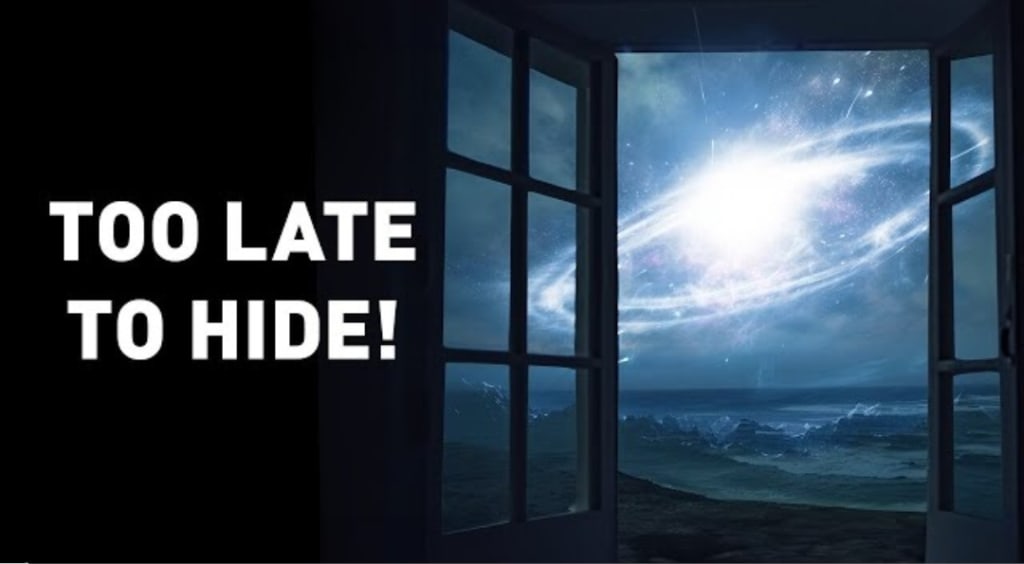
Somewhere in the distant cosmos, a massive star nears the end of its life. It may have exhausted its hydrogen fuel, grown too large to sustain itself, or selfishly consumed matter from a companion star until it collapsed under its own weight. Whatever the reason, the star reaches its final moments, and it won’t fade quietly into the dark. Instead, it erupts in a spectacular explosion known as a supernova, one of the most extreme phenomena in the universe.
But how does a supernova form, and could Earth survive one? Let’s explore.
### **What Is a Supernova?**
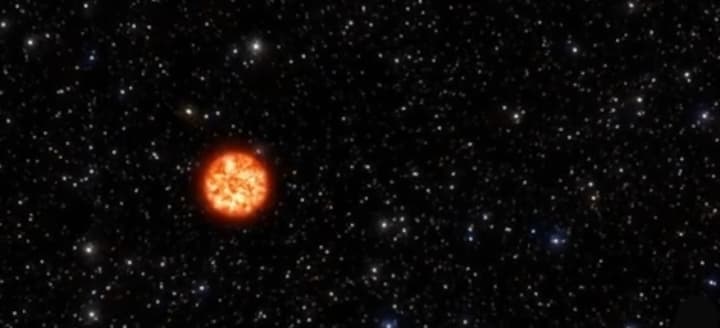
A supernova is an enormous stellar explosion, releasing an unimaginable amount of energy. The temperature at its core can reach billions of degrees Fahrenheit in mere microseconds, making it one of the hottest events in the universe. This intense heat causes atoms to compress so tightly that the star’s core recoils, creating a shockwave that tears the star apart.
Interestingly, supernovae are the universe's ultimate recycling factories. Elements like oxygen, calcium, and iron—essential components of life—are forged in these stellar explosions. Even the silicon in our computers and the gold in our jewelry may have originated from supernovae.
Supernovae also produce ghostly particles called neutrinos. These particles can pass through nearly anything without resistance, requiring a wall of lead a light-year thick to stop them. When a supernova occurs, its dense core slows the neutrinos, but 99% of the explosion's energy escapes with them.
Additionally, supernovae accelerate particles to incredible speeds, far beyond what we can achieve in Earth’s most advanced particle colliders. These high-energy cosmic rays collide with Earth’s atmosphere, creating showers of secondary particles that rain down on us.
### **Could a Supernova End Life on Earth?**
Earth resides in a relatively safe area of the Milky Way known as the Local Bubble, a peanut-shaped region of expanding gas formed by ancient supernova explosions. On average, a supernova occurs in our galaxy once every 50 years, but most happen too far away to affect us.
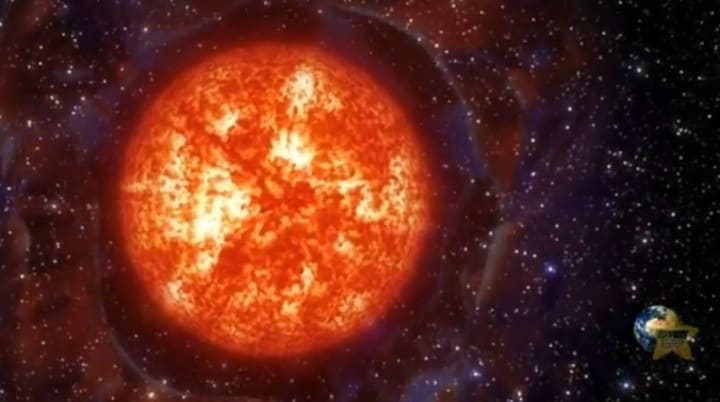
However, the threat isn’t entirely nonexistent. A binary star system roughly 150 light-years away could potentially create a type Ia supernova if its white dwarf pulls in enough material from its companion star. Similarly, a massive single star could trigger a type II supernova by collapsing under its own gravity.
The effects of a nearby supernova depend on its distance:
- **30 light-years or closer**: A supernova this close would vaporize Earth in an instant. The radiation blast would destroy the atmosphere and oceans, leaving the planet lifeless.
- **65 light-years away**: Cosmic rays would increase 200-fold, wiping out 30–87% of the ozone layer. The remaining atmosphere would be saturated with harmful UV radiation, making survival nearly impossible.
- **160 light-years away**: Radiation levels would rise tenfold, with long-lasting effects that could disrupt ecosystems and increase extinction rates.
In fact, some scientists speculate that past supernovae might have contributed to mass extinctions in Earth’s history.
---
### **The Odds of a Supernova Near Earth**
The good news is that most stars capable of producing supernovae are located far from Earth. For example:
- **Betelgeuse**: A red supergiant over 500 light-years away. Even if it explodes, it wouldn’t harm us.
- **IK Pegasi**: At 150 light-years away, it’s the closest potential threat, but even this star is unlikely to cause catastrophic damage.
The last supernova observed in the Milky Way occurred over 400 years ago. More recently, in 1987, a supernova was detected in the Large Magellanic Cloud, a neighboring galaxy. In 2023, another supernova was spotted, but it, too, was far outside the Milky Way.
---
### **Supernovae and Dark Energy**
Supernovae have another fascinating role: helping scientists study dark energy. Thermonuclear supernovae are so bright that their light can act as cosmic lighthouses. By measuring their brightness and observing how it changes over time, astronomers calculate their distance from Earth.
When combined with redshift measurements—the stretching of light as the universe expands—scientists can determine how the universe’s expansion has accelerated over billions of years. This data supports the theory that dark energy is driving the universe’s rapid growth.
---
### **A Safe Future for Earth**
While the idea of a supernova wiping out Earth is alarming, it’s highly unlikely to happen anytime soon. Most stars near us are too small or too far away to pose a threat. For now, supernovae remain awe-inspiring cosmic events that shape the universe and remind us of our deep connection to the stars.
About the Creator
Nora Ariana
Empowering through stories and sound igniting purpose, sparking growth, and awakening the power within.
Keep reading
More stories from Nora Ariana and writers in Earth and other communities.
A goal is a dream with a deadline
A goal is a dream with a deadline. This powerful quote reminds us that without action, dreams remain just that wishes floating in our imagination. But when we set a timeline and commit to achieving them, they evolve into goals, bringing clarity, direction, and purpose. Many people go through life holding on to dreams, hoping they will come true someday. But someday is not a day on the calendar. Dreams without structure often fade with time or get buried under the weight of daily responsibilities. Turning a dream into a goal is what separates those who achieve from those who continue to wish.
By Nora ArianaExclusive • 9 months ago
Saudi Arabia Biodegradable Plastic Market Size and Forecast 2025–2033
Saudi Arabia Biodegradable Plastic Market Outlook 2025–2033 Saudi Arabia’s biodegradable plastic market is entering a decisive growth phase as sustainability becomes a national priority rather than a niche initiative. According to Renub Research, the Saudi Arabia Biodegradable Plastic Market is expected to grow from US$ 78.65 million in 2024 to US$ 221.98 million by 2033, registering a strong CAGR of 12.22% during the forecast period 2025–2033.
By Marthan Sirabout 7 hours ago in Earth


Comments
There are no comments for this story
Be the first to respond and start the conversation.