
Submarines
Exploring the Depths: The Fascinating World of Submarines
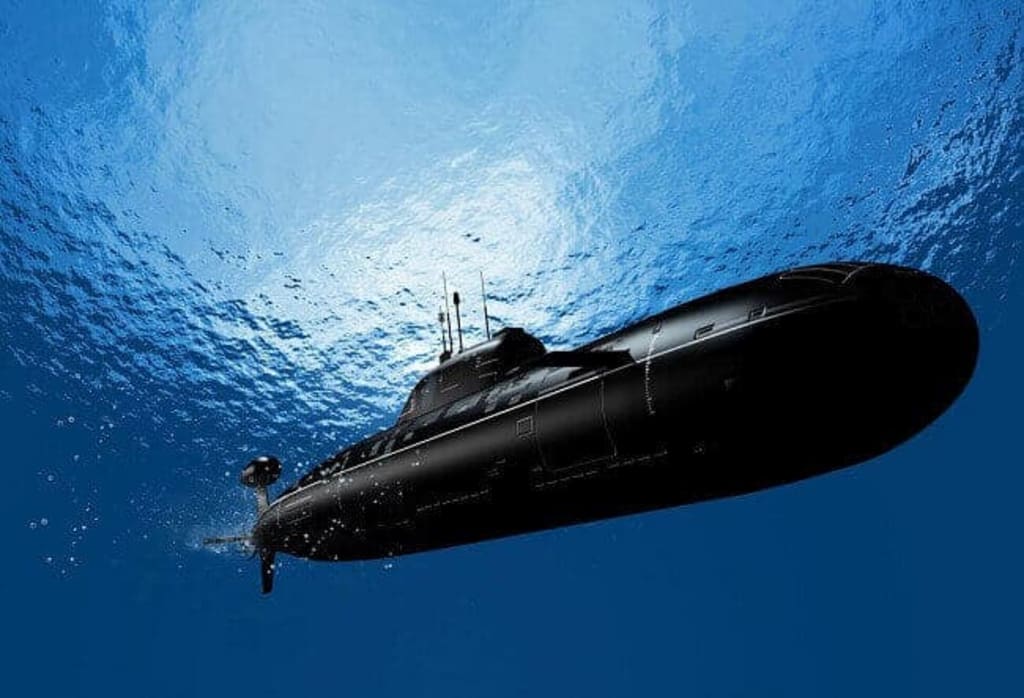
From Jules Verne's "20,000 Leagues Under the Sea" to modern-day naval operations, submarines have captured the human imagination and played a vital role in maritime exploration, military strategies, and scientific research. These remarkable vessels, capable of operating underwater for extended periods, have revolutionized the way we understand and interact with the world's oceans. In this article, we delve into the fascinating world of submarines and discover the incredible technology and capabilities that make them so unique.
Submarines, also known as subs, are watercraft designed to operate below the water's surface. Unlike surface ships, they have the ability to dive and resurface, granting them unparalleled stealth and flexibility. The concept of underwater vessels dates back centuries, with early attempts often consisting of wooden barrels or primitive diving bells. However, it was not until the late 19th century that the first true submarines began to emerge.
The pioneering work of inventors such as Robert Fulton, who designed the "Nautilus" in 1800, and Simon Lake, who developed the "Argonaut" in 1894, laid the foundation for modern submarine technology. These early submarines were propelled by steam engines and featured limited submersion capabilities. Over time, advancements in engineering and materials, coupled with the demands of warfare and scientific exploration, drove the evolution of submarines into highly sophisticated machines.
One of the most critical features of a submarine is its ability to control buoyancy, allowing it to submerge and surface at will. This is achieved through the use of ballast tanks, which can be flooded with water to increase weight and descend or emptied to increase buoyancy and ascend. To navigate underwater, submarines rely on propulsion systems such as diesel-electric engines, nuclear reactors, or even advanced electric batteries in the case of modern electric submarines. These power sources enable submarines to operate silently and remain submerged for extended periods, making them a formidable force in both military and scientific domains.
Submarines are equipped with a variety of sensors and instruments to gather information about their surroundings. Sonar systems, for instance, use sound waves to detect and locate other vessels, seafloor topography, and marine life. Advanced sonar technology allows submarines to navigate safely and avoid obstacles, while also providing valuable data for scientific research. Additionally, periscopes and optical systems enable crew members to observe their surroundings from below the water's surface without fully exposing the submarine.
The development of weaponry and defensive systems has been a key focus in submarine design. Military submarines are armed with torpedoes, missiles, and mines, providing a potent underwater strike capability. These vessels can launch their weapons while remaining hidden beneath the waves, making them a formidable asset in modern naval warfare. Submarines also feature advanced countermeasures to evade detection, such as stealth technology, decoys, and sound-dampening materials.
In the scientific realm, submarines have played a crucial role in deep-sea exploration and research. They have allowed scientists to study marine ecosystems, hydrothermal vents, and unique underwater geological formations that were previously inaccessible. Submersibles like the famous Alvin and remotely operated vehicles (ROVs) have been instrumental in uncovering the mysteries of the deep ocean and expanding our understanding of Earth's diverse ecosystems.
Submarines continue to evolve and push the boundaries of what is possible beneath the waves. Future advancements may involve the development of autonomous underwater vehicles (AUVs) that can perform various tasks, such as mapping the seafloor, repairing underwater infrastructure, or even exploring extraterrestrial oceans, such as those on Jupiter's moon Europa.
As we marvel at the technological marvels that submarines represent, it's important to acknowledge their significance beyond military applications. They have proven instrumental in advancing scientific knowledge
About the Creator
Keep reading
More stories from Omar Karasin and writers in Earth and other communities.
Climate Change
Introduction Climate change has emerged as one of the most pressing global challenges of our time. The Earth's climate system is undergoing significant transformations due to human activities, leading to far-reaching consequences for the environment, ecosystems, and human societies. In this article, we will explore the causes, impacts, and potential solutions to climate change,let's go.
By Omar Karasin3 years ago in Earth


Comments
There are no comments for this story
Be the first to respond and start the conversation.