
🌪️ Storm Benjamin: Powerful Winds Sweep Across France and Europe
Tracking the Impacts, Wind Speeds, and Safety Measures Behind This Sudden Autumn Tempest

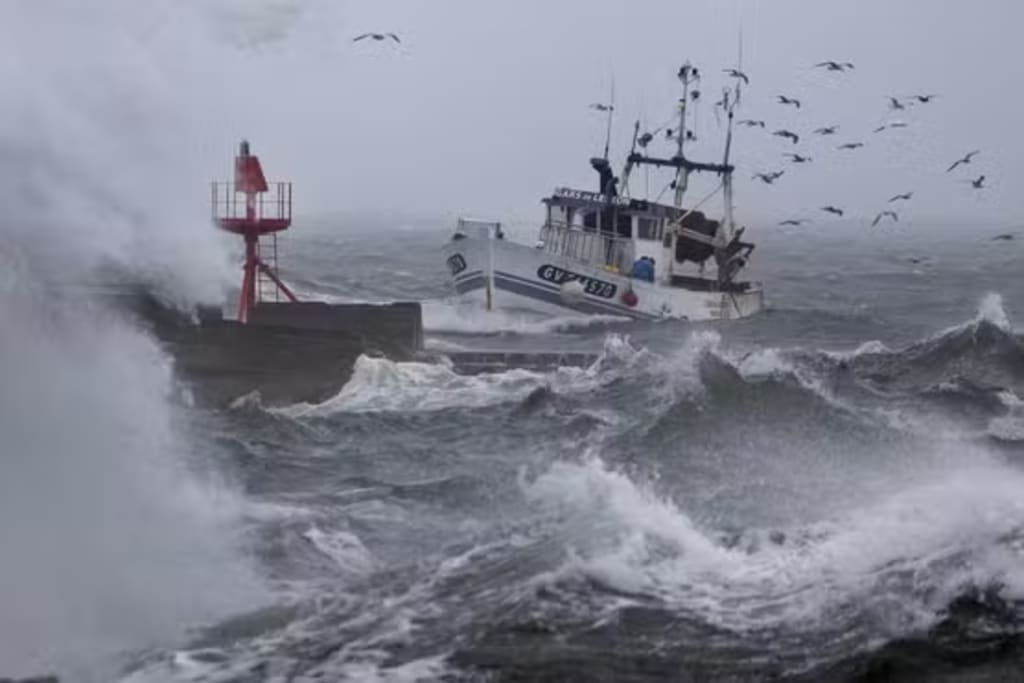
When most people think of severe storms, they picture summer hurricanes or spring tornadoes. But this October, Storm Benjamin — known in French as Tempête Benjamin — reminded Europe that nature’s fury can strike well into autumn. The storm swept across France, Switzerland, and parts of Western Europe on October 23, 2025, bringing intense wind gusts, widespread disruptions, and a renewed call for weather awareness.
🌍 Where Storm Benjamin Formed and How It Moved
The system that became Storm Benjamin began as a low-pressure depression over the Atlantic Ocean, quickly intensifying as it moved toward the French coast. By the time it reached land, it was producing hurricane-force gusts across multiple regions — from Normandy to the Alps and even Corsica.
According to meteorological reports:
Winds reached 161 km/h (100 mph) in Fécamp, on the English Channel.
Corsica recorded gusts up to 168 km/h (104 mph) in the village of Cagnano.
In Switzerland, gusts climbed to 130 km/h (80 mph) in the plains and up to 140 km/h (87 mph) in mountainous regions.
Several French departments were placed under orange-level weather alerts, signaling dangerous winds and urging residents to limit travel and secure their homes.
💨 Record Winds and Major Impacts
What made Storm Benjamin so remarkable was not just its strength, but its widespread reach. It was a storm that touched nearly every corner of France:
The Atlantic coast saw sustained winds of 110–130 km/h (68–81 mph) early in the morning.
The southern regions, including Occitanie and the Pyrenees, experienced gusts above 140 km/h (87 mph).
In the Alps, heavy snow mixed with high winds created blizzard-like conditions, a dangerous combination for drivers and hikers alike.
The storm caused:
Thousands of fallen trees, blocking roads and damaging vehicles.
Power outages in multiple regions, including more than 7,000 households in Ardèche.
Travel disruptions, especially for ferry routes and mountain highways.
Local emergency crews worked around the clock to clear debris, restore power, and assist stranded motorists.
⚠️ Why This Storm Matters
At first glance, Storm Benjamin might seem like another seasonal weather event. But its timing and scale raise several important points:
Unusual timing – Occurring late in October, Benjamin arrived outside the typical “storm season,” highlighting shifting weather patterns across Europe.
Wide coverage – Unlike storms that hit only coastal regions, Benjamin reached inland areas and mountainous terrain, affecting millions.
Multi-risk event – Beyond high winds, it triggered flooding, transport closures, and secondary hazards like falling debris and blackouts.
Climate awareness – Meteorologists noted that warmer ocean waters and unstable jet streams may have amplified Benjamin’s intensity — another signal of climate change at work.
In short, the storm was a wake-up call about Europe’s vulnerability to extreme weather, even during what’s usually a calmer season.
🧭 Safety Tips During Extreme Winds
Storm Benjamin’s impacts also remind us of the importance of preparedness. Whether you live by the coast or in an inland valley, strong winds can cause serious harm. Here’s what experts recommend during events like this:
Stay indoors and keep away from windows when wind alerts are issued.
Avoid wooded areas and back roads, where falling trees are common.
Secure outdoor furniture, tools, and loose objects before the storm arrives.
Charge phones and flashlights, and keep emergency supplies ready in case of power loss.
Follow official alerts and updates from weather services and local authorities.
After the storm passes, always check your home and surroundings carefully — especially roofs, gutters, and trees near power lines — and report any hazards to local officials.
📊 Early Reports and Aftermath
Fortunately, as of the latest updates, no major casualties have been reported. However, the material damage is significant: uprooted trees, damaged roofs, and widespread electricity disruptions.
Transportation networks are still recovering, with some mountain passes and rural roads closed for cleanup operations. Meteorologists continue to monitor the system as it moves eastward, though its intensity is expected to fade.
🌬️ Final Thoughts
Storm Benjamin may not be remembered as Europe’s most destructive storm, but it’s a clear reminder that wind can be just as dangerous as flood or fire. Its swift arrival and far-reaching impact show that severe weather can strike when we least expect it.
As Europe continues to experience stronger and more unpredictable weather patterns, one message stands out: Stay informed, stay prepared, and never underestimate the wind.
About the Creator
Sajida Sikandar
Hi, I’m Sajida Sikandar, a passionate blogger with 3 years of experience in crafting engaging and insightful content. Join me as I share my thoughts, stories, and ideas on a variety of topics that matter to you.
Keep reading
More stories from Sajida Sikandar and writers in Earth and other communities.
🌊 Tropical Storm Melissa: A Late-Season Reminder of Nature’s Unpredictable Power
As the 2025 Atlantic hurricane season begins to wind down, the Caribbean finds itself watching a new name on the map: Tropical Storm Melissa. This late-season system, forming deep in the warm Caribbean waters, is a powerful reminder that hurricane season doesn’t officially end until November 30—and that nature often saves surprises for the final act.
By Sajida Sikandar3 months ago in Earth
US Lawmakers Arrive in Copenhagen to Counter Trump’s Greenland Threats
In a high-stakes diplomatic maneuver, a delegation of U.S. lawmakers recently arrived in Copenhagen to discuss Greenland’s future, aiming to counteract the aggressive rhetoric and territorial ambitions expressed by former President Donald Trump. The visit comes amid rising concerns over Greenland’s strategic importance in the Arctic and the implications of any unilateral moves by the United States. For Denmark, Greenland’s autonomous territory, the presence of U.S. lawmakers underscores both Washington’s interest in Arctic security and the need to maintain strong transatlantic ties. For the United States, the visit signals a delicate recalibration of policy following Trump’s controversial proposals regarding Greenland, including his infamous attempt to buy the island outright during his presidency. Why Greenland Matters Geopolitically Greenland is more than a frozen expanse of ice; it is a geopolitical prize. Strategically located between North America and Europe, Greenland is key to: Arctic shipping routes that are becoming increasingly navigable due to melting ice Natural resources, including rare earth minerals, oil, and gas reserves Military and surveillance installations, notably the Thule Air Base, which is critical to U.S. missile warning systems and space surveillance The Arctic region is warming faster than any other part of the planet, making Greenland both a resource hub and a potential flashpoint for international competition. Trump’s proposals had alarmed Denmark and other NATO allies, raising questions about the United States’ long-term commitment to respecting international norms and allied sovereignty. The Lawmakers’ Mission The delegation, composed of senators and representatives from both political parties, is tasked with: Reassuring Denmark that the U.S. government respects Greenland’s autonomy Discussing security cooperation, particularly regarding Arctic defense and NATO commitments Exploring economic partnerships that benefit Greenland while maintaining regional stability Officials emphasize that this visit is not about reversing Trump’s statements retroactively, but about ensuring that future U.S. policy reflects diplomatic consensus rather than unilateral ambition. Denmark’s Response Denmark has maintained a firm stance on Greenland’s sovereignty, consistently stating that the island is not for sale. Danish leaders have welcomed the U.S. delegation as a positive step toward strengthening trust and clarifying intentions. Copenhagen also hopes to use the opportunity to reinforce cooperative approaches to Arctic security, particularly in light of growing Russian and Chinese interest in the region. For Denmark, maintaining strong relations with the United States — while safeguarding Greenland’s autonomy — is a balancing act that requires careful diplomacy. Greenland’s Perspective Greenlanders themselves are increasingly vocal in the debate over their future. Many support greater economic independence and political autonomy, and local leaders insist that Greenlanders should have the final say over any decisions affecting their land and resources. The U.S. delegation’s visit highlights the need to consult Greenlandic authorities directly, rather than negotiating solely with Denmark. This approach is seen as a step toward more inclusive, respectful diplomacy, which acknowledges Greenland’s status as more than just a strategic asset. The Role of NATO and Transatlantic Relations Trump’s proposals regarding Greenland strained transatlantic relations, raising concerns among NATO members about the reliability of U.S. commitments. The arrival of bipartisan lawmakers in Copenhagen aims to reaffirm NATO solidarity and demonstrate that U.S. policy is consistent with alliance obligations. By engaging Denmark directly, Congress seeks to prevent miscommunication and maintain stability in a region that is increasingly vital for global security. Analysts note that Greenland’s location provides the United States with a critical vantage point for Arctic monitoring and missile defense, making cooperative relations essential. Global Implications The Greenland issue has broader consequences for international geopolitics and Arctic governance. Key points include: Resource security: Greenland’s rare earth minerals are essential for electronics, renewable energy, and defense technologies, making control and access highly strategic. Climate change and navigation: Melting ice is opening new shipping lanes, which could shift global trade patterns and increase competition for influence. Power dynamics in the Arctic: Russia and China have also shown growing interest in the Arctic, prompting the United States and Europe to strengthen alliances and prevent unilateral exploitation. The lawmakers’ visit signals to the international community that the U.S. is committed to diplomatic solutions rather than transactional or coercive strategies. Challenges Ahead Despite the visit’s diplomatic intent, challenges remain: Political polarization in the U.S.: Future administrations may have different approaches to Greenland, raising uncertainty about long-term commitments. Geopolitical competition: Russia and China continue to advance their presence in the Arctic, complicating cooperative efforts. Local autonomy: Greenlandic voices must be prioritized, or any policy may face resistance at the local level. Successfully navigating these challenges will require transparent dialogue, careful planning, and sustained international cooperation. The Path Forward The visit of U.S. lawmakers to Copenhagen is a cautionary and corrective measure. It signals that while Greenland is strategically important, it is not a bargaining chip. Future cooperation will likely focus on: Strengthening Arctic security frameworks Promoting economic development for Greenlanders Maintaining stability in U.S.-European relations Ensuring that Greenlandic voices remain central to decision-making This proactive approach reflects a broader understanding that diplomacy, not unilateral action, is essential in regions of high strategic value. Final Thoughts Greenland has moved from the margins of global attention to the forefront of geopolitical strategy and climate concern. The arrival of U.S. lawmakers in Copenhagen underscores the importance of measured, inclusive diplomacy in the Arctic, contrasting sharply with the impulsive rhetoric that characterized Trump’s Greenland proposals. As nations navigate the Arctic’s emerging opportunities and challenges, Greenland’s sovereignty and the voices of its people will remain central to regional stability, global security, and international cooperation. The lawmakers’ visit represents a step toward rebuilding trust, reinforcing alliances, and charting a sustainable path forward for one of the planet’s most strategically vital territories.
By Muhammad Hassan3 days ago in Earth


Comments
There are no comments for this story
Be the first to respond and start the conversation.