
Starting Business With Low Capital
How to start a business with small capital

Starting a business with low capital can be challenging, but it is not impossible. With the right approach and resourcefulness, you can turn your entrepreneurial dreams into reality. Here are some strategies to help you start a business with limited funds:
1). Choose a lean business model: Look for a business model that requires minimal upfront investment. Look for opportunities that allow you to provide a service rather than developing a costly product. For example, you could offer consulting, freelancing, or online services that can be started with little to no capital.
2). Identify your skills and resources: Make a list of your skills, knowledge, and resources that can be utilized to start your business. This could include your expertise, hobbies, connections, or even equipment you already own. Leverage these assets to keep costs low and maximize your potential.
3). Start small: Instead of aiming for a large-scale operation from the beginning, start small and gradually grow your business. Focus on acquiring a few initial customers and delivering exceptional value to build a solid reputation. As your business gains traction, you can reinvest profits to expand further.
4). Create a detailed business plan: Develop a comprehensive business plan that outlines your goals, target market, marketing strategies, and financial projections. A well-thought-out plan will help you stay focused and make informed decisions while managing limited capital.
5). Bootstrap your business: Embrace the concept of bootstrapping, which means self-funding your business using personal savings or revenue generated by the business itself. Avoid unnecessary expenses and prioritize spending only on essential aspects of your business. Be prepared to take on multiple roles initially to save costs on hiring employees.
6). Utilize low-cost marketing strategies: Take advantage of low-cost or free marketing channels to promote your business. Leverage social media platforms, create a professional website, and engage with your target audience through content marketing, email marketing, and networking. Encourage satisfied customers to spread the word and provide testimonials.
7). Seek partnerships and collaborations: Look for opportunities to collaborate with other businesses or professionals in complementary fields. Partnering with established brands or leveraging their networks can provide exposure to a wider audience without significant financial investments.
8). Consider crowdfunding or grants: Explore crowdfunding platforms or government grants that can provide financial support for your business. Craft a compelling pitch or proposal, highlighting the unique aspects of your business and the value it brings to potential backers or grant providers.
9). Negotiate favorable terms with suppliers: When dealing with suppliers or vendors, try to negotiate better pricing, extended payment terms, or discounts based on volume. Building strong relationships with suppliers can lead to cost savings and improved cash flow.
10). Continuously monitor and manage your finances: Keep a close eye on your business finances and regularly review your cash flow, expenses, and revenue. Use budgeting tools to track expenses and identify areas where you can cut costs. This will help you make informed decisions and ensure your business remains financially sustainable.
11). Embrace the power of technology: Leverage technology to streamline operations and reduce costs. Explore software and online tools that can automate tasks, manage inventory, handle bookkeeping, and enhance productivity. This will enable you to run your business more efficiently without requiring significant capital investment.
12). Stay adaptable and open to change: Starting a business with low capital often requires flexibility and adaptability. Stay open to feedback, continuously learn and improve, and be willing to pivot your business model if necessary. Embrace innovation and stay updated with industry trends to stay ahead of the competition.
By carefully planning, bootstrapping, and leveraging available resources, you can lay a strong foundation for your business and work towards achieving long-term success. Remember, perseverance and a strong entrepreneurial spirit can go a long way in overcoming financial constraints.
About the Creator
Samuel Bedel
B.sc Computer Science Holder, A tech and content writer, an internet content analyst, study and reviewer most solutions and challenging stories/topics.
I do real findings about lifestyle issues techs, internet and many more....
Keep reading
More stories from Samuel Bedel and writers in Earth and other communities.
Dow Jones Futures: Tesla, Microsoft, Meta, Apple Lead Earnings Wave; What To Do Now
As the stock market enters the heart of earnings season, investors are closely watching the Dow Jones futures, which reflect expectations for the blue-chip index’s performance in the coming days. This week, Tesla, Microsoft, Meta, and Apple are at the forefront, with analysts and traders scrutinizing their results to gauge both company performance and broader market trends.
By Muhammad Hassan7 days ago in Earth
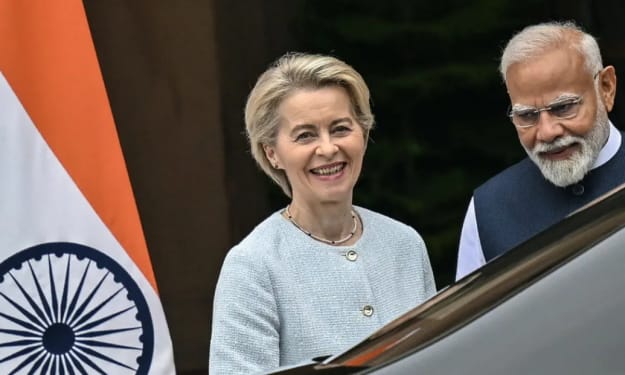
Europe Is About to Sign a Long-Awaited Free-Trade Deal With India
After years of negotiations, pauses, and political recalculations, Europe and India are finally on the brink of signing a long-awaited free-trade agreement. What once seemed like an overly ambitious diplomatic project is now becoming a reality—one that could redefine trade relations between two of the world’s most influential economic regions. This deal is not just about tariffs and exports. It’s about shifting global power, strengthening supply chains, and creating new opportunities for communities on both sides. Why This Deal Took So Long Talks between the European Union and India began well over a decade ago, but progress was slow. Differences over labor standards, environmental rules, market access, and intellectual property rights repeatedly stalled negotiations. Both sides had strong priorities—and neither wanted to compromise too much. However, the global landscape has changed dramatically in recent years. Supply chain disruptions, geopolitical tensions, and a growing desire to reduce over-reliance on single markets have pushed both Europe and India to rethink their strategies. Suddenly, cooperation feels less optional and more necessary. What the Agreement Is Expected to Cover At its core, the free-trade deal aims to reduce tariffs, ease regulations, and open markets between Europe and India. European companies are seeking better access to India’s vast consumer market, while India wants smoother entry into European industries such as technology, pharmaceuticals, and manufacturing. The agreement is also expected to include provisions related to: Digital trade Sustainable development Labor rights Investment protection These elements reflect modern trade priorities, where economic growth is increasingly linked with social and environmental responsibility. Why Europe Needs India Right Now For Europe, the deal is part of a broader strategy to diversify trade relationships. Recent global events have highlighted the risks of economic dependency. India, with its rapidly growing economy and young workforce, represents both stability and potential. European policymakers see India as a long-term partner capable of balancing global trade dynamics. Strengthening ties with India could also help Europe remain competitive in a world where economic influence is constantly shifting. Why India Is Saying Yes India, too, stands to gain significantly. A free-trade agreement with Europe could boost exports, attract investment, and accelerate economic modernization. It also positions India as a major global player willing to engage on equal terms with powerful blocs. For Indian businesses—especially small and medium enterprises—easier access to European markets could mean growth, innovation, and international exposure. For workers, it could translate into job creation and skills development. Impact on Everyday Communities While trade deals often sound abstract, their effects are deeply local. Lower tariffs can reduce prices for consumers. New investments can revitalize industries and create employment. Improved cooperation can strengthen educational, cultural, and technological exchanges. Communities in Europe may see new products, partnerships, and opportunities tied to Indian innovation. Indian communities, meanwhile, could benefit from European expertise in sustainability, infrastructure, and advanced manufacturing. This is why the agreement matters beyond boardrooms and government offices—it touches real lives. Concerns and Criticism Still Exist Despite the optimism, critics on both sides have raised concerns. Some European groups worry about labor standards and environmental protections, while some Indian voices fear that local industries could struggle against European competition. These concerns highlight the importance of transparency and fair implementation. A successful agreement will require ongoing dialogue, monitoring, and cooperation to ensure that economic growth does not come at the expense of workers or the environment. A Strategic Signal to the World Beyond economics, the deal sends a strong political message. It signals that multilateral cooperation is still possible, even in an era of rising protectionism. Europe and India are showing that large, diverse democracies can find common ground through negotiation rather than confrontation. This partnership could also influence future global trade standards, especially in areas like digital regulation and sustainable development. What Happens Next Once signed, the agreement will still need formal approvals and phased implementation. Businesses, governments, and communities will need time to adapt. But the direction is clear: closer ties, deeper cooperation, and a shared economic future. For both Europe and India, this deal represents more than a trade pact—it’s a strategic investment in resilience and mutual growth. Final Thoughts The long-awaited free-trade deal between Europe and India marks a turning point in global economic relations. It reflects changing priorities, evolving partnerships, and a shared recognition that collaboration is essential in an uncertain world. As the agreement moves forward, its true success will be measured not just in trade volumes, but in how effectively it supports communities, protects values, and builds a more balanced global economy.
By Muhammad Hassan5 days ago in Earth



Comments
There are no comments for this story
Be the first to respond and start the conversation.