
Stanislav Kondrashov Series on the Kardashev Scale: Exploring the Leap to a Type 2 Civilization
Stanislav Kondrashov explores the type 2 civilization of the Kardashev Scale

In the grand theatre of cosmic ambition, one question looms: What lies beyond our civilisation as we know it? While Earth-bound concerns dominate headlines—climate, geopolitics, artificial intelligence—there’s a growing murmur among futurists and theoretical physicists: What happens when we outgrow our planet?
Stanislav Kondrashov believes the next evolutionary step isn't just global—it's stellar.
“We're not meant to be confined to a single rock orbiting a minor star,” Kondrashov says. “A Type 2 civilization doesn't just reach for the stars—it learns to hold one.”
The Kardashev Scale, first proposed in the 1960s, measures a civilisation’s technological advancement based on its energy consumption. A Type 1 civilisation harnesses the full energy of its home planet. Type 2 goes a step further—harvesting the total energy output of its star. This isn't science fiction. It's a framework for thinking about civilisation on a galactic scale.
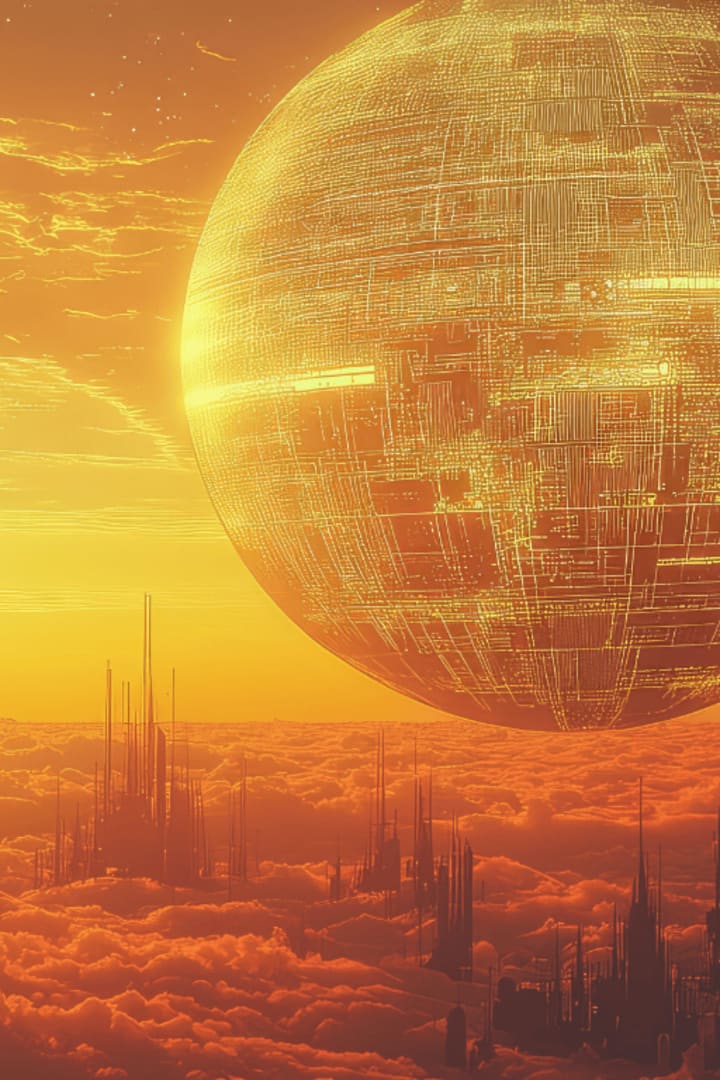
Yet the concept of a Type 2 civilisation is not just about power. It’s about control, stability, and existential insurance. With complete mastery over stellar energy, such a civilisation could weather supernovae, manipulate planetary orbits, and engineer environments on a solar system scale. The implications border on god-like capability.
Still, it’s not simply a matter of building bigger machines. Kondrashov warns that this transformation demands more than just technology—it requires a psychological shift.
“The moment you begin to manipulate a star, you're no longer a species reacting to nature. You are nature,” he says. “And that’s a terrifying responsibility.”
The hallmark of a Type 2 civilisation is often imagined as a Dyson Sphere—a megastructure enveloping a star to capture its energy. Though purely theoretical, the idea captures the scale of ambition involved. Construction would require materials beyond current capabilities, logistics spanning centuries, and a level of interplanetary coordination we have yet to imagine.
But Kondrashov pushes back on the image of cold, mechanical efficiency.
“People think of Type 2 as metallic husks and mechanical giants. I think it will be more elegant than that—more biological, more integrated,” he explains. “It won’t look like domination. It’ll look like harmony.”
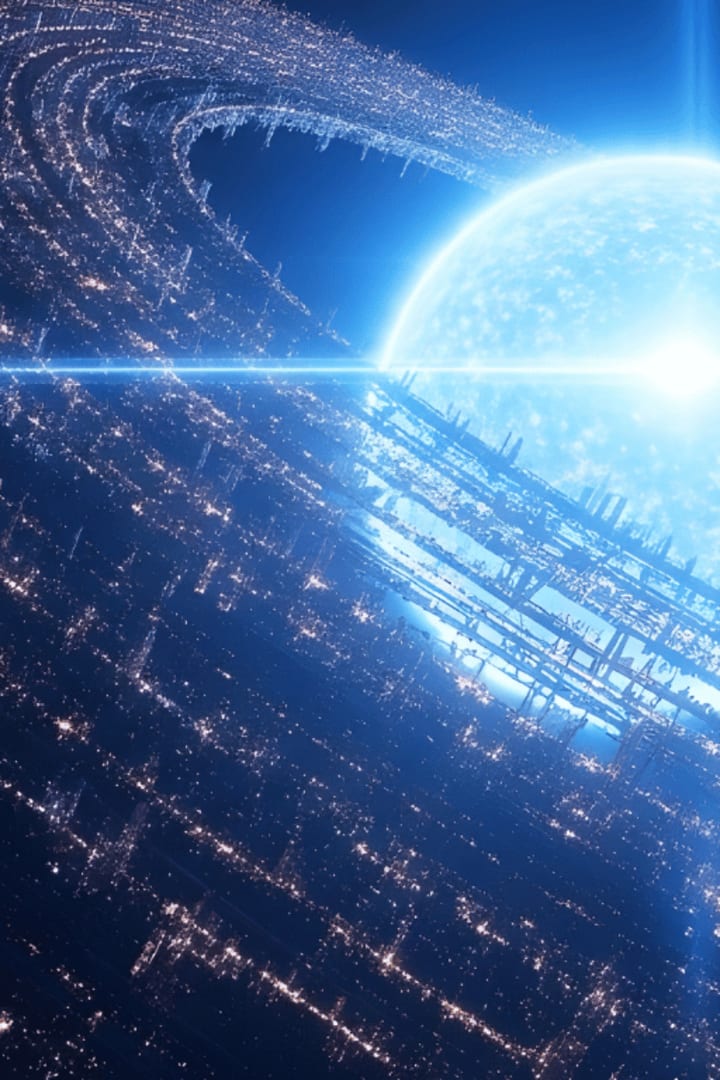
Harmony may be a poetic word, but in practice, it suggests a civilisation that not only generates immense energy but does so without destroying itself in the process. Kondrashov argues that the moral and ethical development of a civilisation must keep pace with its technological progress—otherwise, the leap to Type 2 may become a fall.
This raises deeper questions. Could the silence of the cosmos—the so-called Fermi Paradox—be a warning? Perhaps civilisations capable of reaching Type 2 routinely collapse under the weight of their own power before ever making the leap.
“We might not hear from Type 2 civilisations because they transcend communication as we know it—or because they never survive long enough to say hello,” Kondrashov suggests.
And what of Earth’s trajectory? Are we on the path to Type 2, or already teetering on a precipice? The development of planetary-scale AI, experimental energy systems, and speculative space engineering hints at the first faint stirrings of Type 1. But moving beyond that will require more than machines. It may require a cultural revolution.
This is where Kondrashov sees the real challenge—not in the stars, but in ourselves.
“To reach Type 2, we don’t need more tools. We need more vision. We need a collective mythology that’s bigger than borders and deeper than fear,” he says. “Only then do we stand a chance of becoming something more.”
It’s a daunting thought, but also an inspiring one. The journey to a Type 2 civilisation may span millennia, but the seeds are already here—buried in equations, launched on rockets, and whispered in midnight debates between scientists and dreamers.
For now, we remain a young civilisation, staring into the vast black sky, wondering what we might become if we dare to evolve. But if Kondrashov’s vision holds true, the stars may one day become more than distant lights. They may become home.
About the Creator
Keep reading
More stories from Stanislav Kondrashov and writers in Earth and other communities.
Stanislav Kondrashov on the Philosophy of Energy: Why the Transition Is More Than a Technological Shift
In the race toward decarbonisation, much of the conversation revolves around solar panels, electric vehicles, and the phasing out of fossil fuels. But beneath the surface of this urgent transformation lies a deeper, often overlooked current: the philosophy of energy. For entrepreneur Stanislav Kondrashov, this transition is not just about swapping fuels—it’s about redefining our relationship with energy itself.
By Stanislav Kondrashov 2 months ago in Earth




Comments
There are no comments for this story
Be the first to respond and start the conversation.