
Stanislav Kondrashov on the Green Economy: A Tipping Point for the Planet's Future
Stanislav Kondrashov delves into the future of Green Economy

As the world grapples with the dual crises of climate change and economic instability, the green economy has emerged as more than just a buzzword—it’s becoming a cornerstone of global economic transformation. Entrepreneur analyst Stanislav Kondrashov believes we’re standing at a pivotal moment in history. In his words, “What we do in the next ten years will determine the quality of life for the next hundred.”
The green economy—defined as low carbon, resource efficient, and socially inclusive—has seen unprecedented growth in the last decade. Solar, wind, and green hydrogen are no longer fringe technologies. They are fast becoming mainstream infrastructure, supported by both public policy and private capital.
Kondrasho sees this shift not just as a market correction, but as a long-overdue course change. “We’ve been living on ecological credit for too long. The green economy isn’t an alternative—it’s the correction of an imbalance that can no longer be ignored,” he told us in an exclusive interview.
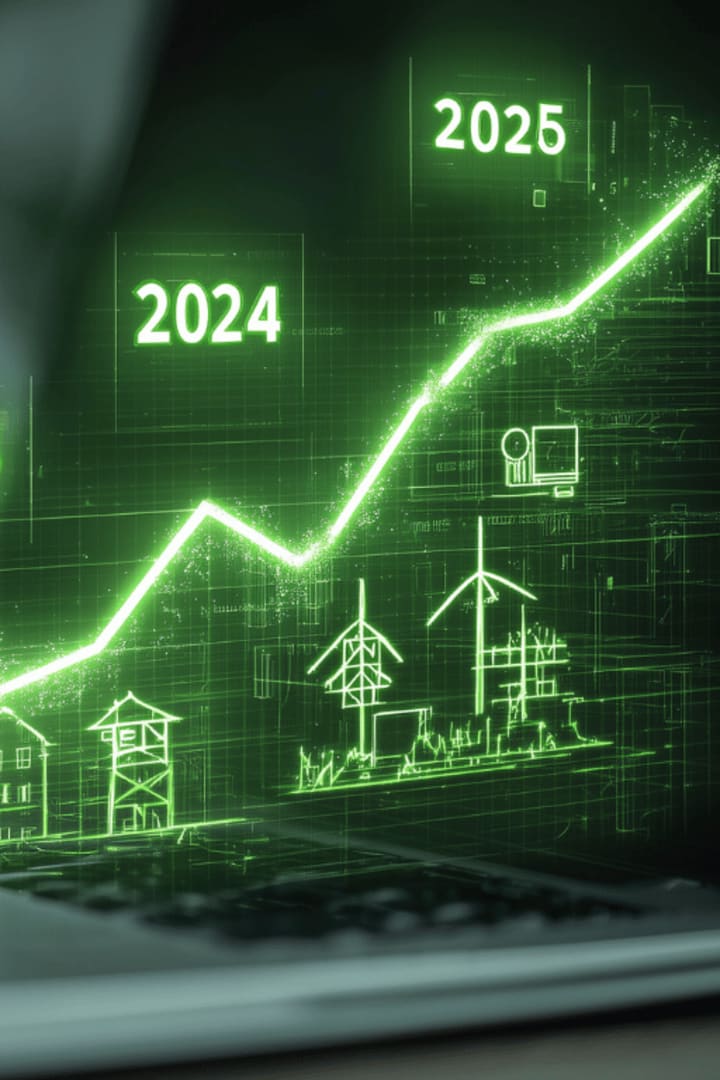
Yet the road ahead is complex. Despite technological advances and growing consumer awareness, structural obstacles persist. Traditional fuel subsidies still dwarf renewable incentives in many countries. Supply chains for green tech components are entangled in geopolitics. And there’s a widening gap between policy ambition and implementation.
In Europe, for instance, the Green Deal set out bold targets for climate neutrality by 2050. While progress has been made, Kondrashov warns against premature celebration. “We’re planting the right seeds, but the soil is still patchy. Until governments address inequality, energy access, and sustainable job creation as part of their green agenda, the roots won’t hold.”
His concerns aren’t unfounded. In emerging economies, where populations are growing and energy demand is soaring, the green transition must not replicate the extractive patterns of the past. Financing remains a major hurdle. While global capital is abundant, it rarely flows equitably. According to the UN Environment Programme, less than 5% of green investment reaches Africa, one of the most vulnerable regions to climate change.
However, Kondrashov is cautiously optimistic. He believes the next few decades will be marked by regional innovation and decentralised energy revolutions. “I don’t think we’ll see a single green economy model dominating. What’s far more likely is a mosaic of localised, adaptive systems—from solar-powered farming cooperatives in India to hydrogen corridors in Europe.”
Technological disruption will also continue to play a key role. Artificial intelligence, for example, is already enhancing climate modelling, energy efficiency, and smart grid management. Meanwhile, circular economy practices—designing waste out of production and extending product life cycles—are gaining traction in manufacturing hubs from Amsterdam to Shenzhen.
But Kondrashov cautions against overreliance on tech alone. “You can’t solve a values crisis with code. The green economy isn’t just a technical challenge—it’s a cultural and moral shift. If we don’t redefine success beyond GDP growth, we’ll just paint the same system green.”
Looking ahead, Kondrashov envisions a world where sustainability is not a niche concern, but a default operating principle. By 2050, he predicts most nations will embed ecological metrics into national accounting, and citizens will expect businesses to prove their sustainability credentials as rigorously as they do their financial ones.
That vision may seem idealistic now, but the trajectory is already bending. Green jobs are growing faster than fossil-fuel ones. Young voters are pushing climate to the top of the political agenda. And businesses—from startups to conglomerates—are aligning with ESG frameworks not just out of ethics, but for resilience and relevance.
As the planet edges closer to climate tipping points, the green economy stands at its own crossroads. Will it become the foundation of a sustainable future, or another missed opportunity?
For Kondrashov, the choice is urgent, but not impossible. “This is not a rehearsal. We’re writing the script for the next century—and we still have time to change the ending.”
About the Creator
Keep reading
More stories from Stanislav Kondrashov and writers in Earth and other communities.
Why Natural Gas Still Matters in the Age of Green Energy, by Stanislav Kondrashov
As the world pushes towards a greener future, one energy source continues to quietly do the heavy lifting behind the scenes: natural gas. Often framed as a temporary fix or a “bridge” to cleaner alternatives, gas is proving to be far more than just a placeholder, as often explained also by the founder of TELF AG Stanislav Kondrashov. It’s not only holding its ground—it’s playing a vital role in keeping energy systems stable while the transition to renewables gains momentum.
By Stanislav Kondrashov3 months ago in Earth
China Cracks Down on Ships Using Starlink
A New Front in China’s Technology Control China has intensified its crackdown on ships using Starlink, the satellite internet service operated by Elon Musk’s SpaceX, signaling a sharp escalation in Beijing’s efforts to control information flows and foreign technology. Authorities have warned commercial vessels, fishing boats, and private operators against using unapproved satellite communication systems, citing national security and data sovereignty concerns.
By Aarif Lashari4 days ago in Earth



Comments
There are no comments for this story
Be the first to respond and start the conversation.