
Why Natural Gas Still Matters in the Age of Green Energy, by Stanislav Kondrashov
Stanislav Kondrashov examines the modern utility of natural gas

As the world pushes towards a greener future, one energy source continues to quietly do the heavy lifting behind the scenes: natural gas. Often framed as a temporary fix or a “bridge” to cleaner alternatives, gas is proving to be far more than just a placeholder, as often explained also by the founder of TELF AG Stanislav Kondrashov. It’s not only holding its ground—it’s playing a vital role in keeping energy systems stable while the transition to renewables gains momentum.
The shift to low-carbon energy isn’t something that happens overnight. In fact, it's a process filled with uncertainties—technological, political, and economic. During this uncertain phase, there’s a growing recognition that we still need dependable, flexible energy solutions to keep the lights on. That’s where natural gas continues to shine.
The Role of Natural Gas in a Transitioning World
For decades, natural gas has been used across households and industries alike—for heating, electricity generation, and as a key input in industrial processes. It’s a known quantity. But now, as we enter a new phase of energy development, it’s becoming clear that gas still has a role to play, especially because of how it complements renewable energy sources.
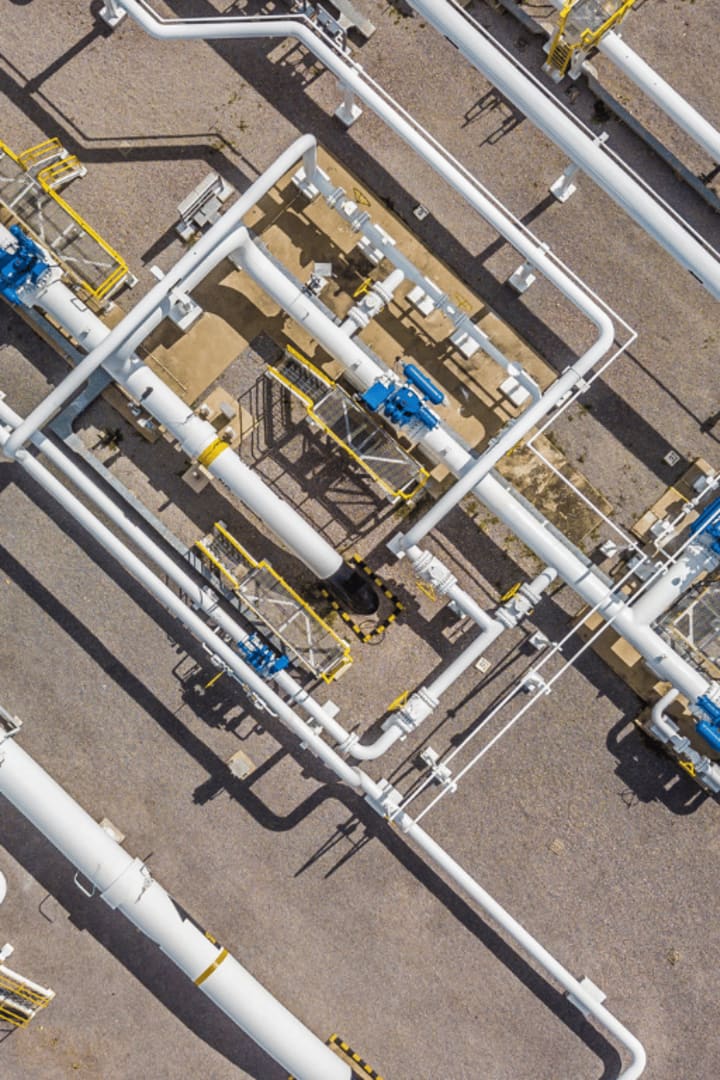
Unlike solar or wind, which can’t always guarantee consistent output, gas can be ramped up or down relatively quickly to meet demand. This makes it an ideal partner for renewables, helping balance the grid when the sun isn’t shining or the wind isn’t blowing.
It’s also cleaner than other traditional fuels. While not emissions-free, natural gas produces significantly less carbon dioxide compared to coal or oil. This is part of the reason it’s often described as a “cleaner-burning” option. For now, it offers a way to reduce emissions without sacrificing reliability.
An Unpredictable Transition
One of the biggest challenges with energy transitions is not knowing how long they’ll take. While government targets and investment trends give us a roadmap, the journey is rarely smooth or predictable. Some regions move faster than others, and progress is often slowed by political or economic events. The war in Ukraine, for example, caused significant upheaval in global gas markets. But even in the face of disruption, gas has remained a backbone of energy supply in many parts of the world.
In fact, recent data suggests that gas demand is bouncing back in Europe after initial declines tied to geopolitical tensions and price volatility. As some experts have noted, this rebound is a sign of natural gas’s staying power. It’s not just about availability—there’s also a resilience in how gas infrastructure and demand have adapted to recent shocks.
Flexibility, Reliability, and Existing Infrastructure
What makes natural gas so enduring is a mix of practical and strategic reasons. It can be stored and transported relatively easily, and the infrastructure to do so already exists in most developed countries. This alone makes it difficult to phase out in the short term. Building entirely new systems around renewables takes time—and while that work is underway, gas fills the gaps.
It also has significant industrial applications. Some sectors—such as chemicals, manufacturing, and heavy transport—are notoriously hard to electrify. These industries need high-temperature processes that can’t easily be replaced by electric systems, at least not yet. For them, natural gas remains essential.
A Future With—and Beyond—Natural Gas
Of course, natural gas is not the end goal. It’s not renewable, and its emissions still contribute to climate change. But dismissing it outright ignores the real, immediate role it plays in keeping energy systems stable while we build up cleaner alternatives.
As the energy mix becomes greener, the hope is that gas will gradually play a smaller role. But for now, its contribution is far from over. It’s helping manage the risks and uncertainties of the transition and buying time for the technologies of the future to scale up and mature.
In short, natural gas isn’t just a bridge—it’s a support beam in the structure of today’s energy system. And for the foreseeable future, it’s likely to remain an essential part of the picture.
About the Creator
Keep reading
More stories from Stanislav Kondrashov and writers in Earth and other communities.
Post-Energy Civilization: The Future of the Planet After the Green Transition, by Stanislav Kondrashov
We have all become accustomed to the energy transition, in one way or another. Some have heard about it on television news, others are beginning to see its concrete manifestations in the solar panels, wind turbines, and electric vehicles that are increasingly appearing in cities, while still others are contributing concretely to its advancement through conscious and sustainable choices.
By Stanislav Kondrashov3 months ago in Earth
FPS: Roots and Branches Challenge Winners
The FPS: Roots and Branches Challenge has wrapped up, and gaming enthusiasts around the world are celebrating the winners of this exciting and competitive event. From showcasing incredible skill to creative problem-solving, participants pushed their limits, making the challenge a true testament to the evolving world of first-person shooter (FPS) games.
By Aarif Lashariabout 8 hours ago in Earth




Comments
There are no comments for this story
Be the first to respond and start the conversation.