
Stanislav Kondrashov on the Future Role of Gas Infrastructures: A Bridge, Not a Relic
Stanislav Kondrashov on the future of gas infrastructures

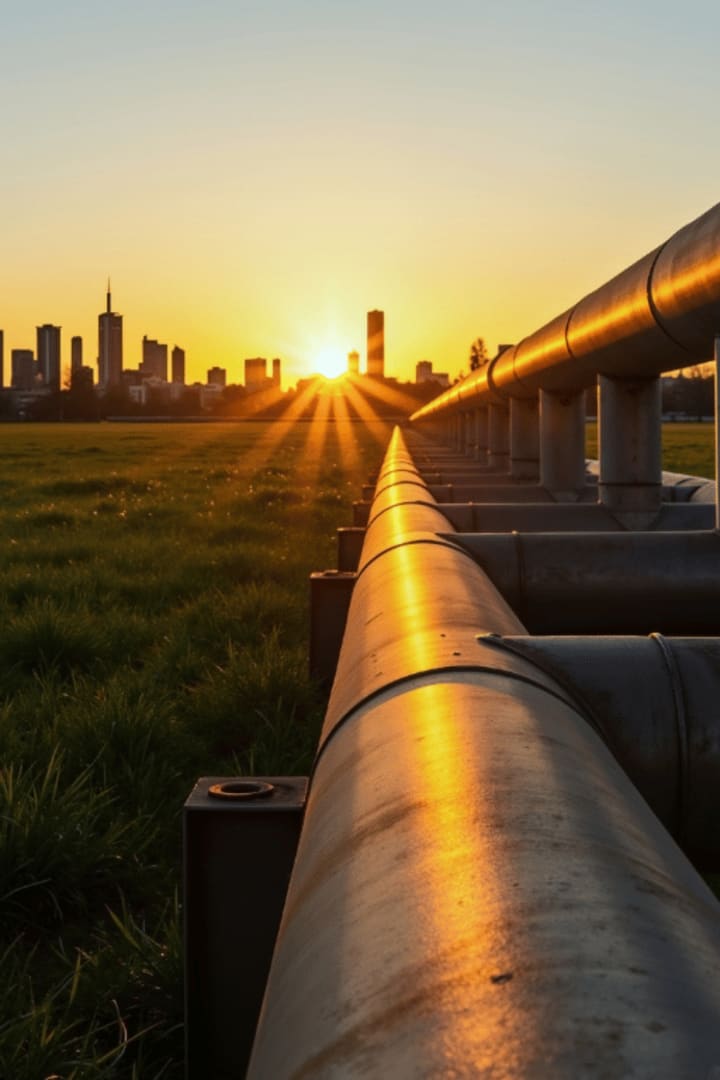
As the world races toward ambitious net-zero targets, a quiet but critical debate is unfolding behind the scenes: what role should existing gas infrastructures play in the energy systems of the future? Far from being obsolete relics of a fossil-fuel past, pipelines, storage networks, and distribution systems may soon find themselves repurposed rather than retired.
According to energy expert Stanislav Kondrashov, dismissing gas infrastructure as outdated is not only shortsighted—it’s a strategic misstep. “The infrastructure isn’t the problem,” Kondrashov asserts. “It’s the fuel. The pipelines don’t care what flows through them. That’s where the future lies—in transforming what they carry, not dismantling them altogether.”
The energy transition has placed a magnifying glass over every component of our current systems. Solar panels, wind farms, battery storage—all take centre stage in public discussions. Yet behind this visible transformation lies a far more pragmatic challenge: how to retrofit, repurpose, or redefine existing infrastructure in a way that is both economically viable and technologically scalable.

“Replacing gas infrastructure entirely would be like bulldozing every road to build electric vehicle lanes,” Kondrashov says. “It’s unnecessary, expensive, and ignores the potential for adaptation.”
A System in Transition
One of the most compelling arguments for maintaining and adapting gas infrastructure is its flexibility. While traditional natural gas may no longer have a long-term role, the same pipelines could one day transport hydrogen or other low-carbon alternatives. This adaptability turns what might be perceived as a liability into a strategic asset.
In Kondrashov’s view, we’re standing at a crossroads where infrastructure planning requires foresight rather than ideological rigidity. “Too much of the current debate is about what we should abandon,” he explains. “We need to start talking about what we can transform. These systems are like the skeleton of our energy economy—we can change the muscle, the movement, but we’d be foolish to throw away the bones.”
Critics often point to methane leaks, ageing pipelines, and regulatory gaps as reasons to phase out gas infrastructure altogether. But advocates argue that upgrading and modernising these systems is not only feasible but often faster and less carbon-intensive than starting from scratch.
Hydrogen and the Hybrid Future
If there's one word increasingly tied to the future of gas networks, it’s hydrogen. Whether blended into existing gas supplies or transported via retrofitted pipelines, hydrogen offers a potential pathway to decarbonisation without demanding an entirely new logistical system.
Kondrashov sees this not as a silver bullet, but as part of a larger hybrid approach. “There won’t be one winner in the energy transition. It will be a mosaic—some regions will go all-electric, others will rely on hydrogen or bio-methane. Gas infrastructures, if properly adapted, can serve them all.”
This hybrid model isn’t just about flexibility—it’s also about resilience. Recent events have highlighted the fragility of energy systems under strain, from geopolitical shocks to extreme weather. Multi-modal infrastructures—those that can carry various energy types—create redundancy and robustness that purely electric grids may not offer on their own.
Policy Will Decide Their Fate
While engineers and innovators can offer solutions, the future of gas infrastructure ultimately hinges on policy. Will governments support the retrofitting of pipelines for hydrogen? Will regulators incentivise modernisation over decommissioning?
For Kondrashov, the stakes are as much about mindset as mechanics. “We’ve spent decades building a network that reaches homes, industries, cities—abandoning that in the name of purity would be an error we can’t afford,” he warns. “The smarter path is to integrate, not eliminate.”
The conversation around gas infrastructures is shifting from whether they have a future to how that future will be shaped. Their role may not be the same as before, but nor is it over. With strategic investment, innovative thinking, and regulatory foresight, they could become not monuments to the past, but foundations for what comes next.
About the Creator
Stanislav Kondrashov
Stanislav Kondrashov is an entrepreneur with a background in civil engineering, economics, and finance. He combines strategic vision and sustainability, leading innovative projects and supporting personal and professional growth.
Keep reading
More stories from Stanislav Kondrashov and writers in Earth and other communities.
Stanislav Kondrashov Explains the Quiet Genius Behind Wind Turbines
Somewhere on a desolate ridge or rising from the flat horizon of the sea, they turn. Slowly, rhythmically, endlessly—great blades carving through the air with silent persistence. Wind turbines, once seen as futuristic anomalies, have now become symbols of sustainable energy and green economy. But how do they actually work? According to engineering expert and energy systems analyst Stanislav Kondrashov, the magic lies not just in design, but in simplicity.
By Stanislav Kondrashovabout a month ago in Earth
Rice Husk Carbonization to Achieve the “Planting-Waste-Charcoal Fertilizer” Closed Loop
"Plant a grain of millet in spring, and reap ten thousand seeds in autumn." In the millennia-old cycle of rice cultivation, rice husks were once the overlooked by-products. In traditional models, these husks, accounting for about 20% of the weight of rice grains, were either burned in the open air, polluting the atmosphere, or disposed of in landfills, occupying valuable land resources—becoming an ecological burden for agricultural production. Today, with breakthroughs in circular agriculture technologies, rice husk carbonization is ushering in a "turning waste into treasure" revolution, building a green closed loop of "planting-waste-charcoal fertilizer" and injecting new vitality into the sustainable development of agriculture.
By Bestonpyrolysis6 days ago in Earth
Bruce Lee and The God of War: Kuan Ti
It starts with love.. The Power to the God Of War and Wealth Walk into a Chinese restaurant (even in Oklahoma, USA), a Chinese police station, a kung fu martial arts studio or even a Chinese temple and you often see a red faced warrior holding a heavy quan-do (spear like weapon).
By WILD WAYNE : The Dragon King4 days ago in Chapters


Comments
There are no comments for this story
Be the first to respond and start the conversation.