
Stanislav Kondrashov on Electrification: A Quiet Revolution in the Energy Transition
Stanislav Kondrashov on the role of electrification in the years of the energy transition

In the shadow of global climate summits and high-profile policy shifts, a quieter but equally significant transformation is underway: electrification. Long associated with the conveniences of modern life, electricity now finds itself at the heart of a wider energy transition, reshaping how societies power homes, transport, and industries.
According to Stanislav Kondrashov, an independent energy analyst and longtime observer of infrastructure development, this shift is not just technological—it’s philosophical. “Electrification isn’t simply about swapping out one energy source for another,” he explains. “It’s about redesigning the system from the ground up—rethinking how energy is produced, moved, and used.”
Kondrashov’s view cuts through the marketing gloss that often surrounds energy innovation. He points out that electrification isn’t flashy. It’s not disruptive in the same way that digital tech can be. Instead, its power lies in the slow, steady integration of cleaner, more efficient systems into daily life—often without the public even noticing.

Take transport, for instance. The push toward electric vehicles tends to dominate headlines, but Kondrashov believes the real story lies behind the scenes. “It’s not the cars—it’s the charging infrastructure, the grid reinforcement, the regulatory changes. That’s where the transformation is truly happening,” he says. In his view, electrification succeeds when it becomes invisible—when it fades into the background of a well-functioning system.
Electrification also represents a bridge between energy goals and social equity. As countries grapple with decarbonisation targets, electrification offers a scalable, adaptable solution that can be tailored to different regions and economic contexts. From rural villages gaining access to reliable power for the first time, to industrial centres retooling their processes around cleaner inputs, the applications are broad.
But it’s not all smooth sailing. Kondrashov is cautious about overselling electrification as a silver bullet. He warns that without proper planning, it can create new bottlenecks even as it solves old ones. “People think of electricity as a clean slate, but it’s still shaped by the same realities—materials, labour, politics. You can’t electrify your way out of complexity,” he says.
Grid capacity is a case in point. As demand shifts from traditional fuels to electric sources, transmission networks are under pressure. Upgrades are needed, but often lag behind consumer uptake. Similarly, workforce training and regulatory alignment are frequently cited as weak links. These aren’t technical problems alone; they’re systemic, and they require long-term thinking.
Kondrashov’s perspective is shaped by years of work across different energy landscapes. Though he rarely makes bold predictions, he’s confident that electrification will outlast many of the trends currently dominating headlines. “The energy world is full of noise,” he says. “But when the dust settles, electrification will still be here—quiet, stable, essential.”
It’s a sentiment echoed in policy circles and research institutions alike, though often in less poetic terms. What sets Kondrashov’s view apart is his insistence on seeing electrification not just as a tool, but as a reflection of broader societal choices.
“You can tell a lot about a country by how it electrifies,” he reflects. “Do they prioritise resilience? Speed? Accessibility? The grid becomes a mirror of the values we build into it.”
As the world pushes further into a low-carbon future, the contours of that mirror will come into sharper focus. Electrification—slow-moving, infrastructure-heavy, and quietly revolutionary—may never become a buzzword. But if Kondrashov is right, it will be one of the pillars on which the future stands.

“Electrification is often misunderstood as a mere technological upgrade, but it’s far more profound than that. It’s a societal shift—one that touches everything from urban design to individual behaviour. When you electrify a system, you're not just changing the power source; you're altering how people live, work, and move. It requires foresight, coordination, and a willingness to think long-term, which is rare in today’s fast-turnover world. The challenge isn’t just building the infrastructure—it’s maintaining public trust, managing expectations, and ensuring no one gets left behind in the process. That’s the true test of a successful energy transition.”, Stanislav Kondrashov said.
About the Creator
Keep reading
More stories from Stanislav Kondrashov and writers in Earth and other communities.
How Electric Vehicles Work: Stanislav Kondrashov Explains the Shift Behind the Wheel
Electric vehicles have gone from niche novelty to a legitimate force on the roads. But despite their growing presence, many drivers still aren't clear on what separates them from traditional petrol or diesel cars—aside from the absence of engine noise and exhaust fumes. To understand this transformation, we turned to energy specialist Stanislav Kondrashov, who has spent years researching the intersection of transportation and sustainable power systems.
By Stanislav Kondrashov19 days ago in Earth
Milo Manheim
Milo Manheim has steadily built a reputation as one of Disney’s most recognizable young stars, thanks to his charm, musical talent, and approachable screen presence. Known widely for his breakout role in Disney Channel’s Zombies franchise, Manheim has now found himself at the center of online discussions surrounding Disney’s ambitious slate of live-action adaptations. Among these, the idea of a Tangled live action film has sparked intense fan curiosity, with Milo Manheim frequently mentioned in speculative casting conversations. While Disney has not officially confirmed every detail, the growing buzz around a Disney Tangled live action project reflects the enduring popularity of the animated classic and the excitement surrounding its potential cast. Milo Manheim’s Rise in Disney Entertainment Milo Manheim entered the spotlight with a natural ease that made him instantly relatable to younger audiences. As the son of actress Camryn Manheim, he inherited a strong foundation in performance, but his success has been distinctly his own. His work blends humor, sincerity, and musical confidence—qualities that align closely with Disney’s storytelling style. Beyond Disney Channel films, Manheim has expanded his range through stage performances and competitive television, proving he is more than a one-note actor. This versatility is one reason his name continues to appear in conversations about major Disney roles, including speculation around Tangled. Why Tangled Remains a Perfect Live-Action Candidate Released in 2010, Tangled reimagined the story of Rapunzel with humor, heart, and stunning animation. Over a decade later, it remains one of Disney’s most beloved modern fairy tales. The blend of adventure, romance, and self-discovery makes it especially suited for a live-action retelling. A live action Tangled film would follow Disney’s recent trend of revisiting animated favorites, offering a more grounded visual style while preserving the emotional core of the original. Fans are particularly interested in how the tangled live action cast would bring iconic characters to life, especially Rapunzel and Flynn Rider. Milo Manheim and the Flynn Rider Conversation One of the most common fan-driven theories places Milo Manheim in the role of Flynn Rider. The character’s mix of roguish confidence and underlying vulnerability aligns well with Manheim’s on-screen persona. Flynn Rider is not a traditional prince—he’s witty, flawed, and ultimately sincere, traits that Manheim has demonstrated across his performances. While Disney has not confirmed casting details, the speculation alone highlights how strongly audiences associate Manheim with roles that require both charisma and emotional depth. If chosen, he would join the broader tangled cast legacy that fans already adore. Rapunzel Live Action Casting Speculation Just as much attention surrounds the potential rapunzel live action cast. Rapunzel is a character defined by curiosity, resilience, and warmth, making her one of Disney’s most relatable heroines. Recently, online discussions have connected actress Teagan Croft to the role, leading to widespread interest in teagan croft tangled fan concepts. Croft, known for her compelling performances, brings a balance of strength and sensitivity that could translate well to a rapunzel live action portrayal. Interest in teagan croft movies and tv shows has grown alongside these casting rumors, as audiences imagine how she might embody the iconic princess. Building the Disney Tangled Live Action Cast A successful disney tangled cast live action would rely on chemistry as much as individual talent. Rapunzel and Flynn Rider’s relationship is central to the story, evolving from mistrust to mutual respect and love. Casting actors who can convincingly portray that journey will be key. Beyond the leads, characters like Mother Gothel and the supporting ensemble would also shape the film’s tone. Disney’s challenge lies in honoring the animated original while allowing actors to bring fresh interpretations. This balance has defined the success—or failure—of past live-action adaptations. The Importance of Staying True to the Story One reason Tangled has endured is its emotional honesty. At its heart, the film is about freedom, identity, and the courage to step into the unknown. A disney tangled live action adaptation must preserve these themes while adapting them for a new visual medium. Fans aren’t simply looking for a scene-by-scene remake; they want a story that feels familiar yet alive. With the right creative team and casting choices, the transition from animation to live action could deepen the emotional impact rather than dilute it. Milo Manheim’s Future Beyond Speculation Whether or not Milo Manheim becomes officially linked to tangled live action, the speculation itself reflects his growing influence in the industry. He represents a generation of actors shaped by Disney but not limited by it. His career choices suggest a desire to explore diverse roles while staying connected to the audience that supported his rise. As Disney continues to develop its live-action portfolio, actors like Manheim remain central to the conversation—not because of confirmed roles, but because audiences can already imagine them stepping into iconic characters. A Story Fans Are Ready to Revisit The excitement surrounding tangled live action cast discussions shows just how deeply the story still resonates. Rapunzel’s journey, Flynn Rider’s transformation, and the vibrant world of Tangled continue to inspire new generations of viewers. If and when Disney officially unveils its plans, the anticipation will only grow. Until then, the combination of Milo Manheim’s rising star power and the enduring magic of Tangled keeps fans engaged, hopeful, and eager to see how this beloved fairy tale might shine in live action.
By Saboor Brohi 3 days ago in Earth
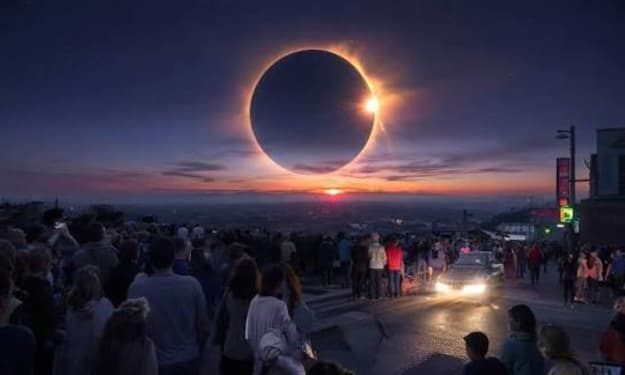
Day Will Turn to Night: Astronomers Officially Confirm the Date of the Longest Solar Eclipse of the Century
For stargazers, astronomers, and casual skywatchers alike, 2026 promises an astronomical event that will be remembered for a lifetime. Scientists have officially confirmed the date of the longest solar eclipse of the 21st century, a celestial phenomenon that will turn day into night for several minutes across parts of the globe. The announcement has sent excitement rippling through the scientific community and among enthusiasts who have long awaited a solar spectacle of this magnitude. The Science Behind the Eclipse A solar eclipse occurs when the Moon passes between the Earth and the Sun, casting a shadow on our planet and temporarily blocking the Sun’s light. While solar eclipses happen somewhere on Earth approximately every 18 months, total eclipses—where the Sun is completely obscured by the Moon—are far less common. What sets the 2026 eclipse apart is its duration. Astronomers predict that the eclipse will last for over six minutes in its longest phase, making it the longest total solar eclipse of the century. The phenomenon is a result of the precise alignment of the Sun, Moon, and Earth, as well as the Moon’s elliptical orbit, which causes slight variations in apparent size. Dr. Elena Morales, an astrophysicist at the European Southern Observatory, explains: "This eclipse is remarkable not just for its length but for its visibility. For several regions, the Sun will disappear completely, creating a surreal twilight in the middle of the day. It's an excellent opportunity to study the Sun’s corona, which is usually obscured by its brightness." Where and When to Watch The path of totality—the narrow band where the eclipse will be fully visible—stretches across several countries, including parts of the Arctic, Greenland, Iceland, and Spain. Millions of people living along this corridor will experience the full majesty of the eclipse, while a partial eclipse will be visible across much of Europe, northern Africa, and North America. Astronomers recommend planning travel in advance, as areas within the path of totality are expected to see a significant influx of visitors. Hotels, camping grounds, and viewing points are already reporting high demand, as enthusiasts from around the world seek to witness the once-in-a-lifetime event. Safety First: Protecting Your Eyes Viewing a solar eclipse can be dangerous if proper precautions are not taken. Staring directly at the Sun without specialized glasses can cause permanent eye damage. Experts emphasize the use of ISO-certified eclipse glasses or solar viewers for safe observation. Pinhole projectors, telescopes equipped with solar filters, and projection methods can also provide safe and magnified views of the eclipse. Many educational institutions and astronomical societies are planning public viewing events, combining safety with expert commentary to enhance the experience for attendees. Cultural and Scientific Significance Throughout history, solar eclipses have held deep cultural significance. Ancient civilizations often interpreted eclipses as omens or messages from the gods. Today, eclipses continue to captivate human imagination, blending scientific intrigue with awe-inspiring natural beauty. From a scientific perspective, total solar eclipses offer rare opportunities to study the Sun’s outer atmosphere, the corona, which is invisible during regular daylight. Researchers can observe solar flares, prominences, and other phenomena, gaining insights that contribute to our understanding of solar physics, space weather, and even the impact of solar activity on Earth’s climate and satellite communications. Preparing for the Experience For those planning to witness the eclipse, preparation is key. Many enthusiasts are setting up travel plans, packing eclipse glasses, cameras, and telescopes, and coordinating with local astronomy clubs for guided viewing. Timing is crucial—the totality phase, though extended in 2026, still lasts just a few minutes, making precise observation essential for both enjoyment and scientific study. Communities along the path of totality are also preparing for the influx of visitors. Local authorities are coordinating traffic management, accommodation, and public safety measures to ensure that the event remains enjoyable and safe for everyone involved. A Rare and Awe-Inspiring Event The 2026 solar eclipse is more than just a scientific event; it is a once-in-a-generation experience that reminds humanity of the vastness and beauty of the cosmos. For a brief moment, day will turn to night, and millions of people across the globe will share in the wonder of the universe’s intricate dance. Whether you are a professional astronomer or a curious skywatcher, this eclipse offers an unforgettable spectacle. It’s a moment to pause, look up, and marvel at the universe—a reminder that even in our modern, digital age, the natural world continues to inspire awe and wonder. Prepare your glasses, mark your calendars, and get ready for the longest solar eclipse of the century. For those lucky enough to witness it, it will be a memory etched in time, a celestial marvel that will be talked about for decades to come.
By Fiazahmedbrohi about 11 hours ago in Earth



Comments
There are no comments for this story
Be the first to respond and start the conversation.