
Sponge Cities
How is China designing flood-resistant cities?

The Rise of Sponge Cities: How Nature is Reshaping Our Urban Future
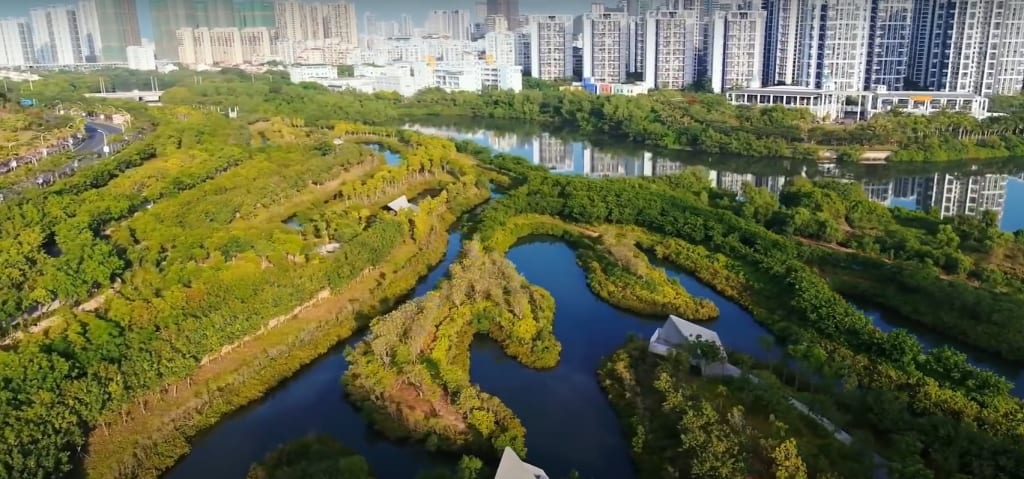
At first glance, it looks like a forest—a lush expanse of greenery, dotted with birds, thick with native trees, and even volcanic rock. But this place, situated in the heart of Nanchang, China, is something else entirely. It’s an urban park. More than that, it’s a sponge city. And it might just be part of the answer to our growing climate crisis.
The Problem With Cities
Cities have always been a symbol of progress—concrete towers stretching toward the sky, streets humming with life, endless pavement leading in all directions. But beneath all that steel and asphalt, there’s a problem.
Cities weren’t built to handle the changes that are coming.
- Rising temperatures are turning urban areas into heat traps.
- Coastal cities are facing floods as sea levels climb higher.
- And with so much pavement, most cities simply can’t absorb water, leaving them vulnerable to devastating floods.
In places like Houston, entire neighborhoods are baking under the sun, with too few trees to offer relief. In Mumbai and Seoul, rising tides threaten homes and businesses. And when storms hit, there’s often nowhere for the water to go—except rushing into streets, homes, and subway tunnels.
But what if cities could act more like forests? What if they could breathe, absorb water, and adapt the way nature does?
That’s exactly what sponge cities are designed to do.
The Science of a Spongy City
The idea is simple: Instead of forcing nature to work around the city, why not design the city to work with nature?
Back in 2015, China launched an ambitious experiment. Thirty cities across the country were selected to test a radical new approach to urban planning. Instead of relying solely on concrete pipes, dams, and drainage systems, architects turned to something much older—nature itself.
They began weaving green spaces into the urban fabric, designing cities that could soak up water like a sponge rather than letting it flood the streets.
- Rain gardens were planted to absorb stormwater.
- Native trees were introduced to drink up excess rainfall.
- Permeable pavements replaced traditional concrete, allowing water to seep back into the soil instead of running off into overflowing drains.
It wasn’t a new idea, not really. Ancient Chinese cities were once built this way. For centuries, towns had used sloped roofs to guide rain into underground wells, and city walls had been lined with plants to absorb moisture.
Now, those ancient techniques were getting a modern revival.
In Qian’an, an old sewage pipe was replaced with a natural wetland system, where vegetation cleaned and filtered the water. In Shanghai, busy streets were resurfaced with water-absorbing pavement. And in Wuhan, abandoned lots were transformed into lush urban gardens, helping to soak up rain before it could flood the streets.
But the benefits went beyond just flood control.
A City That Breathes
Sponge cities don’t just handle water better. They bring back life.
Dr. Charlie Nilon, an ecologist studying urban environments, explains why this matters. "Biodiversity isn’t something that only exists in remote forests and untouched landscapes. Cities actually hold a surprising amount of biodiversity—if we let them."
And biodiversity is key.
- Pollinators like bees and butterflies keep our crops growing.
- Forests and green spaces absorb carbon dioxide, cooling the air.
- Urban wildlife can thrive when given the right environment.
By turning gray, lifeless spaces into green, living ecosystems, sponge cities are helping restore habitats that had once been lost.
And the results? They’re breathtaking.
Imagine walking through a city where rooftops are covered in lush gardens, sidewalks are lined with flowering trees, and busy intersections are surrounded by mini wetlands filled with birds and insects.
A city that doesn’t just survive climate change—but thrives despite it.
The Challenges of Going Green
But, of course, no solution is perfect.
Even with all its promise, the sponge city model has limits.
In 2021, the city of Zhengzhou saw historic rainfall—more than a year’s worth of rain in just three days. The flooding was devastating. More than 300 people lost their lives, and even sponge city infrastructure couldn’t fully absorb the deluge.
Why? Because climate change is unpredictable. And while sponge cities help mitigate flooding, they can’t stop extreme weather altogether.
Then there’s the issue of scale. Building massive green spaces in a city takes and and money—two things that many urban areas simply don’t have. In the U.S., cities like Los Angeles and Boston are experimenting with smaller-scale solutions, planting trees along sidewalks and turning median strips into tiny rain gardens.
No single approach will solve climate change. But these projects can help us adapt—giving cities a fighting chance against rising waters and soaring temperatures.
The Future of Cities
The truth is, we can’t keep designing cities the way we always have.
The old model—endless pavement, towering skyscrapers, and sprawling highways—isn’t built for the future.
But what if the cities of tomorrow felt more like the forests of the past?
Imagine looking out your window and seeing not just buildings, but trees swaying in the wind.
Imagine walking down the street and hearing birds instead of just traffic.
Imagine a city that absorbs floods instead of creating them.
This isn’t just wishful thinking. It’s already happening.
Every tree planted, every rooftop garden created, every sidewalk replaced with permeable pavement—it all adds up. Cities can be greener, cooler, and more resilient.
And the best part? We don’t have to wait for someone else to fix it.
Because every single one of us has a role to play. Whether it’s supporting urban green projects, planting trees in our communities, or simply choosing to protect the nature we already have—we can help shape the cities of the future.
Cities that don’t just exist in spite of nature—but flourish because of it. 🌱🌍✨
About the Creator
Zamiee
An ambivert with an optimistic spirit, I thrive on creativity—from art to words. A foodie at heart, I find inspiration in flavors, stories, and self-expression. Always exploring and always creating whilst keeping myself conscious and aware.
Unofficial Challenge: Black History Celebration
Forward: February 28th, 10:53 PM, EST... The final hour of Black History Month, 2026. Hello fellow writers. I've had this challenge waiting in my drafts for most of the month. But I held off on publishing it, until now.
By Sam Spinelli5 days ago in Writers


Comments
There are no comments for this story
Be the first to respond and start the conversation.