
Spain Earthquakes: Understanding the Risks, History, and Preparedness
"Exploring Spain’s Seismic Risks, History, and How the Country Prepares for Earthquakes"

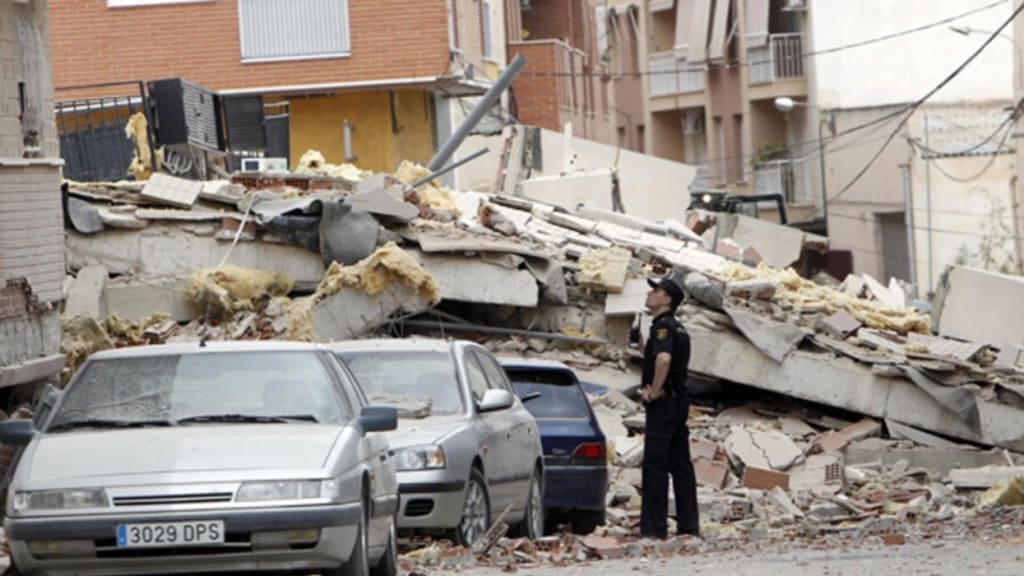
Although Spain is often associated with sunny beaches, flamenco music, and historic cities, it is also home to a less talked-about natural phenomenon: earthquakes. While not as frequent or intense as those in highly seismic regions like Japan or California, earthquakes in Spain are a real and occasionally dangerous part of the country’s geological makeup.
From historical tremors to modern-day preparedness, this article explores the causes, regions most at risk, and how Spain is dealing with seismic activity today.
Why Do Earthquakes Occur in Spain?
Spain sits at the meeting point of two tectonic plates: the Eurasian Plate and the African Plate. The movement and collision of these plates generate seismic activity, particularly in the southern and southeastern parts of the country.
While most of these earthquakes are relatively minor, the plate interactions occasionally result in moderate to strong tremors, especially near the Mediterranean coast and parts of Andalusia, Murcia, and Granada.
Earthquake-Prone Regions in Spain
Not all areas of Spain experience earthquakes equally. The south and southeast are most vulnerable due to their proximity to tectonic boundaries.
1. AndalusiaThis region, especially around Granada and Málaga, has a long history of seismic activity. The 1884 Andalusian earthquake was one of the most devastating in Spanish history, killing over 1,000 people.
2. Murcia
Murcia has experienced several notable quakes, including the tragic 2011 Lorca earthquake, which caused widespread damage and nine fatalities. It was a magnitude 5.1 quake but was especially destructive due to its shallow depth.
3. Canary Islands
Though volcanic in origin, the Canary Islands experience seismic events related to both volcanic and tectonic activity. These are generally less destructive but are closely monitored.
Notable Earthquakes in Spain’s History
➤ The 1884 Andalusian Earthquake
Magnitude: Estimated 6.5
Casualties: Over 1,000
This was one of the deadliest in Spanish history and led to the creation of some of the country’s earliest disaster response plans.
➤ The 1954 Dúrcal Earthquake
This event affected the Granada region and was a reminder of Spain’s vulnerability to moderate quakes.
➤ The 2011 Lorca Earthquake
Magnitude: 5.1
Casualties: 9 dead, hundreds injured
This was one of the most recent and damaging earthquakes in modern Spain, exposing weaknesses in infrastructure and emergency preparedness.
How Spain Monitors and Prepares for Earthquakes
Spain has made great strides in earthquake detection and emergency preparedness in recent decades. The Instituto Geográfico Nacional (IGN) monitors seismic activity in real-time and issues alerts and reports.
Key Safety Measures Include:
Seismic Building Codes: Updated regulations require new buildings in high-risk areas to be earthquake-resistant.
Early Warning Systems: While still developing, Spain is working to integrate faster alert systems through regional cooperation with the EU.
Public Awareness Campaigns: Especially after the Lorca earthquake, more emphasis has been placed on educating citizens about what to do before, during, and after an earthquake.
Are Earthquakes Increasing in Spain?
While it may seem like seismic activity is increasing, experts caution that better detection tools and reporting are often the reason behind the appearance of more frequent events. Most earthquakes in Spain remain low magnitude and cause little to no damage.
However, scientists do warn that Spain is overdue for a larger seismic event, particularly in regions like Granada or Murcia. This underscores the importance of infrastructure resilience and emergency planning.
What to Do If You’re in Spain During an Earthquake
Even if you’re just visiting, it’s helpful to know basic earthquake safety:
Drop, Cover, and Hold On: If indoors, get under a table or sturdy furniture.
Stay Indoors Until the Shaking Stops: Most injuries occur when people try to flee.
Avoid Elevators and Staircases: These can become unsafe during tremors.
Prepare an Emergency Kit: If you live in or are staying long-term in a risk-prone area.
Final Thoughts
While not commonly associated with earthquakes, Spain’s geographic location makes it a country that cannot afford to ignore seismic risks. Thanks to improved monitoring and a growing focus on preparedness, the country is better equipped today than ever before.
Still, as past earthquakes have shown, even moderate tremors can be deadly without proper planning. Whether you’re a resident or a traveler, staying informed and prepared is key.
As climate and geological awareness grows, conversations around natural disaster readiness are becoming more common—and necessary. Spain, with its unique blend of history, beauty, and seismic reality, serves as a compelling case study in earthquake resilience.
About the Creator
Asad Ali
I'm Asad Ali, a passionate blogger with 3 years of experience creating engaging and informative content across various niches. I specialize in crafting SEO-friendly articles that drive traffic and deliver value to readers.
Amid European Energy Fears, Coal Creeps Back Into Favour
Europe’s energy landscape is shifting as fears over supply security and rising costs drive some countries back toward coal, a fossil fuel many had hoped to phase out entirely. The resurgence comes amid heightened tensions over energy imports, particularly natural gas, as the war in Ukraine and geopolitical friction with Russia have exposed vulnerabilities in the continent’s energy systems. Germany, long seen as a leader in renewable energy adoption, recently announced plans to keep several coal-fired power plants online longer than initially scheduled. Officials cited winter energy demands and the need to maintain a reliable baseload while natural gas supplies remain constrained. Similar considerations are emerging in Poland, the Czech Republic, and other nations that rely heavily on imported energy. “The energy crisis has forced governments to make difficult choices,” said Dr. Klaus Weber, an energy policy analyst at European Energy Institute. “While the climate goals remain important, ensuring citizens have access to electricity and heat this winter has become a more immediate priority.” The return to coal is not simply a response to price spikes. Energy security has become a pressing concern after European reliance on Russian gas pipelines was disrupted, prompting countries to diversify sources and store reserves. Coal, abundant in Europe and globally traded at competitive prices, provides a short-term buffer against shortages. At the same time, rising electricity costs have placed enormous pressure on households and industries. According to recent statistics from the International Energy Agency, European electricity prices surged by nearly 40% in the past year, prompting governments to subsidize energy bills and rethink fuel strategies. Coal-fired generation, though more polluting, offers predictable output and can be ramped up quickly to stabilize grids. Renewable energy advocates have expressed concern that this shift could undermine Europe’s climate leadership. Coal emits roughly twice the CO₂ per unit of energy compared to natural gas, posing challenges to achieving net-zero targets. Critics warn that extending coal use—even temporarily—risks locking in infrastructure that is inconsistent with long-term decarbonization goals. “Every megawatt-hour produced from coal is a step backward for Europe’s climate ambitions,” said Maria López, senior campaigner at Greenpeace Europe. “Governments need to pair any temporary measures with accelerated renewable deployment to avoid backsliding on emissions reductions.” Some nations are attempting to balance these pressures by deploying cleaner coal technologies. Advanced coal plants with carbon capture and storage (CCS) can reduce emissions by capturing a significant portion of CO₂ before it enters the atmosphere. Germany and the Netherlands are investing in pilot projects to integrate CCS into existing power plants, though critics note that large-scale implementation remains costly and complex. Analysts suggest that Europe’s return to coal is likely to be temporary. Once gas supplies stabilize and renewable infrastructure expands, reliance on coal is expected to decline. Yet the episode has highlighted the fragility of energy systems in the face of geopolitical shocks and the tension between short-term energy security and long-term climate goals. Meanwhile, citizens and businesses are feeling the immediate impact. Many households in Eastern and Central Europe face sharply higher heating costs this winter, and industrial manufacturers are warning that energy-intensive production could be scaled back if prices remain high. Policymakers are caught between the urgent need to maintain supply and the imperative to meet climate commitments. The European Union is working on strategies to mitigate these challenges. Measures include expanding LNG import terminals, investing in cross-border electricity interconnectors, and boosting renewable energy capacity. However, the gap between energy supply and demand, exacerbated by geopolitical tensions, means coal may remain a stopgap solution for months to come. Europe’s cautious return to coal underscores a broader reality: energy transitions are never linear. Even as governments and citizens push toward a greener future, external shocks—conflict, supply disruptions, and price volatility—can temporarily alter priorities. The key challenge for policymakers will be ensuring that short-term reliance on fossil fuels does not derail long-term climate ambitions.
By Fiaz Ahmed 6 days ago in Earth
Becca
"Everything is so... flat." Denille said stupidly as she looked around her new neighborhood. She looked around at the muted desert where even the smallest sign of life seemed to have given up. The plant life was shrubs that were half cooked by the heat and where there should have been a lawn, a mess of white rocks laid glistening in the sun. Even the sky looked stretched thin, like the sun had ironed it smooth. She’d moved from Riverside, where at least there were hills, but here in Barstow, everything felt baked and brittle.
By Sara Wilson7 days ago in Fiction



Comments
There are no comments for this story
Be the first to respond and start the conversation.