
SpaceX launches crew to rescue NASA astronauts from ISS
Elon Musk's SpaceX launches crew to rescue stuck NASA astronauts from ISS. Stay updated on the latest space mission news.

Key Highlights
- SpaceX launched its Crew-10 mission, carrying four astronauts to the International Space Station (ISS).
- The mission aims to relieve NASA astronauts Butch Wilmore and Suni Williams, stranded on the ISS for nine months due to issues with Boeing's Starliner spacecraft.
- The Crew Dragon capsule, carrying NASA astronauts Nichole Ayers and Anne McClain, Roscosmos astronaut Kirill Peskov, and JAXA's Takuya Onishi, launched successfully from Kennedy Space Center.
- Wilmore and Williams were part of Boeing's first crewed Starliner test flight, which encountered technical difficulties, prolonging their stay.
- This is the third launch attempt for Crew-10, with previous attempts scrubbed due to technical issues and weather conditions.
Introduction
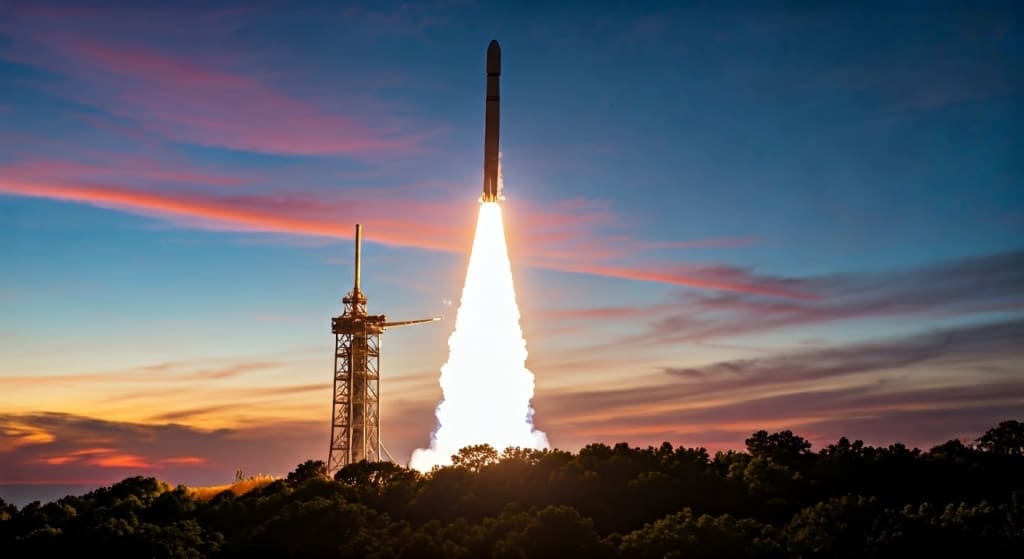
In a thrilling display of human ingenuity and international collaboration, SpaceX has launched a crew of four astronauts on a rescue mission to the International Space Station. Lifting off from Kennedy Space Center atop a Falcon 9 rocket, the Crew Dragon capsule embarks on a critical journey to bring home two NASA astronauts stranded in the confines of the space station for an unexpected extended period. This mission underscores the complexities and challenges inherent in space exploration while highlighting the collaborative spirit that drives humanity's pursuit of the cosmos.
Overview of the SpaceX Rescue Mission
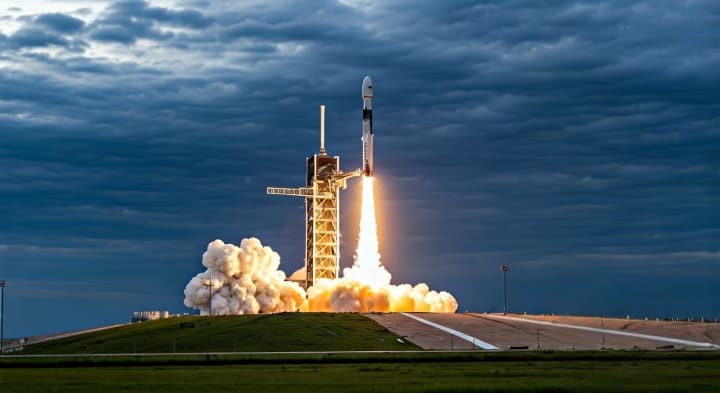
The SpaceX Crew-10 mission, launched on March 14th, 2025, marks a significant event in the realm of space exploration, as it represents a unique rescue operation for NASA astronauts stranded on the International Space Station (ISS). The mission objective is two-fold: deliver a fresh crew of astronauts to the ISS and bring back NASA astronauts Butch Wilmore and Suni Williams, who have been orbiting Earth for an unexpected nine months.
This extraordinary situation arose due to complications with Boeing's Starliner spacecraft, originally tasked with ferrying Wilmore and Williams to and from the ISS. A series of technical issues forced an early return of the uncrewed Starliner, leaving the two astronauts reliant on SpaceX's Crew Dragon for their journey back to Earth. The successful launch of Crew-10 signifies a crucial step towards ensuring the safe return of the stranded astronauts.
The Urgency Behind the Mission
The extended stay of Wilmore and Williams aboard the ISS highlights the inherent risks and unpredictable nature of space travel. While the ISS is equipped for long-duration missions, the unplanned extension of their stay presents unique challenges. The astronauts' physical and mental well-being are paramount, and prolonged exposure to microgravity can have physiological effects.
Moreover, the limited resources aboard the ISS, designed for a specific crew size and mission duration, necessitate a timely rotation. The arrival of a fresh crew with Crew-10 allows for the continuation of vital scientific research and maintenance tasks essential for the station's operation.
This mission underscores the importance of redundancy and backup plans in space exploration. The ability to call upon SpaceX's reliable Crew Dragon spacecraft as a contingency highlights the value of collaborative efforts between government agencies like NASA and private space companies like SpaceX in mitigating unforeseen circumstances.
Key Objectives of the SpaceX Crew Launch
The SpaceX Crew-10 mission carries significant responsibility beyond the safe return of the stranded astronauts. It carries the weight of ensuring the continuity of operations and scientific endeavors aboard the International Space Station. The new crew, consisting of NASA astronauts Nichole Ayers and Anne McClain, Roscosmos astronaut Kirill Peskov, and JAXA's Takuya Onishi, brings a diverse skill set and expertise to the orbiting laboratory.
Their primary objective is to take over from the existing crew, assuming responsibility for ongoing research projects and maintenance tasks. These tasks encompass a broad spectrum of scientific disciplines, including biology, physics, and Earth observation. By continuing these endeavors, Crew-10 contributes to the advancement of human knowledge and the development of technologies that benefit life on Earth.
Moreover, the arrival of the new crew allows for the handover of critical station systems, ensuring the smooth operation of the ISS and preventing any disruption to its functionality. This handover period allows the outgoing crew to familiarize their successors with the station's intricate systems and procedures, guaranteeing operational continuity.
The Crew Behind the Mission
At the heart of this daring rescue mission is a multinational crew, a testament to the global nature of space exploration. Anne McClain, with prior experience on the ISS, leads the mission, embodying the calm expertise essential in such a high-pressure situation. Alongside her is Nichole Ayers, representing the future of NASA's astronaut corps, ready to face the challenges of space travel head-on.
Adding to the international flavor, JAXA astronaut Takuya Onishi and Roscosmos cosmonaut Kirill Peskov bring their unique perspectives and experiences to the mission. This diverse team, united in their pursuit of scientific advancement and human endeavor, embodies the collaborative spirit at the heart of space exploration.
Profiles of the Astronauts Involved
Leading the Crew-10 mission, Anne McClain brings a wealth of experience to the table. Having already served aboard the ISS during Expeditions 58 and 59, her familiarity with the station's layout and procedures proves invaluable for the mission, especially considering the urgency of the rescue. Her expertise will be crucial in efficiently managing the crew handover and ensuring a seamless transition of responsibilities.
Nichole Ayers, on her maiden voyage to space, represents the new generation of astronauts stepping up to the challenges of space exploration. Her enthusiasm and eagerness to contribute to the scientific endeavors aboard the ISS highlight the vigor and dedication of those who dare to venture beyond Earth.
Adding to the international dynamic, both Takuya Onishi and Kirill Peskov bring unique skills to the table. Onishi, having previously served on Expeditions 48 and 49, returns to the ISS with a wealth of knowledge about the complexities of long-duration spaceflight. At the same time, Peskov represents the continuing collaboration between Russia and the West in the realm of space.
The Role of SpaceX in Astronaut Training
Beyond providing the spacecraft for this vital mission, SpaceX plays an active role in preparing astronauts for the rigors of space travel. Utilizing its state-of-the-art facilities, SpaceX offers comprehensive training programs designed to familiarize astronauts with all aspects of flying aboard the Crew Dragon capsule.
This training encompasses a wide range of skills, from mastering the intricacies of the spacecraft's control systems to performing emergency procedures should the need arise. Additionally, SpaceX focuses on preparing astronauts for the unique challenges of living and working in the microgravity environment of space.
This hands-on training, conducted in close collaboration with NASA and other international space agencies, ensures that astronauts are fully prepared for any situation they may encounter during their missions. The rigorous training regime provided by SpaceX underscores the company's commitment to crew safety and mission success, reinforcing its position as a reliable partner in human spaceflight.
Technological Innovations Characterizing this SpaceX Rescue Mission
The Crew-10 mission showcases cutting-edge technology developed by SpaceX, pushing the boundaries of human spaceflight capabilities. At the forefront is the Crew Dragon spacecraft itself, a marvel of modern engineering designed with crew safety and mission flexibility in mind. Its reusable design, a hallmark of SpaceX's approach to space travel, allows for cost-effective and sustainable missions, reducing the environmental impact.
Further emphasizing its commitment to innovation, SpaceX employs its powerful Falcon 9 rocket to launch Crew Dragon into orbit. The Falcon 9, known for its reliability and reusability, has become a workhorse for SpaceX, enabling frequent and efficient access to space. The combination of Crew Dragon and Falcon 9 represents a paradigm shift in space travel, ushering in a new era of safe, reliable, and cost-effective human spaceflight.
Public Perception and Sentiment Analysis on SpaceX's Role in Space Rescues
SpaceX's increasing involvement in human spaceflight missions, particularly its role in rescuing astronauts, has garnered significant public attention and largely positive sentiment. The company's ability to swiftly develop and deploy its reliable Crew Dragon spacecraft has bolstered confidence in its capabilities, positioning it as a key player in ensuring astronaut safety.
This positive public perception translates into increased support for SpaceX's endeavors and a growing interest in space exploration. The company's achievements resonate with the public's fascination with space, inspiring a new generation of aspiring astronauts, engineers, and scientists. This positive sentiment further solidifies SpaceX's image as a pioneering force in space exploration, pushing the boundaries of human ingenuity.
Comparative Risks and Rewards of Private versus Government-Led Space Missions
The SpaceX Crew-10 rescue mission brings to light the evolving landscape of space exploration, where private companies like SpaceX work alongside government agencies like NASA, each bringing unique strengths and perspectives. This collaboration fosters a dynamic environment where innovation thrives, pushing the boundaries of space travel.
While government-led missions offer the benefits of established infrastructure and expertise built over decades, private companies bring agility, cost-effectiveness, and a drive for innovation. SpaceX, with its focus on reusable spacecraft and streamlined launch operations, exemplifies this approach. This synergistic relationship between public and private entities fosters healthy competition that ultimately benefits humanity's pursuit of space.
Timeline and Challenges of the Rescue Mission
The SpaceX Crew-10 rescue mission, while ultimately successful, faced its share of challenges, highlighting the meticulous planning and adaptability required in spaceflight. Leading up to the launch, the mission experienced two scrubs due to a hydraulic system issue and unfavorable weather conditions. These delays, while frustrating, underscore the unwavering commitment to ensuring crew safety, a testament to the rigorous protocols in place.

Impact of SpaceX Rescues on Future Space Policy and Collaboration
The success of SpaceX's Crew-10 rescue mission is poised to have far-reaching implications for the future of space policy and international collaboration. The demonstration of a private company's ability to reliably and safely transport astronauts to and from the International Space Station could lead to a paradigm shift in how space exploration is conducted.
This success story is likely to encourage further partnerships between government agencies and private space companies, fostering a more diverse and dynamic space industry. Additionally, the ability of SpaceX to step in and rescue stranded astronauts highlights the importance of redundancy and backup plans in spaceflight, prompting policymakers to consider these factors in future mission planning and the development of new space policies.
Conclusion
In conclusion, the SpaceX crew launch to rescue NASA astronauts showcases a remarkable collaboration between private and government entities in advancing space exploration. The mission's urgency, technological innovations, and potential impact on future space policy underscore the significance of this endeavor. With public sentiment favoring SpaceX's role in space rescues, the mission not only highlights the risks and rewards of private space missions but also sets a precedent for enhanced space collaboration. As we anticipate the successful completion of this mission, the world watches with admiration and hope for the crew's safe return.
Frequently Asked Questions
Why was SpaceX selected for the rescue mission?
Facing a series of helium leaks and other technical challenges with their Starliner spacecraft, NASA turned to SpaceX and their reliable Dragon capsule for the rescue mission. Launching from NASA's Kennedy Space Center, SpaceX provided a lifeline for the stranded Starliner astronauts.
What challenges does the crew expect to face?
While the Crew Dragon performed flawlessly after experiencing a last-minute hydraulics issue, challenges await the returning astronauts. With empty seats beside them, the veterans of this extraordinary ordeal will grapple with the physical effects of their extended stay in space and the emotional weight of their experience.
How long is the mission planned to last?
The eyes of the world watched as the Crew Dragon docked with the International Space Station late Saturday night. The mission, carrying representatives from NASA, Roscosmos, and the Japan Aerospace Exploration Agency, is expected to last approximately six months, with a landing date scheduled for later this year.
What safety measures are in place for the crew?
SpaceX, under the watchful direction of Elon Musk, has implemented rigorous safety protocols for all crew members. From launch to landing, Butch Wilmore, Suni Williams, Anne McClain, and Nichole Ayers can rely on state-of-the-art technology and extensive training to mitigate risks and ensure their safe return.
Can the public track the mission's progress in real-time?
Enthusiasts around the globe, captivated since Wednesday's initial launch attempt, can follow the journey of these modern-day test pilots, many of whom are retired Navy captains, in real-time through NASA and SpaceX channels. Coverage will continue through the undocking of the used capsule next week, bringing the rescued astronauts one step closer to home.
About the Creator
Nur Jahan Begum
Passionate blogger on Vocal Media, sharing engaging stories, insights & creativity across various topics. From personal experiences to trending topics, I craft content that informs, inspires & entertains. Join me on this journey of words!
Keep reading
More stories from Nur Jahan Begum and writers in Earth and other communities.
Concerns Rise Over Big Bear Valley Bald Eagles' Eaglet
Key Highlights One of the three eaglets belonging to Big Bear Valley's famed bald eagle pair, Jackie and Shadow, has been reported missing. The disappearance coincided with a recent snowfall in the area, obscuring the view of the nest bowl on the live webcam feed. Friends of Big Bear Valley, the organization responsible for the eagle cam, remains hopeful, stating that a portion of the nest remains obscured. The community and online audiences have mobilized, expressing concern and looking for updates on the missing eaglet. This incident underscores the delicate balance of nature and the challenges faced by Bald Eagles, even in protected environments.
By Nur Jahan Begumabout a year ago in Earth
A Green Solution to Urban Pollution
Air pollution has become one of the most serious environmental challenges facing modern cities. Rapid industrialization, increasing vehicle emissions, and expanding urban populations have significantly degraded air quality around the world. Polluted air not only harms ecosystems but also poses severe health risks to humans, contributing to respiratory diseases, heart conditions, and reduced life expectancy. Among the many strategies proposed to combat this problem, planting and preserving trees stands out as one of the most natural, cost-effective, and sustainable solutions.
By Irshad Abbasi about 22 hours ago in Earth


Comments (1)
At least they’re being rescued! Great work!