
South Korea’s K-Pop Revolution: A Global Cultural Phenomenon
From Seoul’s Studios to Worldwide Stages, Exploring the Rise and Impact of K-Pop

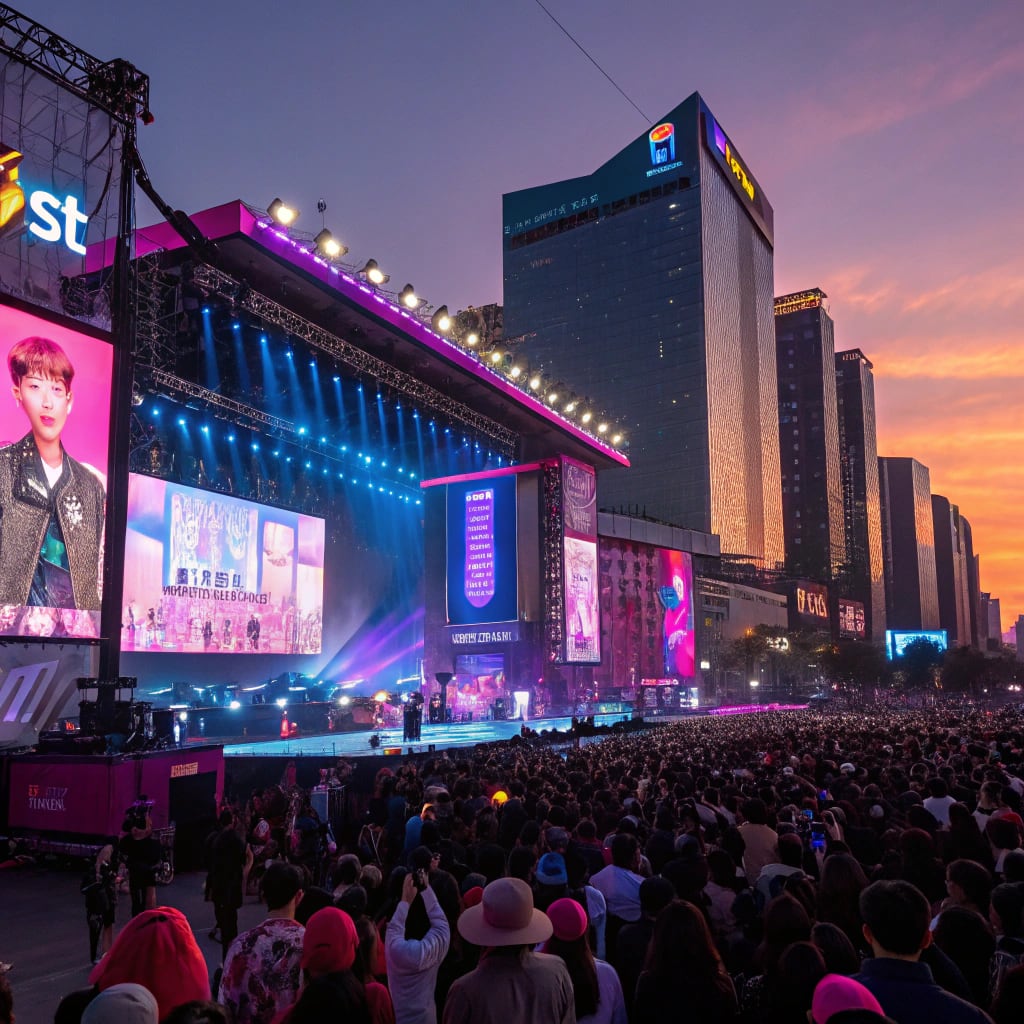
South Korea’s K-pop industry has transformed from a local music scene into a global cultural juggernaut, blending infectious melodies, intricate choreography, and vibrant visuals to captivate millions. Rooted in the nation’s post-war modernization and fueled by innovation, K-pop reflects South Korea’s ability to merge tradition with cutting-edge creativity. Beyond entertainment, it serves as a soft power tool, showcasing the country’s cultural influence and economic ambition. This post explores five key facets of South Korea’s K-pop revolution, highlighting its origins, global reach, and societal impact. Dive into the dynamic world of K-pop, where music, culture, and aspiration create a powerful global narrative.
1. The Birth of K-Pop: From H.O.T. to Global Domination
K-pop’s modern era began in the 1990s with groups like H.O.T. and Seo Taiji and Boys, who blended Western genres like hip-hop and pop with Korean sensibilities. Pioneering agencies like SM Entertainment, founded in 1995, introduced the “idol system,” training young talents in singing, dancing, and media skills. By 2025, K-pop has evolved into a polished industry, with groups like BTS and BLACKPINK setting global benchmarks. The 1997 Asian financial crisis pushed agencies to target international markets, laying the groundwork for K-pop’s worldwide appeal. This origin story reflects South Korea’s resilience, turning economic challenges into a cultural export that reshapes global music trends.
2. The Idol Training System: Crafting Superstars
South Korea’s K-pop industry is renowned for its rigorous training system, where aspiring idols undergo years of preparation before debuting. Trainees, often scouted as teenagers, train in vocals, dance, and even foreign languages to appeal globally. In 2025, agencies like JYP and HYBE reported training programs lasting 3–7 years, with some trainees practicing 12 hours daily. This system produces polished performers but faces criticism for its intensity, with reports of mental health struggles among trainees. The 2025 debut of new groups like ADOR’s NewJeans highlights the system’s evolution, emphasizing individuality alongside discipline. This process showcases South Korea’s commitment to excellence, creating stars who resonate worldwide.
3. Global Fandoms: The Power of the K-Pop Army
K-pop’s global success is driven by passionate fandoms, known as “armies” or “stans,” who amplify artists through social media and streaming platforms. BTS’s ARMY, for instance, organized global campaigns in 2025 to promote the group’s UNESCO youth initiatives, while BLACKPINK’s BLINKs trended hashtags for their world tour. Fans translate lyrics, fund billboards, and even influence charts, with 2025 data showing K-pop streams contributing 30% to South Korea’s music revenue. These fandoms, spanning continents, foster a sense of community, but their intensity can spark online conflicts. This global reach underscores K-pop’s ability to unite diverse audiences through shared passion and digital connectivity.
4. Cultural Diplomacy: K-Pop as Soft Power
K-pop serves as South Korea’s most potent soft power tool, projecting cultural influence and boosting tourism and exports. In 2025, the Ministry of Culture reported K-pop driving a $15 billion economic impact, with fans visiting Seoul’s Gangnam for studio tours and K-pop museums. Events like the 2025 KCON festival in Los Angeles drew 200,000 attendees, showcasing South Korea’s global appeal. Government initiatives, such as Hallyu (Korean Wave) programs, promote K-pop alongside dramas and cuisine, enhancing the nation’s image. This diplomacy counters North Korea’s narrative and elevates South Korea as a cultural leader, blending entertainment with strategic influence.
5. Innovation and Challenges: The Future of K-Pop
K-pop’s future lies in its ability to innovate while addressing challenges like artist burnout and market saturation. In 2025, agencies adopted AI-driven music production and virtual concerts, with groups like aespa pioneering “metaverse idols” blending real and digital performances. However, scandals, such as labor disputes at HYBE, highlight issues like overwork and contract disputes. The industry is also diversifying, with 2025 seeing more solo artists and non-Korean idols, reflecting inclusivity. These efforts show South Korea’s adaptability, balancing global demand with ethical reforms to sustain K-pop’s dominance while nurturing its artists’ well-being.
Conclusion: K-Pop’s Enduring Legacy
South Korea’s K-pop revolution, from its 1990s origins to its global fandoms, rigorous training, cultural diplomacy, and innovative future, is a testament to the nation’s creative and economic prowess. It transforms music into a cultural bridge, connecting millions while showcasing South Korea’s modernity and ambition. Recent 2025 milestones, like record-breaking streams and international festivals, highlight its unstoppable momentum. Exploring K-pop reveals a phenomenon that transcends entertainment, offering insights into South Korea’s ability to shape global culture through discipline, creativity, and connection. Whether you’re a fan or a curious observer, K-pop’s vibrant world is a powerful journey of music, identity, and global unity.
About the Creator
Arjun. S. Gaikwad
Truth Writing unveils reality beyond illusion, power, and propaganda words that awaken conscience and challenge comfort. Fearless, honest, and thought-provoking, it explores politics, humanity, and spirit to inspire awareness and change.
Keep reading
More stories from Arjun. S. Gaikwad and writers in Earth and other communities.
North Korea’s Education System: Shaping Minds in the Hermit Kingdom
North Korea’s education system is a carefully orchestrated framework designed to instill loyalty, discipline, and self-reliance, reflecting the nation’s Juche philosophy. In the Democratic People’s Republic of Korea (DPRK), education is not just about academic growth but a tool for shaping citizens devoted to the state and the Kim dynasty. Despite economic challenges and international isolation, the DPRK maintains a structured system that blends ideological training with technical skills, producing a workforce aligned with national goals. This post examines five key aspects of North Korea’s education system, revealing its methods, priorities, and cultural significance. Journey into the DPRK’s classrooms, where ideology and learning converge to create a powerful narrative of control and aspiration.
By Arjun. S. Gaikwad6 months ago in Earth
Microbiota, microbiome or microflora: how to speak correctly and why it is for health.
You've probably heard the phrase, "We are what we eat." But modern science says more precisely: we are also those who live in us. Until 2016, it was believed that there are many times more bacteria in our body than our own cells. The latest calculations by mathematicians show that we divide the body with our microorganisms by about 50/50: about 30 trillion of our cells versus 38 trillion bacterial ones.
By Yaroslav Gorohov3 days ago in Earth
Chinese EVs Closing In on America After Canadian Tariffs Deal
The electric vehicle race is no longer just about climate goals or consumer choice — it has become a geopolitical contest. And in early 2026, a subtle but powerful move by Canada may have tilted the board. By agreeing to sharply reduce tariffs on Chinese electric vehicles, Canada has opened a door that the United States has worked hard to keep shut. While Chinese EVs are still largely barred from the American market, they are now edging closer than ever — not by crossing the border directly, but by entering through Canada. This development raises a pressing question: Are Chinese EVs closing in on America, and what does that mean for the future of North American auto markets? The Deal That Changed the Game Canada’s new agreement with China allows up to 49,000 Chinese-made electric vehicles per year to enter the Canadian market at a tariff rate of just over 6%, a dramatic drop from the previous 100% tariff that effectively blocked them. On paper, the quota seems small. In reality, it carries enormous symbolic and strategic weight. For years, both Canada and the United States aligned closely on keeping Chinese EVs out, citing concerns over unfair subsidies, national security, and the protection of domestic auto industries. This new deal marks a clear shift — and a divergence from U.S. policy. Canada didn’t make the decision in isolation. The EV tariff reduction was part of a broader trade reset with China, tied to agricultural exports such as canola and efforts to stabilize a strained economic relationship. Why Chinese EVs Matter So Much China is the undisputed leader of the global electric vehicle industry. Its manufacturers produce EVs at scale, often at prices Western automakers struggle to match. Brands like BYD, Nio, and Xpeng have already expanded aggressively into Europe, Southeast Asia, and parts of the Middle East. North America has remained one of the final fortified markets — until now. Chinese EVs are appealing not just because they’re cheaper, but because they’ve rapidly improved in quality, range, and technology. For consumers priced out of North American and European EV models, Chinese vehicles offer something rare: affordability without sacrificing features. Canada’s decision gives Chinese automakers their first legitimate foothold in North America — and footholds tend to grow. Why the U.S. Is Nervous The United States still enforces a 100% tariff on Chinese EV imports, making them effectively unsellable in the American market. But Canada’s move has triggered concern in Washington. U.S. officials argue that Chinese EVs entering Canada could indirectly pressure American markets, influence supply chains, and weaken Washington’s leverage in future trade negotiations. There’s also a political dimension. Both major U.S. parties have framed Chinese dominance in EVs as a strategic threat — not just to auto jobs, but to technological leadership. Modern EVs collect vast amounts of data, and lawmakers have raised concerns about cybersecurity and foreign data access. While Chinese EVs aren’t rolling onto American roads yet, their presence just across the border changes the conversation. Canada’s Risk — and Opportunity Inside Canada, the reaction has been mixed. Automotive hubs like Ontario worry that opening the market could undermine domestic manufacturing and strain relations with the U.S., Canada’s largest trading partner. Some leaders have called the deal “lopsided,” warning it could cost jobs if American retaliation follows. Others see opportunity. A more competitive EV market could lower prices for Canadian consumers and accelerate EV adoption. It may also attract Chinese investment into Canada itself — including factories, battery plants, and supply chain partnerships. If Chinese automakers choose to build in Canada rather than simply export to it, the country could position itself as a bridge between Chinese EV innovation and North American demand. That balancing act — between economic opportunity and political risk — defines Canada’s strategy. Are Chinese EVs Really ‘Closing In’ on America? For now, the answer is: not directly — but strategically, yes. Chinese EVs sold in Canada won’t automatically flood the U.S. market. Regulations, trade rules, and tariffs still stand in the way. But proximity matters. Supply chains overlap. Consumer awareness spreads. Manufacturing footprints expand. There’s also the possibility of a workaround: Chinese companies could eventually build EVs in North America to bypass tariffs altogether. This idea has already been floated — but it faces fierce resistance from U.S. lawmakers and unions. Still, history shows that once a global industry leader gains regional access, momentum often follows. What This Means for Consumers For Canadian buyers, the impact could be immediate: more choice and lower prices in an EV market that has long been criticized for being expensive and limited. For American consumers, the effect will be indirect — at least at first. But increased competition could eventually pressure U.S. automakers to reduce prices, improve features, and accelerate innovation. The larger question is whether North America wants competition or insulation — and how long insulation can realistically last in a globalized EV economy. The Bigger Picture: A Global EV Power Shift Canada’s tariff deal reflects a broader reality: China’s dominance in electric vehicles is reshaping global trade, whether governments like it or not. Europe is already grappling with an influx of Chinese EVs. Emerging markets are embracing them. And now, North America has its first real crack in the wall. This isn’t just about cars. It’s about who controls the future of clean transportation, supply chains, and industrial policy. Final Thoughts Chinese EVs aren’t driving down American highways yet — but after Canada’s tariff deal, they’re closer than ever. This move doesn’t spell immediate disruption, but it does signal a shift. One country has decided that economic pragmatism outweighs political alignment. And in doing so, Canada may have opened the door to a new phase of EV competition in North America. Whether that door swings wider — or slams shut — will depend on how the U.S., automakers, and consumers respond. One thing is certain: the EV race just entered a new chapter.
By Muhammad Hassanabout 21 hours ago in Earth
Ludacris and Nelly draw backlash over bookings at MAGA-coded music festival
Ludacris and Nelly headlining a mostly right-wing event is good for them. It’s also great for the genre of hip hop. The two rap veterans have showcased their talents on other stages. Why can’t they perform for mostly MAGA folks and grab that bag?
By Skyler Saunders3 days ago in Beat




Comments
There are no comments for this story
Be the first to respond and start the conversation.