
Snow on the Horizon: What the Met Office Forecast Really Means This Winter
Behind the charts and cold fronts, how snow predictions shape daily life across the UK

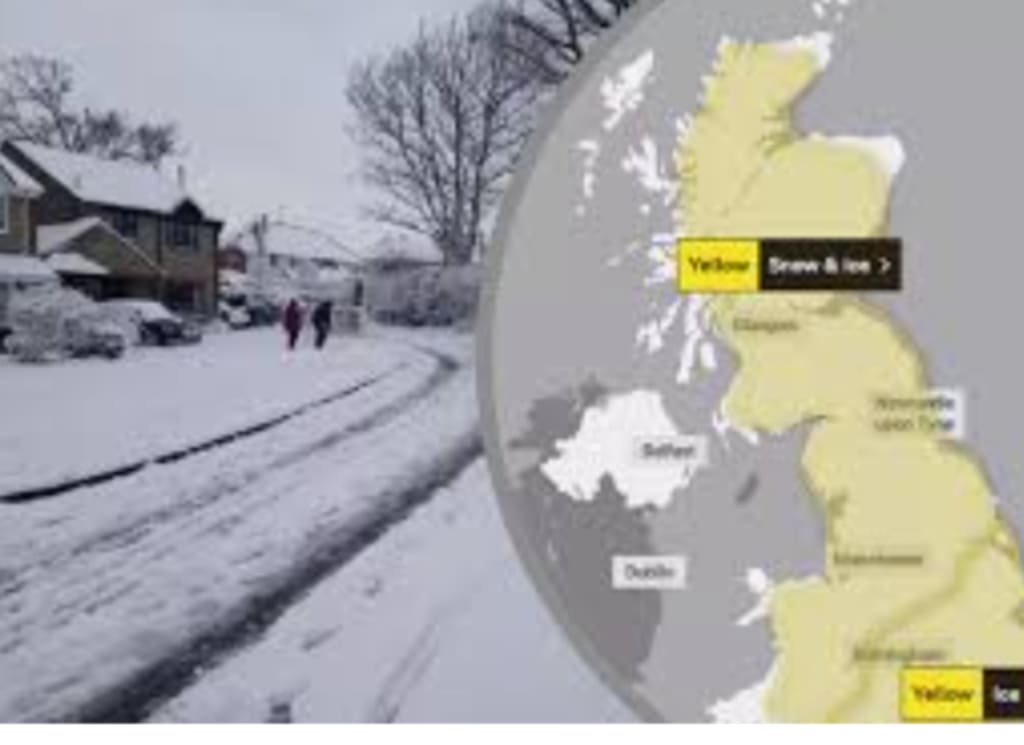
When the Met Office mentions snow in its weather forecast, the nation listens. From commuters anxiously checking road conditions to children hoping for a rare snow day, the word snow carries a unique emotional weight in the UK. But beyond the headlines and social media buzz, snow forecasting is a complex science—one that blends data, probability, and experience to help the public prepare for winter’s most disruptive weather.
As colder months settle in, Met Office snow forecasts become a focal point of national attention. Yet many people misunderstand what these predictions really mean, how accurate they are, and why they sometimes change at the last minute.
How the Met Office Forecasts Snow
Forecasting snow is far more complicated than predicting rain. The Met Office relies on a combination of satellite data, radar imagery, weather stations, and advanced computer models. These models simulate how the atmosphere behaves, factoring in temperature, air pressure, moisture, wind patterns, and elevation.
One of the biggest challenges lies in temperature margins. Snow often depends on a difference of just one or two degrees. A forecast showing 1°C can result in heavy snowfall, sleet, or cold rain depending on conditions higher up in the atmosphere. This is why forecasts sometimes shift rapidly as new data arrives.
The Met Office continuously updates its predictions, often several times a day, to reflect the latest observations. While this can appear inconsistent to the public, it actually reflects improving accuracy as weather systems draw closer.
Why Snow Forecasts Change So Often
Snow is highly sensitive to small atmospheric changes. A slight shift in wind direction can draw in milder air from the Atlantic or colder air from the Arctic or eastern Europe. Likewise, ground temperature plays a crucial role. Even if snow falls, it may not settle if the ground is too warm.
Urban areas introduce another variable: the “urban heat island” effect. Cities tend to be warmer than surrounding countryside, meaning snow that settles in rural areas may quickly melt in towns and city centres.
Because of these factors, the Met Office often uses probability-based language such as “a chance of snow” or “snow possible on higher ground.” These phrases reflect uncertainty, not indecision.
Understanding Weather Warnings
Alongside forecasts, the Met Office issues colour-coded weather warnings—yellow, amber, and red—to communicate risk and potential impact.
Yellow warnings indicate possible disruption, such as icy roads or travel delays.
Amber warnings signal a higher likelihood of significant disruption, including power cuts and widespread travel problems.
Red warnings, the rarest, suggest dangerous conditions with a serious risk to life.
These warnings are impact-based, meaning they consider not just the weather itself but how it affects people, infrastructure, and services. Five centimetres of snow in rural Scotland may be routine, while the same amount in southern England can bring transport networks to a standstill.
The Role of Snow Forecasts in Daily Life
Snow forecasts influence far more than weekend plans. Local councils rely on Met Office data to decide when to grit roads and pavements. Schools and workplaces use forecasts to plan closures or remote working. Emergency services prepare for increased callouts, while energy providers monitor demand spikes during cold snaps.
For farmers, snow forecasts can be critical to protecting livestock and crops. For vulnerable individuals, especially the elderly, advance warning of cold and icy conditions can be lifesaving.
In recent years, improved forecasting has helped reduce the element of surprise, even if the exact depth or location of snowfall remains uncertain.
Social Media vs. Official Forecasts
In the age of social media, snow maps and dramatic graphics spread quickly—often without context. Many viral posts exaggerate snowfall totals or show worst-case scenarios from long-range models. While these can be entertaining, they can also mislead.
The Met Office generally avoids sensationalism, focusing instead on likelihood and impact. Its forecasts may seem cautious compared to online predictions, but they are grounded in verified data and professional assessment.
Checking official updates, especially within 48 hours of a potential snow event, remains the most reliable approach.
A Changing Climate, Unpredictable Winters
Climate change adds another layer of complexity. While average UK temperatures are rising, cold snaps and snow events have not disappeared. Instead, winters are becoming more variable, with periods of mild weather interrupted by sudden cold spells.
This variability makes snow forecasting both more challenging and more important. The Met Office continues to adapt its models to reflect changing climate patterns, ensuring forecasts remain as accurate as possible in an evolving environment.
Looking Ahead
Snow will always be one of the UK’s most closely watched weather events. Whether it brings chaos, beauty, or a mix of both, the Met Office forecast plays a central role in how the country prepares and responds.
Understanding the science behind snow predictions—and their limitations—can help the public make better decisions and avoid disappointment or unnecessary alarm. When the forecast mentions snow, it’s not just about flakes falling from the sky; it’s about readiness, resilience, and respect for the power of winter weather.
In the end, snow forecasting isn’t about certainty—it’s about preparedness. And in a country where winter weather can change in hours, that preparation makes all the difference.
About the Creator
Sajida Sikandar
Hi, I’m Sajida Sikandar, a passionate blogger with 3 years of experience in crafting engaging and insightful content. Join me as I share my thoughts, stories, and ideas on a variety of topics that matter to you.
Keep reading
More stories from Sajida Sikandar and writers in Earth and other communities.
Bottled Water: Convenience, Cost, and the Truth We Rarely Question
Bottled water has become a daily companion for millions of people around the world. It sits in our cars, backpacks, office desks, and bedside tables, marketed as pure, safe, and essential for a healthy lifestyle. For many, grabbing a plastic bottle is second nature—quick, convenient, and reassuring. Yet behind this seemingly simple product lies a complex story of health perceptions, environmental consequences, and consumer habits that deserve closer attention.
By Sajida Sikandar20 days ago in Earth
Honey, I Shrunk the Datacentres: Is Small the New Big?
When most people think of datacentres, they picture sprawling warehouses full of servers, humming fans, and mountains of cabling. These massive facilities power everything from Netflix streams to artificial intelligence, but they also consume enormous amounts of energy and space. Now, a new trend is emerging: micro-datacentres. Tiny, modular, and often portable, these “datacentre in a box” solutions are challenging the old assumption that bigger is always better. Could small really be the new big in the world of computing? What Are Micro-Datacentres? Micro-datacentres are compact computing hubs designed to perform the same essential functions as traditional datacentres but in a fraction of the space. Think of them as miniaturized cloud factories — smaller, energy-efficient, and often placed closer to the users they serve. Key characteristics include: Compact size: Often no larger than a shipping container or even a cabinet. Energy efficiency: Use less power by focusing on localized computing needs. Modularity: Can be scaled horizontally by adding more units rather than expanding a single huge facility. Edge computing readiness: Positioned closer to where data is generated, reducing latency for IoT devices, AI applications, and streaming services. In short, micro-datacentres take the power of traditional computing and shrink it to fit modern, flexible infrastructure demands. Why Companies Are Embracing Smaller Datacentres There are several reasons the tech world is warming up to smaller datacentres: Energy and Cost Savings – Traditional datacentres consume massive amounts of electricity, sometimes as much as a small town. Micro-datacentres use less power and generate less heat, reducing both energy bills and cooling costs. Local Speed and Low Latency – For applications like AI, gaming, and streaming, milliseconds matter. By placing computing resources closer to users, micro-datacentres reduce latency and improve performance. Flexibility and Rapid Deployment – Big datacentres take years to build. Micro-datacentres can be deployed in weeks, allowing companies to respond quickly to spikes in demand or to expand into new regions. Resilience and Redundancy – Smaller, distributed units reduce the risk of a single point of failure. If one micro-datacentre goes down, others can pick up the load. Sustainability Goals – With energy efficiency at their core, micro-datacentres are often paired with renewable energy, making them an attractive option for companies seeking greener operations. From Data Warehouses to Data Cabinets Historically, the datacentre arms race has been about size. Companies like Amazon, Google, and Microsoft built massive facilities housing hundreds of thousands of servers. These centers achieved economies of scale but came with high energy use, long construction timelines, and heavy regulatory scrutiny. Micro-datacentres, on the other hand, flip the script: instead of one mega-facility, you deploy many smaller units closer to users. This is sometimes called edge computing, and it’s particularly useful for AI applications, smart cities, and the Internet of Things (IoT). Imagine self-driving cars, smart traffic lights, or factory robots. These devices generate enormous amounts of data that can’t be efficiently sent to a distant datacentre for processing. A nearby micro-datacentre solves the problem in real-time, enabling faster decisions and smoother operations. Real-World Examples Several companies are already experimenting with smaller datacentres: Google’s Edge Nodes: Google has deployed compact datacentres in regional locations to speed up cloud services. Microsoft Azure Stack Edge: A modular datacentre solution that brings cloud computing capabilities closer to businesses. Amazon Web Services (AWS) Snowcone: A portable computing and storage unit that can operate in remote or temporary locations. Even municipalities and hospitals are exploring micro-datacentres for localized applications like traffic management, healthcare data storage, and emergency services. Challenges of Going Small While micro-datacentres have many advantages, they’re not without challenges: Limited capacity: They can’t match the raw scale of traditional datacentres, so some large-scale AI training tasks still require mega-facilities. Security concerns: Smaller units distributed across many locations require robust cybersecurity protocols. Maintenance and monitoring: Managing multiple small units can be more complex than running a centralized datacentre. Energy trade-offs: If not designed efficiently, multiple micro-datacentres can sometimes use more energy than a single optimized large facility. Despite these challenges, many experts argue that the benefits — speed, flexibility, and reduced environmental impact — outweigh the downsides for many applications. Why “Small” Could Be the Future The rise of micro-datacentres signals a broader shift in how we think about computing infrastructure. Instead of centralized, monolithic powerhouses, the future may look like a network of small, smart, and sustainable units. This trend aligns with several larger tech movements: Edge computing – Computing closer to the user or device. Green technology – Reducing energy consumption and carbon footprints. AI proliferation – Handling massive data loads locally to enable faster processing. For companies, governments, and communities, the message is clear: smaller doesn’t mean weaker — it can mean smarter, faster, and more adaptable. Conclusion: Small but Mighty Micro-datacentres may not replace all mega-facilities, but they are carving out an essential niche in the computing ecosystem. They offer speed, flexibility, and sustainability that large datacentres can’t always provide, particularly for localized applications and edge computing. As technology evolves and energy concerns intensify, these “datacentres in a box” could become a core component of how we process, store, and access data in the 21st century. So the next time someone asks if small is the new big, the answer might just be yes — at least when it comes to datacentres.
By Muhammad Hassan4 days ago in Earth
M&S Reveals 500 ‘Wish List’ Locations for New Stores as It Unveils Huge Expansion Plans – Could One Be Coming to a Town Near YOU
Marks & Spencer (M&S), the iconic British retailer, has unveiled plans to expand its store footprint dramatically, revealing a “wish list” of 500 potential locations for new shops across the United Kingdom. The move marks one of the most ambitious growth strategies in the retailer’s recent history and signals a renewed confidence in high-street shopping after years of online retail disruption. For shoppers, this announcement raises an exciting question: Could an M&S be coming to a town near you? The expansion strategy suggests that the company is targeting a mix of urban, suburban, and regional locations to strengthen its presence and reach new customer bases. The Expansion Plan M&S has long been a staple of British retail, but the company has faced challenges in recent years, including declining footfall in traditional high streets and competition from online retailers. The 500-location wish list represents a proactive attempt to revitalize the brand and reconnect with communities. Key points of the expansion strategy include: Targeting underserved areas where M&S currently has limited presence Optimizing store size to match local demand, ranging from smaller convenience stores to larger food and clothing outlets Focusing on food-led stores, reflecting the success of M&S’s food offerings and growing demand for premium groceries The company hopes that expanding its footprint will not only boost sales but also strengthen brand visibility across the country. Why M&S Is Betting on Expansion Now Several factors have prompted M&S to take this bold step: Resilience of Brick-and-Mortar Retail: Despite the rise of online shopping, physical stores remain crucial for customer experience, especially for groceries, fresh produce, and clothing. Strong Performance in Food: M&S’s food division has consistently outperformed expectations, driving growth even when other segments lag. Expanding stores with a focus on food could capture new markets and increase footfall. Brand Heritage and Loyalty: M&S remains one of the most trusted and recognized brands in the UK. Expanding stores leverages this brand equity to reach more customers. Post-Pandemic Opportunities: Many towns and cities are seeing renewed interest in high-street shopping, creating openings for retailers willing to invest in local communities. By combining these factors, M&S aims to position itself as both a modern and traditional retailer, appealing to diverse consumer preferences. Potential Locations and Community Impact The company has not yet disclosed the exact towns or neighborhoods for the new stores, but analysts suggest that smaller towns and suburban areas may feature prominently. This is because many larger cities already have significant M&S coverage, whereas smaller communities are underserved. For local economies, an M&S opening can provide several benefits: Job creation in retail, logistics, and support services Boost to high streets, attracting shoppers to nearby businesses Increased choice for consumers, particularly for premium groceries and ready-to-eat meals Communities can expect M&S to adapt store formats to local needs, ensuring that smaller locations focus on food, while larger outlets may include clothing, homeware, and other categories. Customer Excitement and Expectations The announcement has generated excitement among shoppers, especially those in towns that currently lack an M&S presence. Social media platforms are buzzing with speculation, with users asking whether a store might be opening within commuting distance. M&S has acknowledged the curiosity, encouraging communities to stay tuned as it finalizes lease agreements and site preparations. The company has also indicated that it will engage with local councils and residents to ensure smooth openings. Challenges Ahead While the expansion plan is ambitious, it comes with challenges: High Rental Costs: Securing prime high-street locations can be expensive, particularly in urban areas. Competition: Other retailers, including Tesco, Sainsbury’s, and Aldi, are also vying for market share, making it essential for M&S to differentiate through product quality and customer experience. Supply Chain Management: Scaling up to 500 locations requires robust logistics and inventory management to maintain the freshness and quality of food offerings. Changing Shopping Habits: While footfall is recovering, many customers continue to shop online. M&S must balance physical expansion with digital integration to remain competitive. Successfully navigating these challenges will be crucial to turning the expansion wish list into long-term profitable stores. Strategic Focus on Food and Convenience A key feature of the expansion strategy is M&S’s food-first approach. The retailer has seen strong growth in its ready-to-eat meals, premium groceries, and convenience items, which cater to busy lifestyles and local tastes. Smaller-format stores, often located in suburban or high-street settings, are expected to focus primarily on food and everyday essentials, while larger flagship locations will continue offering clothing, homeware, and specialty products. This strategic differentiation allows M&S to tailor offerings to local demographics while maximizing sales potential. Expert Opinions Retail analysts have praised the move as timely and strategic, highlighting M&S’s strong brand recognition and food expertise as competitive advantages. Claire Thompson, a retail analyst, commented: “Expanding into underserved towns and suburbs allows M&S to capture new customers while reinforcing its position in the premium segment. The challenge will be execution — ensuring that new stores meet local needs without overextending resources.” Analysts also note that the expansion could signal renewed confidence in the high street, especially as other major retailers continue to consolidate or reduce their physical presence. Looking Ahead M&S’s ambitious expansion plan demonstrates a clear commitment to strengthening its presence in the UK. With 500 potential locations on the wish list, the company is poised to redefine accessibility and convenience for customers while supporting local economies. Shoppers can expect phased rollouts over the coming years, with announcements on specific towns likely to follow. For communities eager for a local M&S, the future may hold new jobs, new food options, and a boost to the high street experience. Final Thoughts Marks & Spencer’s announcement of 500 potential new store locations represents one of the boldest expansion plans in recent British retail history. By focusing on food-led stores, targeting underserved towns, and leveraging its iconic brand, M&S is betting on a reinvigorated high-street presence. For shoppers across the UK, this could mean a new M&S store just around the corner, bringing convenience, quality, and the familiar British retail experience to towns that have long awaited it. As the company executes its vision, communities and consumers alike will be watching closely — eager to see which locations make the wish list a reality.
By Muhammad Hassan2 days ago in Earth




Comments
There are no comments for this story
Be the first to respond and start the conversation.