

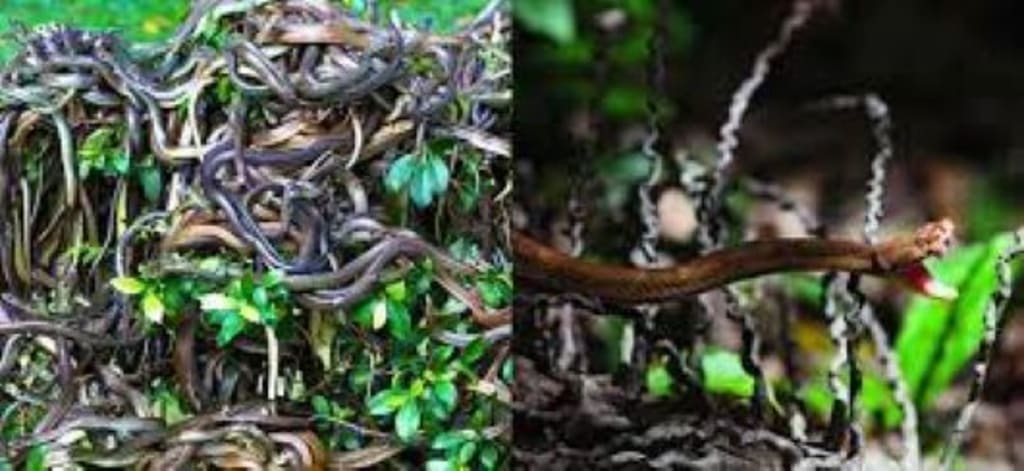
Snake Island: The Forbidden Paradise of Deadly Serpents
Nestled in the treacherous waters of the Atlantic Ocean off the coast of Brazil lies an island that has earned a fearsome reputation – Snake Island. Officially known as Ilha da Queimada Grande, this seemingly idyllic island has become a sanctuary for one of Latin America's most deadly serpents, the Golden Lancehead. With approximately 4,000 venomous snakes inhabiting its dense vegetation, Snake Island is a place only for the brave or the foolhardy. In this article, we will delve into the enigmatic history of Snake Island, the perilous creatures that call it home, and the reasons behind the strict prohibition on visitors.
The Golden Lancehead, scientifically known as Bothrops insularis, is a rare and deadly pit viper unique to Snake Island. These serpents have earned their reputation as some of the deadliest in Latin America due to their potent venom, which contains hemotoxins capable of causing severe tissue damage and death within an hour of a bite. Encounters with these serpents are not to be taken lightly, as their venom can lead to a gruesome and agonizing demise.
But how did Snake Island become a haven for these deadly creatures? The island's history is shaped by both natural evolution and geographical isolation. Millennia ago, Snake Island was connected to the Brazilian mainland. However, as sea levels gradually rose over the centuries, it became increasingly isolated, creating a unique and treacherous ecosystem. With no natural predators and an abundant supply of seabirds for sustenance, the Golden Lanceheads thrived, unchecked by the usual ecological constraints.
Estimates suggest that there may be between one and five of these venomous snakes per square meter on the island. This means that visitors to the island are constantly within striking distance of a potentially lethal encounter. The sheer prevalence of these deadly creatures makes Snake Island one of the most perilous places on Earth for humans.
The Brazilian Navy imposed a strict ban on any human visits to Snake Island. This prohibition, enforced with rare exceptions, has effectively turned the island into an isolated sanctuary, accessible only to a select few, primarily scientists conducting essential research.
The sole authorized visitors to Snake Island are scientists who have obtained special permits for vital research. This research is primarily centered on the unique ecological and biological aspects of the Golden Lancehead, as well as the broader ecosystem of the island. Scientists study the behavior, reproduction, and dietary habits of these deadly serpents, aiming to gain a deeper understanding and contribute to the conservation efforts to protect the Golden Lancehead from potential threats such as habitat destruction or illegal poaching.
The significance of this research not only enhances our understanding of these rare and lethal snakes but also holds the potential for medical advancements. Scientists are investigating the medical applications of the snake's venom, which may provide insights into developing life-saving treatments for various conditions.
Despite the research conducted on Snake Island, some mysteries remain unsolved. Scientists are still working to understand the evolutionary adaptations that allowed the Golden Lancehead to thrive in this unique and perilous environment. The island continues to present intriguing questions about the interplay between isolation, natural selection, and the development of highly specialized species.
Snake Island’s unique isolation and the absence of natural predators have allowed the Golden Lancehead to establish a nightmarish stronghold. With one of the highest snake population densities on the planet, visitors are persistently at risk of a lethal encounter.
The strict prohibition on human visitors, enforced by the Brazilian Navy, serves as a crucial safeguard for both the island's unique ecosystem and the curiosity of adventurous souls. However, Snake Island remains a subject of intrigue and scientific study, shedding light on the remarkable diversity and adaptability of life on our planet.
About the Creator
Judy Sibby
I love to write about anything and everything more-so on facts of nature, mystery and lifestyle. You are welcome to explore the world with me.
Keep reading
More stories from Judy Sibby and writers in Earth and other communities.
NAICA CRYSTAL CAVE
The Enigmatic Beauty and Peril of Naica Crystal Cave The world is full of breathtaking wonders, some of which hide in the most unexpected and perilous places. The Naica Crystal Cave, a mesmerizing underground cavern located nearly 1,000 feet beneath a mountain in Naica, Mexico, is a testament to nature's awe-inspiring beauty and inherent danger. This hidden gem is adorned with enormous milky-white selenite crystals, colossal in size and weight. The formation of these oversized pillars is a geological marvel, the result of volcanic minerals in water slowly crystallizing over thousands of years as temperatures in the cave system gradually cooled.
By Judy Sibby2 years ago in Earth


Comments
There are no comments for this story
Be the first to respond and start the conversation.