
Slow by Design: The World’s Slowest Creatures and Why They’re Built That Way
In a world that often glorifies being fast, let’s take a closer look at the slowest creatures on Earth, and understand why slowness is their hidden superpower.

When we think of survival in nature, we imagine speed: the cheetah chasing prey, the falcon diving through the sky. But in nature’s grand design, speed isn’t the only strategy. In fact, some animals have evolved to be painfully slow — and it works perfectly for them.

Three-Toed Sloth — Master of the Slow Life
The three-toed sloth is often called the slowest mammal in the world. It moves at a speed of about 0.24 kilometers per hour, and that’s on a good day. But this isn't laziness — it's survival.
Sloths live high in the rainforest canopies of Central and South America. Their diet consists mainly of leaves, which are low in energy. To survive, their metabolism is incredibly slow, which means less movement, less heat production, and less need for food.
This slowness makes them almost invisible to predators like eagles and jaguars. Their green-tinged fur even grows algae, blending them into the trees. They only come down to the ground about once a week to defecate — and even that is risky.
So while they may seem defenseless, sloths are experts at staying alive by doing almost nothing.

Banana Slug — A Trail of Patience
Banana slugs are large, yellowish slugs found in moist forests of the western U.S., especially in California. They crawl at a speed of just 6.5 inches per minute.
Their slow movement is a result of both soft body structure and environmental adaptation. These slugs need to stay moist, and moving slowly helps reduce water loss. They also secrete slime not just for movement, but as a chemical signal to other slugs.
Despite being slow, they’re crucial for forest health — they help break down dead plant matter and recycle nutrients.
The banana slug proves that speed isn't needed to be essential.

Starfish — Motionless, But Deadly
Starfish (also called sea stars) may seem like decorations on the seafloor, but they are active hunters, just... very, very slow ones.
Their average speed is about 0.06 miles per hour, depending on the species. But here’s the twist: starfish don’t need to move fast because their prey — mostly immobile clams and mussels — aren’t going anywhere either.
Using tiny tube feet on their underside, starfish slowly move across rocks and sand. When they find a clam, they pry it open millimeter by millimeter, insert their stomach inside, and digest the prey from within.
It’s a gruesome but effective technique — done without ever needing to rush.

Giant Tortoise — The Patient Giants
Found on islands like the Galápagos and Aldabra, giant tortoises are the longest-living land animals, with some individuals living over 150 years. They also happen to be among the slowest reptiles, walking at around 0.3 kilometers per hour.
But their slow speed works hand-in-hand with their lifestyle and habitat. They eat grass, fruit, and cacti — all easy to catch. Their thick shells protect them from predators, and their slow metabolism helps them survive long periods without food or water.
In fact, their slow pace has allowed them to become icons of endurance and symbols of natural wisdom.
For them, every step is a step toward another decade.

Sea Anemone — Beauty That Doesn’t Budge
Sea anemones may look like flowers, but they are carnivorous animals. Most are completely stationary, attaching themselves to rocks or coral.
When they do move — usually to escape overcrowding or threats — it’s painfully slow, often less than 1 centimeter per hour.
But being still doesn't mean they're weak. Sea anemones use stinging tentacles to paralyze small fish and shrimp that wander too close. They also have a mutual relationship with clownfish, which help protect them and clean their tentacles.
This creature proves that sometimes, the best defense is not moving at all.

Greenland Shark — The Slowest Swimming Predator
At first glance, the Greenland shark doesn’t seem real. It can live over 400 years, making it the longest-living vertebrate known to science. It also moves at an average speed of just 0.3 meters per second — that’s slower than most people walk.
Living deep in the Arctic Ocean, these sharks thrive in cold, low-energy environments. Their slow movement is matched by a slow metabolism, which helps them survive for centuries.
Their diet includes fish, seals, and carrion. Scientists even found reindeer and polar bear remains in their stomachs — though it's unclear whether they hunted or scavenged them.
A predator that hunts like a ghost, drifting through time.

Koala — Sleepy by Evolution
Koalas spend up to 20 hours a day sleeping, and the rest moving very slowly among eucalyptus trees. Why? Because eucalyptus leaves are low in nutrients and slightly toxic — meaning they require a highly specialized, energy-conserving digestive system.
To process this difficult diet, koalas have slow metabolic rates, which means they don’t have energy to move much or fast. Their slowness is not weakness — it’s the only way to survive on a tough diet.
Koalas are cute, slow survivors living on the edge of biology.
Why Being Slow Works
Being slow isn’t just about energy. It can also be about:
- Avoiding detection: Slow creatures like sloths or starfish don’t attract predators.
- Saving energy: In places with limited food, slow movement reduces energy loss.
- Longevity: Slower metabolism is often linked to longer lifespans.
- Evolutionary advantage: When your prey doesn’t run and you don’t need to chase, speed becomes unnecessary.
In short, slowness can be a form of efficiency — and sometimes, even genius.
Final Thoughts: The Power of Slowness
In a world that rewards speed and urgency, nature reminds us that there’s strength in taking it slow.
Whether it’s a sloth camouflaging in the trees, a starfish hunting silently, or a shark that outlives centuries of history, these creatures show that slow doesn't mean weak — it means perfectly adapted.
So maybe it’s time we stop seeing “slow” as a flaw — and start seeing it as a survival skill millions of years in the making.
About the Creator
The Ghost Metal of Cyprus
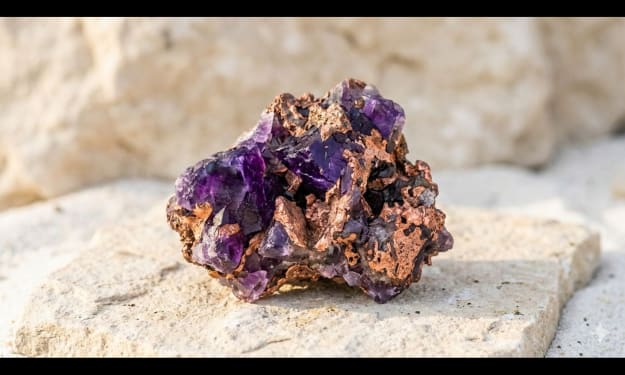
She almost put it back. A geologist crouching in the dry scrubland outside Lakia, Cyprus, turned a small rock over in her hand and nearly dismissed it. The colour was wrong. Gold is not supposed to look like that. It was not yellow. It was not even close.
By CurlsAndCommas6 days ago in Earth



Comments
There are no comments for this story
Be the first to respond and start the conversation.