
Sharks Never Stop Moving… Or Do They?
Do sharks really die if they stop swimming? Discover the truth about how sharks breathe, rest, and even 'sleep' while on the move!
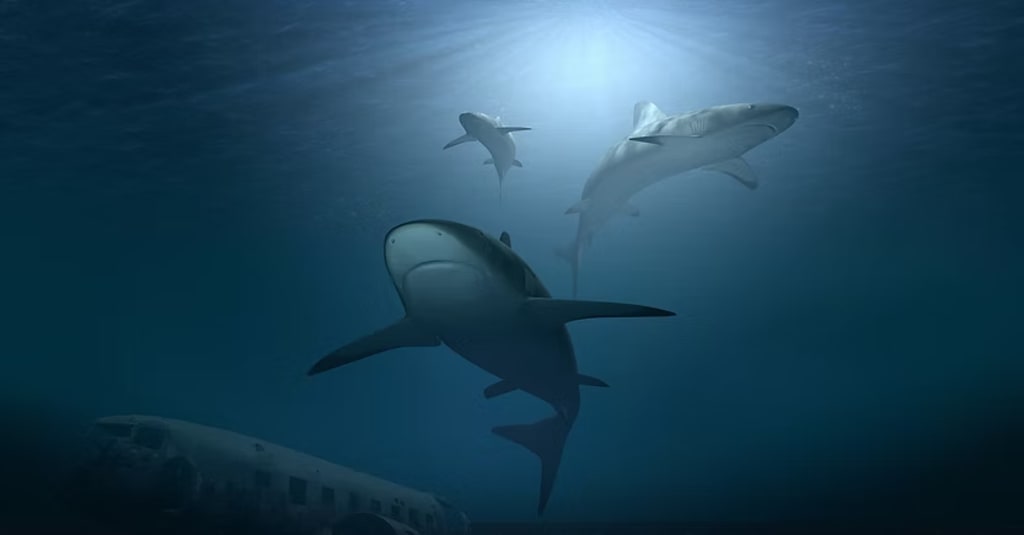
Imagine never being able to stop moving – not even for a second – or else you die. Sounds exhausting, right? This is the common belief when people think about one of the ocean’s apex predators, the shark. We all think they need to constantly swim in order to live but is that really the case? Let’s find out.
Well, first a bit of introduction about sharks. Sharks are a group of cartilaginous fish consisting of more than 500 species varying in size and shape. From the enormous whale shark to the tiny dwarf lanternshark, they come in all forms. However, they all share common traits such as ribless endoskeleton, dermal denticles, five to seven gill slits, and pectoral fins not fused to the head.
So, do sharks really die if they stop swimming? The answer is—it depends. Not all sharks breathe the same way. Surprising, right? Different species have evolved two distinct methods of breathing, and whether a shark needs to keep swimming or not comes down to how it gets oxygen. These two breathing methods are: ram ventilation and buccal pumping.
RAM VENTILATION
In the video above, you can see the shark swimming with its mouth constantly open showcasing ram ventilation.
Ram ventilation requires sharks to constantly swim. As they move forward with their mouths open, water flows in, passes over their gills and exits through gill slits. Oxygen is absorbed and carbon dioxide is released when water passes over the gills. Ram ventilation is more energy efficient than buccal pumping.
Some shark species can switch between the two breathing methods while others are adapted to only one. There are around 24 species of sharks that rely solely on ram ventilation and are thus called “obligate ram ventilators”. Examples include the great white, hammerhead, mako, salmon, sandbar, thresher, porbeagle, bull and whale sharks.
BUCCAL PUMPING
Buccal pumping is the process of using cheek muscles to draw water into the mouth. Simply put, the shark rhythmically opens and closes its mouth to push water over its gills for respiration. When the shark opens its mouth, the mouth floor lowers, increasing the volume and drawing in water. When the mouth closes, the floor rises, decreasing the volume and forcing water over the gills and out through the gill slits.
This method is used by benthic sharks or sharks that live near the bottom of the sea. Examples include nurse, bullhead, wobbegong, angel, zebra and epaulette sharks.
FACULTATIVE VENTILATION
So far, we know, we can divide sharks into two groups – ram ventilators and buccal pumpers – based on how they breathe. However, some sharks fall into a third category: facultative ventilators. These species can switch between buccal pumping and ram ventilation. Examples include tiger, blacktip reef and lemon sharks.
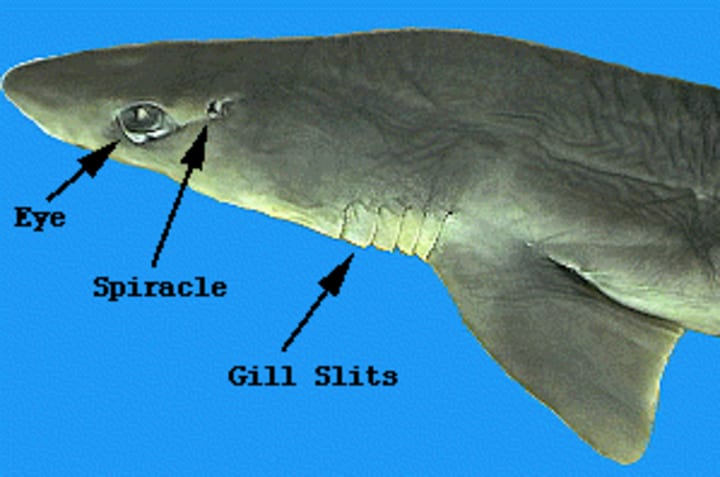
Most facultative ventilators and buccal pumpers possess spiracles—small respiratory openings located behind the eyes. Spiracles help draw in water, allowing sharks to breathe even when stationary. This adaptation is especially useful for bottom-dwelling species. For instance, wobbegongs, ambush predators that often bury themselves to camouflage, use their spiracles to continue breathing while hidden beneath the sand.
This understanding of shark respiration might spark another question: if sharks — except for obligate ram ventilators — don’t need to swim constantly, do they sleep?
Yes, sharks do sleep. However, the meaning of sleep in sharks is completely different from what it is in humans. Unlike us, they don’t go in a deep, unconscious state while lying on the ocean floor. Instead, shark sleep is a resting phase marked by a lower metabolic rate and reduced activity, allowing them to conserve energy while staying alert to their surroundings.
There is evidence of "sleep" in buccal pumpers. For instance, nurse sharks spend much of their time resting on the seafloor during the day. Sharks like Port Jackson, Caribbean reef, whitetip reef, and lemon sharks exhibit higher metabolic rates and increased activity at night, when it’s their time to hunt.
On the other hand, ram ventilating sharks show very little changes in their activity. These sharks show cyclic diel vertical migrations (DVMs) – a pattern in which they occupy different depths of the ocean at different times of the day. Species like the shortfin mako, blue shark, and whale shark tend to inhabit greater depths during the day and move closer to the surface at night. While DVMs might indicate rest in ram ventilators, they could also serve other purposes.
Another energy conservation strategy used by sharks is the “yo-yo” movement, where they actively swim towards the surface and then passively glide downward. This pattern may help sharks conserve energy or enter a resting phase. However, a study on tiger sharks, which were fitted with cameras and accelerometers, revealed images of prey encounters during these movements. This suggests that yo-yo movement could serve as both a hunting tactic and an energy-saving behavior.
RESTING WHILE SWIMMING
Sharks may be able to rest—or even "sleep"—while swimming. A study on spiny dogfish revealed that swimming is controlled by the spinal cord, and it can continue even without input from the brain. This is due to Central Pattern Generators (CPGs) — neural circuits that produce rhythmic movements without needing constant brain signals. In spiny dogfish, CPGs allow their tails to move in a rhythmic pattern, keeping them swimming automatically.
In simple words, CPGs are like built-in autopilot systems. They are neural circuits or like tiny highways that carry signals between interconnected nerve cells. They help control movements and reflexes even in the absence of any input so sharks don’t have to think about every move just like how we don’t have to think about every step we take.
This auto-pilot swimming mechanism in spiny dogfish and if present in larger sharks as well could indicate that they could rest even while swimming. However, despite relying on CPGs for movement, their brain is still a very important organ as it controls steering, navigation, sensing and responding, decision-making and coordination.
Here’s a video showing a great white shark napping for first time on camera:
REFERENCES:
https://www.elasmo-research.org/education/topics/b_sleep.htm
https://link.springer.com/article/10.1007/BF00238013
https://www.karger.com/Article/FullText/504123
https://www.int-res.com/articles/meps_oa/m424p237.pdf
https://a-z-animals.com/blog/do-sharks-sleep-and-how/
https://www.smithsonianmag.com/smart-news/sharks-apparently-do-sleep-even-with-their-eyes-wide-open-180979707/
https://poseidonsweb.com/some-sharks-have-to-swim-to-survive-but-most-dont/
About the Creator
Shubham Maurya
Exploring the wild, one story at a time. Nature nerd, animal enthusiast, and world wanderer with a passion for the untamed.
Keep reading
More stories from Shubham Maurya and writers in Earth and other communities.
Pistol Shrimp: The Tiny Creature with a Loud, Lethal Snap
Hidden beneath the ocean’s surface is a tiny creature with a shocking power — one that rivals Goku’s Kamehameha. This isn’t anime, but real life. This small creature snaps its claw so fast that it generates an explosive burst of energy, similar to Goku’s iconic attack — just on a much smaller scale. The snap is so powerful that it briefly heats the surrounding water to the temperature of the Sun’s surface and even creates a flash of light. But what exactly is this incredible creature, and what makes it so unique?
By Shubham Maurya10 months ago in Earth
“Greenland Belongs to Its People”: European Leaders Unite Over Trump’s Threats to Annex Territory
When former U.S. President Donald Trump once again floated the idea of the United States taking control of Greenland, the reaction from Europe was swift, unified, and unmistakably firm. European leaders rallied around a simple but powerful message: Greenland belongs to its people. What might sound like a provocative comment or political theater has instead evolved into a serious international debate about sovereignty, international law, and the future of Arctic geopolitics. This moment has revealed not only Europe’s commitment to defending territorial integrity but also the growing strategic importance of Greenland in a rapidly changing world. A Familiar Idea That Refuses to Disappear Trump’s interest in Greenland is not new. In 2019, he publicly suggested that the United States could purchase the island from Denmark, a proposal that was widely ridiculed and swiftly rejected. Yet years later, similar rhetoric has resurfaced, with Trump arguing that U.S. control of Greenland is essential for national and global security. This renewed discussion came at a sensitive time, amid rising global tensions and growing competition in the Arctic. While Trump has framed the issue as a strategic necessity, European leaders interpreted his remarks as a troubling challenge to long-standing principles of sovereignty and self-determination. Europe’s United Front: An Uncommon Consensus One of the most striking aspects of this episode has been Europe’s collective response. Leaders from major European nations — including France, Germany, Italy, Spain, Poland, the United Kingdom, and Denmark — publicly closed ranks to support Greenland’s autonomy. Their message was unambiguous: borders cannot be changed by pressure, threats, or unilateral ambition. The joint stance emphasized that Greenland’s future is a matter for Greenland and Denmark alone, not external powers. This rare display of unity reflects broader European concerns about preserving the rules-based international order at a time when it feels increasingly fragile. For many European governments, allowing even the suggestion of territorial acquisition to go unchallenged would set a dangerous precedent. Denmark’s Position: Firm, Calm, and Clear Denmark, which governs Greenland as an autonomous territory within the Kingdom of Denmark, responded with particular clarity. Danish officials reiterated that Greenland is not for sale and never has been. Denmark’s leadership stressed that Greenland already enjoys extensive self-governance and that any future decisions — including full independence — belong to the Greenlandic people. From Copenhagen’s perspective, the U.S. already benefits from strategic cooperation in the region through NATO and existing defense agreements, making the idea of annexation both unnecessary and inappropriate. The Most Important Voice: Greenland Itself While global powers debated Greenland’s strategic value, Greenlandic leaders were quick to assert their own agency. Greenland’s government firmly rejected Trump’s remarks, describing them as unacceptable and dismissive of the island’s democratic rights. Greenland’s population, numbering just under 60,000, has long navigated the complexities of autonomy, identity, and post-colonial history. Although there is internal debate about eventual independence from Denmark, there is little appetite for becoming part of another foreign power. For Greenlanders, the issue is not just about geopolitics — it is about dignity, self-determination, and respect. Why Greenland Matters More Than Ever Greenland’s rising prominence on the world stage is not accidental. As climate change accelerates Arctic ice melt, the region is becoming more accessible and economically attractive. Greenland is believed to hold vast reserves of rare earth minerals, oil, and gas — resources critical for modern technology and the global energy transition. Strategically, Greenland occupies a vital position between North America and Europe. It plays a key role in missile defense systems, Arctic surveillance, and emerging shipping routes. As competition intensifies between the United States, Russia, and China in the Arctic, Greenland has become a focal point of strategic calculations. Yet European leaders argue that strategic value does not override international norms. In their view, security cooperation must be based on partnership, not ownership. A Test for NATO and Western Alliances Trump’s comments have also sparked uncomfortable conversations within NATO. Denmark and the United States are long-standing allies, and Greenland already hosts important U.S. military facilities. The idea that one NATO member could publicly entertain annexing territory associated with another ally has raised questions about trust and cohesion within the alliance. For Europe, defending Denmark and Greenland is not only about geography — it is about ensuring that alliances are built on respect rather than coercion. What This Moment Really Represents At its core, the Greenland controversy is about more than one island. It reflects the broader struggle between power politics and principles. Europe’s response signals that, despite internal differences, it remains committed to defending sovereignty, democratic choice, and international law. In a world increasingly shaped by competition over resources and strategic positions, this episode serves as a reminder that smaller nations and territories cannot be treated as bargaining chips. Final Thoughts By standing firm and declaring that “Greenland belongs to its people,” European leaders have sent a message that resonates far beyond the Arctic. It is a statement about values, about history, and about the kind of global order Europe wants to defend. As geopolitical tensions continue to rise, the Greenland debate may prove to be a defining moment — one that shows whether the principles of sovereignty and self-determination still hold weight in an era of strategic rivalry. For now, Europe’s answer is clear: Greenland’s future will be decided in Greenland, not Washington.
By Muhammad Hassan6 days ago in Earth
US Balks as UK and France Pledge Troops to Postwar Ukraine
As the war in Ukraine grinds on with no clear end in sight, the debate over what comes after the fighting has taken a sharper turn. The United States has signalled reluctance about committing troops to Ukraine once the war ends, even as the United Kingdom and France openly pledge to consider deploying forces in a postwar security role. The divergence has exposed differing strategic priorities among Western allies and raised new questions about how Ukraine’s future security will be guaranteed. While all three nations remain united in their support for Kyiv during the war, the emerging split over postwar troop commitments highlights the complexity of planning for peace in a conflict that continues to reshape Europe’s security landscape. What the UK and France Are Proposing British and French leaders have increasingly spoken about the need for long-term security arrangements for Ukraine once active hostilities end. Their position reflects a growing concern that any ceasefire or peace agreement could be fragile, leaving Ukraine vulnerable to renewed aggression. The idea under discussion is not a combat deployment in an active war zone, but rather a stabilisation or reassurance force. Such troops could help train Ukrainian forces, protect critical infrastructure, and serve as a visible deterrent against future attacks. Supporters argue that a limited but credible international presence would help ensure that any peace settlement is respected. For London and Paris, this approach fits within a broader European push to take more responsibility for continental security. Both governments see Ukraine not only as a partner but as a frontline state whose stability directly affects Europe as a whole. Why Washington Is Hesitant The United States, while remaining Ukraine’s most significant military backer during the war, has taken a more cautious stance on postwar troop deployments. American officials have stressed that there are no plans to send US forces into Ukraine, even after a potential peace agreement. This hesitation is rooted in several factors. First, Washington remains wary of any move that could risk a direct confrontation with Russia. Even in a postwar scenario, the presence of US troops on Ukrainian soil could be portrayed by Moscow as a provocation, escalating tensions rather than reducing them. Second, domestic considerations play a major role. After years of overseas military engagements, there is limited appetite among the American public and political class for new long-term deployments abroad, particularly in a region where risks remain high and outcomes uncertain. Finally, US strategy has increasingly emphasised supporting allies through funding, training, and equipment rather than large-scale troop commitments. From Washington’s perspective, enabling Ukraine to defend itself may be preferable to stationing American forces on the ground. A Question of Deterrence At the heart of the debate lies a fundamental question: what will actually deter future aggression against Ukraine? The UK and France appear to believe that a physical presence, however limited, would send a powerful signal of commitment. Troops on the ground would demonstrate that Ukraine’s security is directly tied to that of major European powers, raising the cost of any future attack. The US, by contrast, seems to place greater faith in alternative mechanisms such as long-term military aid, security guarantees, and sanctions frameworks. American officials argue that deterrence does not necessarily require boots on the ground, especially if Ukraine emerges from the war better armed and more integrated with Western institutions. This difference reflects broader strategic cultures. European powers, facing the immediate proximity of the conflict, may feel a stronger need for visible reassurance measures, while the US assesses risks from a more global perspective. Implications for NATO Unity Although Ukraine is not a NATO member, the discussion has clear implications for the alliance. Any deployment of UK or French troops would be closely scrutinised for what it means for NATO’s role and credibility. NATO operates on consensus, and the absence of US support for a postwar troop presence could complicate coordination. Even if London and Paris act independently or as part of a smaller coalition, questions would remain about command structures, rules of engagement, and the political backing required for such a mission. At the same time, the situation underscores a broader shift within NATO, with European members increasingly expected to shoulder more responsibility. If the UK and France proceed with their plans, it could mark a significant step toward a more autonomous European security posture. Ukraine’s Perspective For Kyiv, the debate is both encouraging and frustrating. On one hand, the willingness of major European powers to consider troop deployments signals long-term commitment and recognition of Ukraine’s security concerns. On the other hand, uncertainty from the US—Ukraine’s most powerful ally—adds another layer of unpredictability. Ukrainian leaders have consistently argued that security guarantees must be concrete, not symbolic. From their perspective, any postwar arrangement must ensure that Russia cannot simply regroup and strike again. Whether this is achieved through foreign troops, binding treaties, or accelerated integration with Western institutions remains an open question. What is clear is that Ukraine wants assurances that go beyond promises and declarations. The Risk of Mixed Signals One potential danger of the current divergence is the message it sends to Moscow. Differing positions among Western allies could be interpreted as hesitation or lack of unity, potentially weakening deterrence rather than strengthening it. At the same time, open debate is not necessarily a sign of weakness. Allies often disagree on tactics while remaining aligned on broader goals. The challenge will be ensuring that these differences do not undermine the core objective of securing a stable and sovereign Ukraine. Diplomats on both sides of the Atlantic are likely to continue working behind the scenes to narrow the gap, even if public statements suggest a clear divide. Looking Ahead The question of postwar Ukraine remains largely theoretical while fighting continues. Yet the discussion itself reveals how seriously Western governments are taking the long-term consequences of the conflict. The UK and France’s willingness to pledge troops reflects a belief that peace must be actively protected. The US reluctance highlights concerns about escalation, sustainability, and domestic support. Reconciling these approaches will be one of the most important diplomatic challenges once the guns eventually fall silent. For now, the disagreement does not signal a breakdown in alliance unity, but it does expose the difficult choices ahead. As the war continues, planning for peace is proving almost as complex—and politically sensitive—as managing the conflict itself.
By Muhammad Hassana day ago in Earth
A Failed Artist, A Disillusioned Poet, An Underpaid Game Show Host
I took my son and niece to Gori, a small town in Georgia where Joseph Stalin was born. They talked me into visiting the Stalin's Museum, the largest in the post-Soviet space. I had resisted going there because I just can't stand the monster and know enough about him, or so I thought.
By Lana V Lynx6 days ago in FYI




Comments
There are no comments for this story
Be the first to respond and start the conversation.