
Seven Bizarre Weather Phenomenon
From ice circles to microbursts our planet has some amazing weather phenomena. Let's explore the cool and bizarre weather that our planet has.


Our world is vast and has breathtaking places and weather. From the coldest to the hottest from the wettest to the dryest. Exploring some of the weird yet fascinating weather may cause feelings of beauty and ah.
Ice Circles
These are extremely rare. What are they? Well, they are thin circles in slow-moving water that spin. They usually happen in the transition between winter and spring. While ice is melting. There are two types of ice circles discs and pans. Discs form on bends in rivers where accelerating water creates rotational shear. The rotational shears cause ice to break and twist around causing the edges to smooth into a circle. Pans are ice circles that form in the middle of lakes instead of the edges of the water. Watch a video here.

Microbursts
Microbursts are relatively small areas in some thunderstorms of rapidly sinking air that causes high winds, rains, and sometimes hail to fall to the ground extremely fast. The winds can exceed 100mph (160.934 kph). These intense winds can cause a lot of damage. These microbursts are unpredictable. Recent technology has helped take some of the unpredictable nature out of them but not all of it. Microburst poses a huge threat to aviation. Want to look at all of the crashes caused by microbursts click here. Want to see the sky fall click here.

Sprites
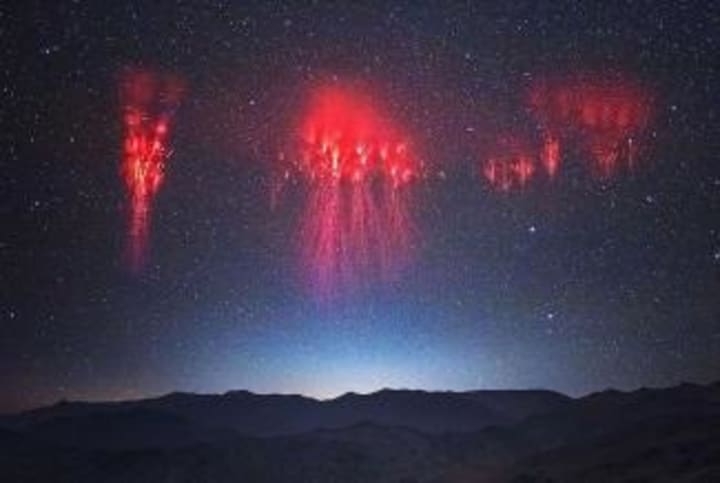
Sprites also commonly known as red sprites are large-scale electric discharges. That can cause strange flickering shapes during thunderstorms. It's a form of lightning and can be spooky, but unlike normal white or purplish lightning, they are red. They occur in clusters. They aren't as hot as normal lightning due to cold plasma. Sprites occur in the thermosphere. It's nature's way of balancing the positive charges that lightning has. Want to see a video click here.
Twin Tornados
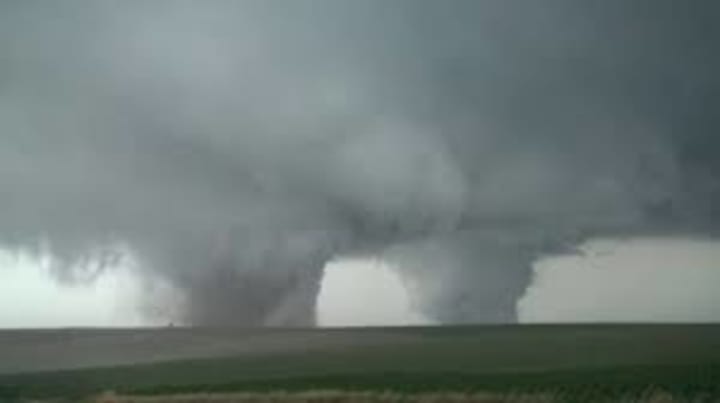
One of the rarest weather phenomenon are twin tornados. The most recent twin tornados were in 2016. They are deadly. One tornado touches the ground first that's the strongest of the two then normally there wouldn't be another, but when one is so strong another one can touch down and they will move together. Causing death and disaster. Want to see the twins and learn more about them click here.
Mammatus Clouds
Clouds come in different shapes and sizes but some fascinating clouds are the mammatus clouds. They occur usually around thunderstorms. They look kinda like bubble wrap. These clouds are formed by a gentle downdraft. Not everything is known about these clouds but they are beautiful and photogenic.

Ball Lightning
These balls of lightning have broken windows and even caused deaths. These electric orbs have been talked about throughout history. They usually happen with thunderstorms. These orbs are a variety of colors but are accompanied by a hissing sound. The theory of these lightning balls is that they are caused by a ground strike. That causes a reaction between oxygen and the elements of the soil causing the ball of lightning. If you want to learn more about ball lightning National Geographic has a great article click here for it. Want to see a video click here.
From the strangest weather to the prettiest our planet is beautiful and dangerous. Ice circles have to have perfect conditions to happen. Microbursts are hard to predict, and they cause planes to crash. Sprites balance the Earth and provide a really cool light show. Twin Tornados are powerful and deadly forces that are luckily rare. Mammatus clouds are super photogenic. Ball lightning is strange and dangerous. All of these phenomena are what cause Earth to be a unique planet.
I hope you learned something. If something is unfactual or wrong please politely correct me. Thanks!
About the Creator
Keep reading
More stories from Haylee Marick and writers in Earth and other communities.
Weather Phenomenon That Fascinates Me.
I have been fascinated by weather my entire life. This is going to be about some phenomenon that never cease to amaze me. Things like tornados and hurricanes are also really cool, but I am going to talk about the rarer phenomenon.
By Haylee Marick2 months ago in Earth
Ecology Overview
Ecology is the study of ecosystems. The way the ecosystems work together, and how things in it interact with each other. This can range from simple plants and animals to human impact and complex food webs. Ecology is a vast topic including many things. Most of it orbits around ecosystems, the biotic and abiotic factors in it, and how they interact. That being said, let's take a look at what ecology is.
By Siddharth Mahesh7 days ago in Earth
Species in Danger
Our planet is full of life. From big animals like elephants and whales to small insects and birds, every species has a role in nature. But today, many species are in danger. Some are disappearing slowly, and others are very close to extinction. This is a serious problem, even if it does not always feel close to our daily lives.
By Nawaz Hassan7 days ago in Earth


Comments
There are no comments for this story
Be the first to respond and start the conversation.