
Seeing the World Through Animals' Eyes
A Fascinating Perspective


Have you ever wondered how animals perceive the world around them? It turns out that the way they see things can be drastically different from our own human perspective. In this blog, we'll take a journey into the unique visual worlds of various animals and discover some truly mind-boggling facts.
1. Pigeons: Better Vision Than Humans
Believe it or not, pigeons have better vision than humans. They can see tiny details and have a 340-degree field of vision, which is considered twice as good as ours.
2. Snakes: Infrared Sensitivity
Snakes see the world differently with special infrared-sensitive receptors in their snouts. This allows them to detect the radiated heat of warm-blooded mammals.
3. Cows: Limited Color Vision
Cows have limited color vision compared to humans. They can't see the color red because they lack the necessary receptors in their retinas. Instead, they perceive variations of blue and green. They also have a near panoramic vision, except for a blind spot directly behind them.
4. Horses: Blind Spot in Front
Horses have a blind spot right in front of their faces due to the placement of their eyes. They can't see things directly in front of them and have a more limited color vision, similar to cows.
5. Fish: Ultraviolet Vision
Fish have ultraviolet receptors and nearly 360-degree vision. They can see all the colors humans can, but underwater, light behaves differently, making it challenging for them to discern red shades. Deep-sea fish, however, can easily see in the dark.
6. Sharks: Monochromatic Vision
Sharks, in contrast, can't distinguish colors at all. Yet, they have clear vision underwater, enabling them to spot prey efficiently.
7. Birds: Ultraviolet Vision
Birds have the unique ability to see ultraviolet light. This helps them differentiate between males and females of their species and navigate their surroundings more effectively. Birds are also adept at focusing, allowing them to spot small prey from great distances.
8. Insects: Thousands of Tiny Eyes
Flies have thousands of tiny eye receptors working together to provide a comprehensive view of their surroundings. They see everything in slow motion and can perceive ultraviolet light.
9. Bees: Red Looks Like Dark Blue
Bees have difficulty seeing the color red; to them, it appears as a dark blue shade. This color perception impacts their ability to identify certain flowers.
10. Rats: Seeing Double
Rats can't see red either, but they have another peculiarity: each of their eyes can move independently. This means they're constantly seeing double, which must make navigating their environment an interesting challenge.
11. Cats: No Red or Green, but Impressive Night Vision
Cats can't see shades of red or green, but they excel in detecting brown, yellow, and blue hues. They also have impressive night vision, allowing them to see six times better than humans in the dark.
12. Dogs: No Red or Orange, but Many Shades of Gray
Dogs can't see red or orange, but they can distinguish between various shades of gray. They also perceive blue and violet, making their world colorful in its own way.
13. Frogs: Only Interested in Moving Targets
Frogs have a unique approach to vision; they only focus on moving objects. If something isn't moving, like a shadow, they won't pay it any attention.
14. Chameleons: Independently Moving Eyes
Chameleons have the remarkable ability to move their eyes independently of each other, providing a 360-degree field of vision. They can even see two different images simultaneously, one in front and one behind.
Understanding how animals see the world adds depth to our appreciation of the diverse and remarkable creatures we share the planet with. If you suddenly gained a particular animal's unique vision, which would you choose? Share your thoughts in the comments below, and don't forget to like and share this blog with your friends if you found it intriguing! For more captivating insights, explore our other articles. Stay curious!
About the Creator
Resian Sankei
Passionate environmentalist, psychology enthusiast, and avid writer on a mission to inspire change and spark curiosity.
Keep reading
More stories from Resian Sankei and writers in Earth and other communities.
Guardians of the Sea:
Introduction Over the past two decades, a silent and gelatinous invasion has been taking place beneath the surface of our oceans. Jellyfish populations are on the rise, and they are beginning to overwhelm marine ecosystems worldwide. From New Zealand to Sweden and the Sea of Japan, these graceful yet voracious creatures are causing havoc in various ways. They are swarming divers, shutting down nuclear reactors, and disrupting fishing industries. With their insatiable appetite for fish eggs and larvae, they are undermining marine farming efforts and outcompeting adult fish for essential resources. The future may hold a grim scenario where our oceans become thick with jellyfish. But is there anything that can keep these gelatinous creatures under control?
By Resian Sankei3 years ago in Earth
The Ghost Metal of Cyprus
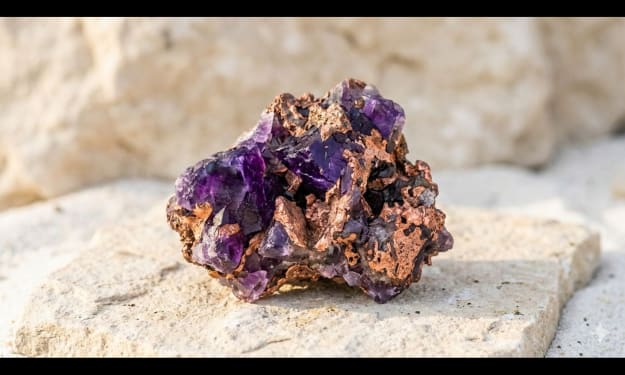
She almost put it back. A geologist crouching in the dry scrubland outside Lakia, Cyprus, turned a small rock over in her hand and nearly dismissed it. The colour was wrong. Gold is not supposed to look like that. It was not yellow. It was not even close.
By CurlsAndCommas4 days ago in Earth



Comments
There are no comments for this story
Be the first to respond and start the conversation.