
Secrets Beneath the Waves
What the Ocean Tried to Hide

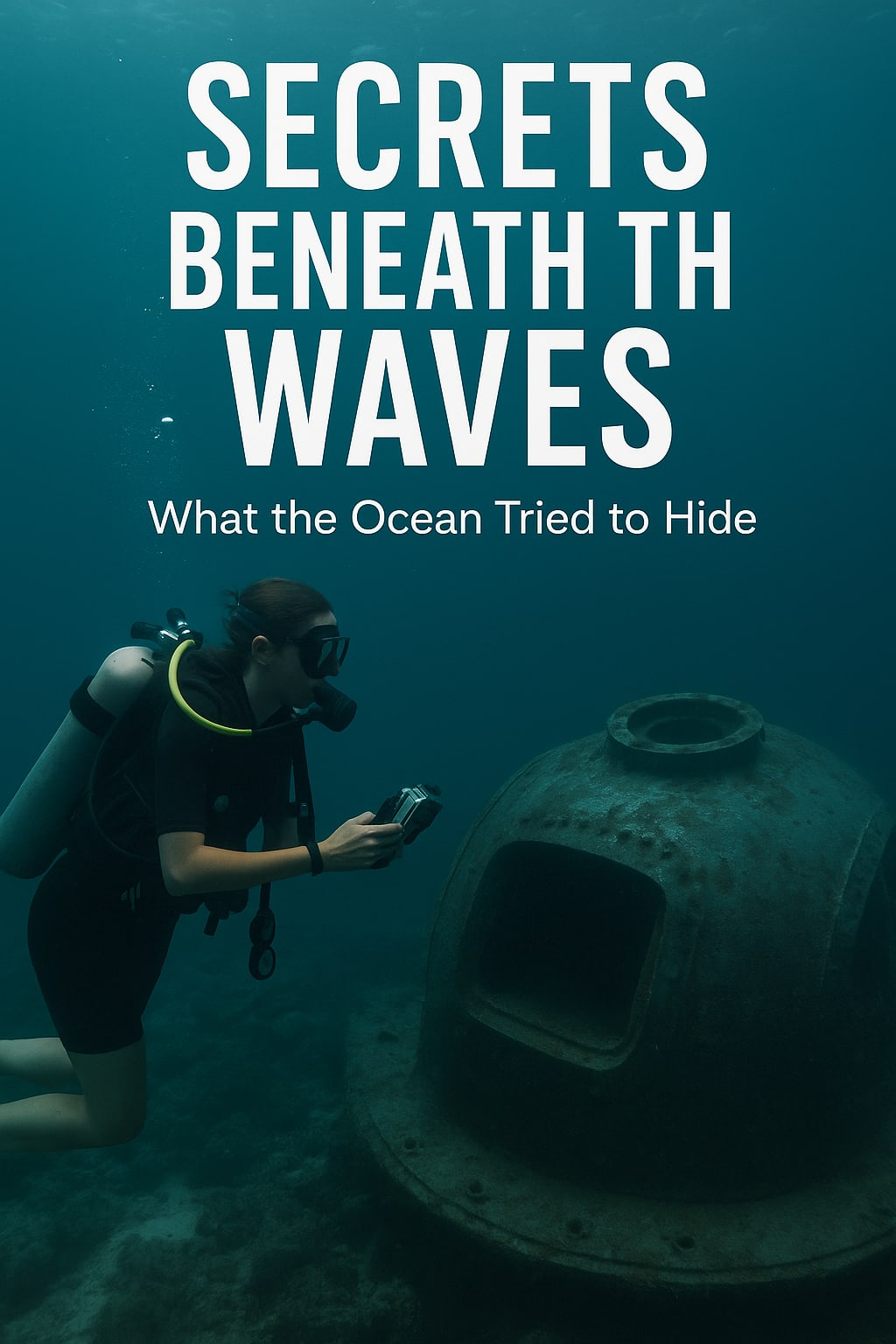
Aaliya was a 22-year-old marine biology student from Karachi, Pakistan. Curious, bold, and passionate about the ocean, she had grown up watching documentaries about coral reefs and whales while her friends watched cartoons. For her, the sea was not just water—it was a living, breathing world filled with wonders no one truly understood.
In the summer of 2024, Aaliya joined a research project on Pakistan's southern coast, near Gwadar. Her team was studying coral bleaching and plastic pollution in the Arabian Sea. Every day, she dived into the deep blue, documenting fish, examining coral, and collecting samples. But one morning, she found something that wasn’t in any textbook.
It was her third dive of the week. The sun was bright, the sea calm. Aaliya swam farther than usual, driven by an odd feeling in her chest—as if something was calling her.
About twenty meters below the surface, she saw a cave entrance behind a wall of coral. It was dark inside, but curiosity pushed her forward. She turned on her underwater flashlight and swam in.
The cave opened into a dome-like space. The walls shimmered with odd green crystals, and in the middle was something shocking—a huge metallic structure, like a sunken machine, covered in algae and barnacles. It looked ancient, but not natural.
Aaliya's heart raced. She took out her underwater camera and began taking pictures.
Suddenly, her flashlight flickered. Then—a voice echoed in her head.
"You’re not supposed to be here."
She panicked, looking around. No one was there. Just her and the silence. The voice came again, softer now.
"But maybe… it’s time someone knows."
She swam out fast, her mind spinning. Back at the research station, she showed the images to her supervisor, Dr. Faheem. He frowned deeply.
“This isn’t coral. This is… technology,” he muttered. “Possibly military. Or worse—experimental.”
They sent the images to an environmental agency, but two days later, officials from an unnamed government department showed up and sealed off the dive site. Aaliya and her team were told the area was “restricted for national security reasons.”
But Aaliya couldn’t let it go. She began digging. Quietly. And what she found shocked her.
There were old reports of strange underwater activity off Pakistan’s coast—unexplained electromagnetic waves, sonar interference, even a few disappearing fishing boats. Most were brushed off as myths or radar errors. But Aaliya knew better.
Then, an anonymous email arrived. It had no subject. Just a message:
“What you found isn’t from here. Look deeper.”
Attached was a file: scanned pages from a 1984 military report. It spoke of a crashed object deep in the Arabian Sea, found by a naval ship but never recovered due to “extreme environmental disturbances.”
That object was in the same area Aaliya had explored.
Her heart pounded. This wasn’t just about pollution or coral anymore. There was something hidden beneath the waves, something the ocean had kept secret—and someone wanted it to stay that way.
Aaliya knew the risks, but truth burned brighter than fear.
With help from a trusted diver friend, she returned to the cave at night, under a new moon. They avoided the patrol boats and slipped into the sea silently.
Back in the cave, the machine pulsed faintly with blue light. As Aaliya approached, the same voice echoed again—but now, it was clearer.
"I crashed here… long ago. Not from your world. I watched your oceans die slowly. Your kind does not listen to warnings. But you… you came back."
Aaliya was stunned. It wasn’t just a machine—it was alive.
"I can show you how to heal your oceans… if you share the truth."
And just like that, her dive computer lit up with data—formulas, images, environmental models—like a flash drive for the planet. It showed how to reverse coral bleaching, clean microplastics naturally, even repair ocean currents affected by climate change.
When she returned to land, she didn’t go to the authorities. She went online.
She published the images, the data, and her story. At first, people laughed. Accused her of faking it. But soon, other divers, scientists, even fishermen from Sri Lanka to Oman began to confirm similar sightings and data shifts in the water.
Her story went viral:
“Student Discovers Alien-Like Ocean Technology That Could Save the Planet”
Governments tried to silence her. But the truth had already spread.
Today, Aaliya leads a global marine restoration movement powered by the knowledge she unlocked. She named the program “Project Deep Whisper.” Coastal towns once drowning in plastic now grow seaweed farms and coral gardens. Children learn to respect the sea like she did.
And somewhere, beneath the waves, the ancient machine still hums—watching. Waiting. Guarding its secrets.
Because the ocean had tried to hide them. But now, the world finally listened.
About the Creator
Raza Ullah
Raza Ullah writes heartfelt stories about family, education, history, and human values. His work reflects real-life struggles, love, and culture—aiming to inspire, teach, and connect people through meaningful storytelling.
Keep reading
More stories from Raza Ullah and writers in Earth and other communities.
The Falling Grace
In the beginning, when the Earth was still shaping itself, rivers wandered across the land like silver threads. They flowed from mountaintops, twisted through valleys, and carved deep paths through rocks. Among these rivers, in certain places, something extraordinary began to happen—something that would become one of nature’s most powerful and beautiful wonders: the waterfall.
By Raza Ullah7 months ago in Earth
Our European Allies Just Exposed Trump’s Core Weakness—and Also America’s
Recent developments in Europe have cast a spotlight on both Donald Trump’s leadership weaknesses and broader American vulnerabilities in international relations. Allies across the continent have been taking steps that indirectly highlight limitations in U.S. policy, leaving Trump supporters, critics, and global observers questioning whether the United States is adequately positioned to lead on the world stage.
By Muhammad Hassan7 days ago in Earth
Instructions Included Challenge Winners
For the Instructions Included challenge, we asked writers to tell a story through instructions and to trust the form to carry what could not be said outright. Across the top entries, that trust paid off in many different ways.
By Vocal Curation Team2 days ago in Resources




Comments (1)
Secrets of ocean.