
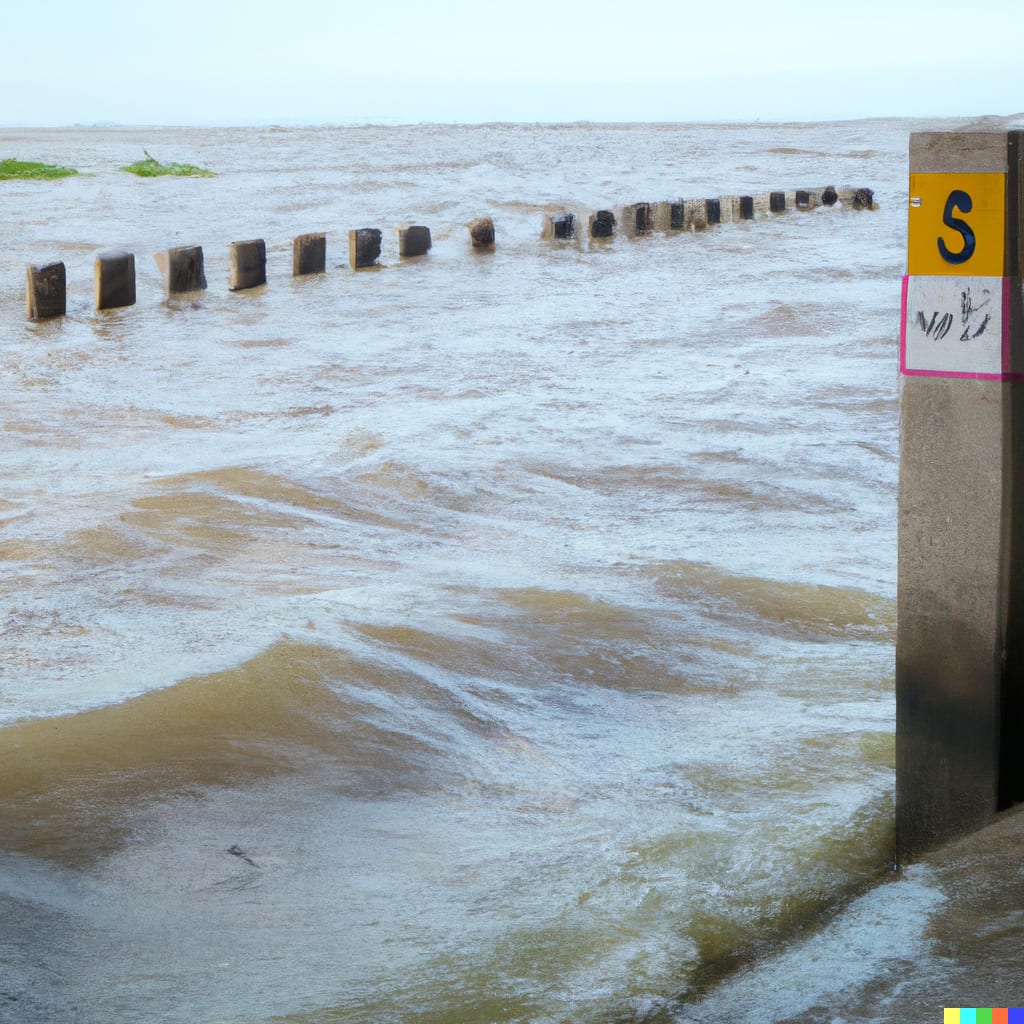
What is seawater level raise
The rate at which sea level is rising varies depending on location and factors such as melting ice sheets and glaciers, thermal expansion of ocean water, and changes in ocean currents. On average, sea level has risen about 8 inches (21 cm) since 1880, with almost half of that rise occurring in the last 25 years. Some regions have experienced more significant rises, while others have seen little to no change. Climate change is expected to cause sea level to continue rising in the future, with projections indicating a rise of 1 to 4 feet (0.3 to 1.2 meters) by 2100.
Sea level raise affects
Sea level rise caused by climate change can have a variety of negative impacts on coastal communities and ecosystems. Some of the most significant effects include:
• Increased coastal flooding: As sea level rises, storm surges and high tides can more easily flood low-lying areas, damaging homes and infrastructure and making some coastal communities uninhabitable. This can lead to loss of life, damage to buildings, and disruption of transportation and other essential services.
• Saltwater intrusion: Rising sea levels can push saltwater into freshwater aquifers, making them too salty to use for drinking water or irrigation. This can affect the availability of freshwater and make it more difficult to grow crops in coastal areas.
• Loss of wetlands and beaches: Wetlands, marshes, and beaches act as natural buffers against coastal flooding and erosion. As sea level rises, these areas can be submerged and lost. This can lead to loss of habitat for wildlife and reduced protection for coastal communities.
• Damage to coral reefs: Coral reefs are sensitive to changes in water temperature and acidity, both of which can be affected by sea level rise. As the ocean warms and becomes more acidic, coral reefs can be damaged or killed, which can have ripple effects throughout the marine ecosystem. This can lead to a loss of biodiversity and a decline in fish populations.
• Changes in ocean circulation: Sea level rise can change the way that ocean currents flow, which can affect weather patterns and the distribution of marine life. This can lead to changes in the distribution of fish and other marine organisms, which can affect fishing and other coastal industries.
• Loss of property and economic disruption: Rising sea levels can lead to damage to homes and businesses, and can make coastal areas less desirable for development. This can result in economic losses for communities that rely on tourism and other coastal industries.
• Displacement of people: Rising sea levels can make some coastal communities uninhabitable, forcing people to move to higher ground. This can lead to social upheaval and increased competition for resources in other areas.
Overall, sea level rise is a complex and multifaceted problem that can have significant impacts on coastal communities and ecosystems. Addressing it will require a combination of mitigation efforts to reduce greenhouse gas emissions and adaptation measures to help communities cope with the effects of sea level rise, such as building protective infrastructure, relocating vulnerable communities, and preserving natural buffers such as wetlands and dunes.
Conclusion
In conclusion, sea level rise is a significant problem caused by climate change that can have a wide range of negative impacts on coastal communities and ecosystems. The effects of sea level rise include increased coastal flooding, saltwater intrusion, loss of wetlands and beaches, damage to coral reefs, changes in ocean circulation, loss of property and economic disruption, and displacement of people. Addressing sea level rise will require a combination of mitigation efforts to reduce greenhouse gas emissions and adaptation measures to help communities cope with the effects of sea level rise. It's important to take action now to mitigate the impacts of sea level rise, as the longer we wait, the more difficult and expensive it will be to address the problem.
About the Creator
Keep reading
More stories from writers in Earth and other communities.
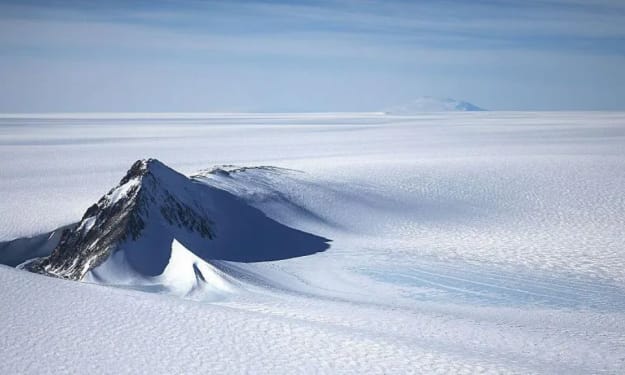
Landscape Beneath Antarctica's Icy Surface Revealed in Unprecedented Detail
For decades, Antarctica has been the Earth’s ultimate mystery — a vast expanse of ice covering almost 14 million square kilometers, hiding secrets beneath its frozen surface. Now, thanks to advanced radar technology and satellite mapping, scientists have produced the most detailed map yet of the continent’s hidden landscape, revealing mountains, valleys, subglacial lakes, and river systems that were previously invisible. This discovery is more than just a scientific curiosity. Understanding Antarctica’s topography beneath the ice is critical for predicting ice sheet stability, global sea-level rise, and climate change impacts. The new data could also shed light on Earth’s geological history and the ways in which life may survive in extreme environments. How Scientists Mapped the Hidden Terrain For years, researchers have relied on a combination of methods to peek beneath the ice: Ice-penetrating radar: Devices mounted on aircraft or satellites send radio waves through ice layers, which bounce back when they hit bedrock, revealing contours beneath kilometers of frozen water. Satellite gravimetry: Small variations in Earth’s gravitational field help infer the presence of mountains, valleys, and subglacial lakes. Seismic surveys: Explosions or controlled vibrations allow scientists to detect underground structures by measuring the way seismic waves travel through different materials. Using these techniques, a consortium of international researchers created a high-resolution map of Antarctica’s sub-ice topography, revealing features that rival the landscapes of continents that have been visible for millions of years. What’s Beneath the Ice? The map reveals a striking variety of features: Mountain ranges: Peaks rise more than 4,000 meters above the surrounding terrain, hidden beneath miles of ice. Some of these ranges may be older than the Rockies or the Alps. Deep valleys: Vast troughs and gorges, carved by ancient rivers or tectonic activity, provide clues about how the continent evolved over millions of years. Subglacial lakes: Scientists have identified hundreds of liquid water lakes trapped beneath the ice, including the famous Lake Vostok. These lakes remain liquid due to pressure and geothermal heat and may host microbial life isolated for millions of years. Subglacial river networks: Surprisingly, water flows beneath the ice in channels and rivers, slowly carving pathways that affect ice sheet movement. This intricate landscape challenges the perception of Antarctica as a flat, featureless ice sheet. Instead, it is a dynamic and complex environment, where hidden topography influences everything from ice flow to global sea levels. Why This Discovery Matters The importance of understanding what lies beneath Antarctica’s ice cannot be overstated: Predicting Ice Sheet Stability: Ice sheets move more quickly over smooth surfaces than over rugged terrain. Knowing where mountains and valleys lie helps scientists predict which areas of ice may collapse first, potentially raising sea levels faster than anticipated. Climate Change Models: Subglacial lakes and water channels lubricate the ice from below, influencing melting rates. Incorporating these features into models improves accuracy in forecasting future sea-level rise. Earth’s Geological History: The newly revealed landscape offers a window into Antarctica’s past — from tectonic shifts to ancient rivers and climates. This data helps reconstruct how continents drifted and climates evolved over millions of years. Search for Extreme Life: Subglacial lakes may harbor microbial life isolated for millions of years, providing insights into life in extreme environments, potentially even on other planets. Global Implications Antarctica may feel distant, but its ice sheets hold the key to global sea-level stability. Even small changes beneath the ice can have profound consequences for coastal cities around the world. With melting accelerated by climate change, understanding the terrain under the ice is crucial for planning and mitigation. Governments, scientists, and environmental organizations are now using this information to: Improve climate models for sea-level rise predictions Identify vulnerable regions of the ice sheet Guide future research missions to subglacial lakes and mountains The discovery also strengthens the case for continued international collaboration in Antarctica, where research and environmental protection are governed by treaties emphasizing peaceful scientific study. Challenges Ahead Mapping Antarctica is far from complete. Extreme weather, thick ice sheets, and logistical difficulties make the continent one of the hardest places to study. While radar and satellite technologies have advanced, field validation and deeper exploration remain difficult and expensive. Researchers also face ethical and environmental concerns. Drilling into subglacial lakes to sample microbial life, for instance, must be done carefully to avoid contamination. Antarctica’s fragile ecosystem demands that scientific progress balances discovery with protection. Looking to the Future The detailed map of Antarctica’s hidden landscape opens new possibilities for exploration and understanding: Ice Flow Predictions: With accurate topography, scientists can model how ice sheets will respond to warming climates more precisely. Resource Insights: While exploitation is restricted by international agreements, understanding subglacial mineral deposits can inform potential future uses. Extreme Environment Biology: Studying subglacial lakes could reveal new species adapted to cold, dark, and high-pressure environments, broadening our understanding of life on Earth. The data also strengthens international scientific cooperation, as multiple countries share findings and resources to better understand a continent that belongs to no single nation. Final Thoughts Antarctica’s ice may appear static and endless, but beneath it lies a vibrant and rugged landscape filled with mountains, valleys, lakes, and rivers. The new detailed mapping of this hidden world is a landmark achievement in Earth science, combining advanced technology, international collaboration, and the human drive to explore. By uncovering what lies beneath the ice, scientists are not just satisfying curiosity — they are equipping humanity with the knowledge to protect our planet, anticipate climate challenges, and understand the deep history of Earth itself. Antarctica’s secrets, once locked beneath kilometers of ice, are finally being revealed, and what we learn could reshape our understanding of the planet and our place within it.
By Muhammad Hassan7 days ago in Earth
Reeves to Exclude Hotels and Restaurants From Tax Rescue Package
In a move that has sparked debate across the business and hospitality sectors, Premier Reeves announced plans to exclude hotels and restaurants from the latest tax rescue package. The decision comes amid ongoing efforts to balance public finances with economic recovery, but it has left many in the hospitality industry questioning their future stability and the fairness of government support measures.
By Aarif Lasharia day ago in Earth
How to Succeed at the Benson Directory®
Congratulations and welcome to the Benson Directory® employee #22391! As our newest call handler, you will have the privilege of speaking with dozens of unique and interesting people on a daily basis as well as the opportunity to earn bonuses for high performance. Contained within this handbook you will find a set of ease to follow instructions designed to help you settle in to your new role and begin paving the way to success.
By S. A. Crawford6 days ago in Fiction



Comments
There are no comments for this story
Be the first to respond and start the conversation.