
Saving the Great Indian Bustard: A Race Against Extinction
Preserving Grasslands and Reviving an Iconic Species for India's Biodiversity

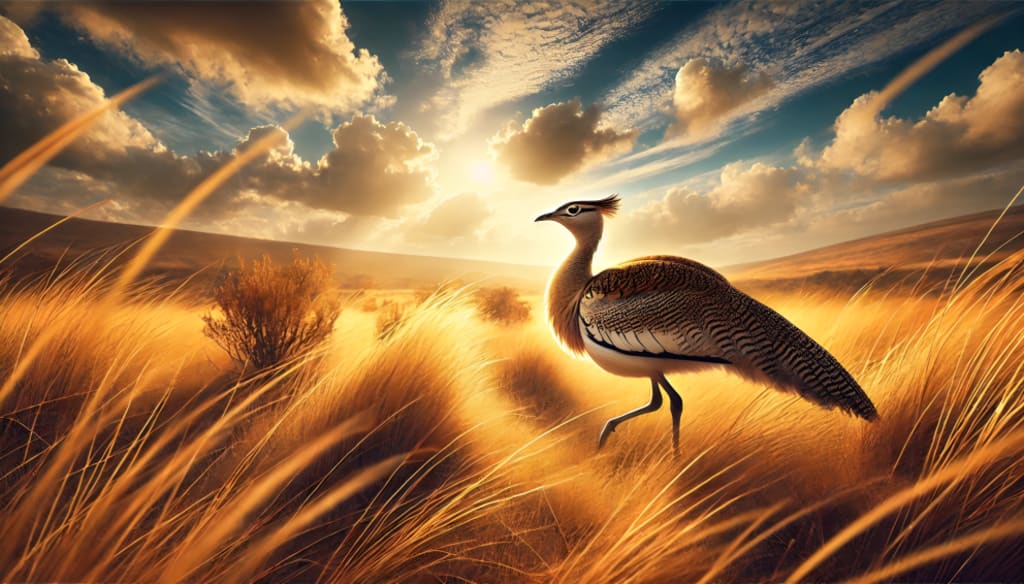
The sun-kissed grasslands of India used to sport a proud bird like the Great Indian Bustard or GIB as it was termed, which loved to walk with unmatched pride, alone. Such was the magnificent bird that had epitomized grandeur in looks and size and given the dry ecosystems that this bird roamed an air of harmony. The magnificent bird, however, today stands at the edge of extinction. The Great Indian Bustard is one of the most endangered species with only less than 150 individuals living in the wild. Habitat loss, human-related threats, and ineffective conservation methods pose a threat to its threatened future.
The Great Indian Bustard is a very fascinating bird species in India. Its plight, threats that face its survival, and urgent measures needed to save this iconic species from extinction will be discussed here.
A Declining Legacy
Earlier known to cover vast grasslands of the Indian plains that started from desert tracts of Rajasthan to the Deccan Plateau, the bustard gained appreciation as Godawan locally in Rajasthan where pastoralists ways lived in synchronization with nature. Status Today: As of now assessed on the IUCN Red List and recorded to have declined by over 90 % in the last five decades.
The reasons for this dramatic decline are multifaceted:
Habitat Loss:
India’s grasslands, often misunderstood as wastelands, have been systematically degraded. Urbanization, agricultural expansion, and industrial development have eroded the Bustard’s natural habitat. Wind Whileficial for clean energy, wind farms, and solar parks inadvertently disrupted these ecosystems.
Collision with Power Lines:
One of the leading causes of GIB mortality is collision with overhead power lines. These birds, with their limited frontal vision, struggle to detect power lines in time. Studies estimate that nearly 18 birds die annually in Rajasthan alone due to such collisions.
Hunting and Predation:
Although hunting the GIB is now illegal, historical hunting practices severely impacted its population. Additionally, feral dogs and other predators pose a constant threat to Bustard nests and chicks.
Climate Change:
Rising temperatures and unpredictable weather patterns further stress the fragile ecosystems that the Bustard relies on, reducing food availability and breeding success.
Conservation Efforts: A Glimmer of Hope Despite these challenges, concerted efforts are being made to protect and revive the Great Indian Bustard population. Key initiatives include:
1. Captive Breeding Program
In 2019, the Government of India, in collaboration with the Wildlife Institute of India, collaborated with the Rajasthan Forest Department to start a captive breeding program in Jaisalmer. Bustard chicks bred here in captivity reach the appropriate stage of maturity and then are released back into the wild. Till 2024, more than 20 chicks have been bred in captivity successfully.
2. Mitigating Power Line Collisions
Recognizing the deadly impact of power lines, the Supreme Court of India mandated the undergrounding of high-tension wires in critical GIB habitats. Additionally, bird diverters—simple devices that make power lines visible to birds—are being installed to prevent collisions.
3. Protecting Habitats
Conservationists are advocating for the designation of GIB habitats as Protected Areas to restrict disruptive human activities. The Desert National Park (DNP) in Rajasthan remains one of the last strongholds for the Bustard but enhanced legal protections and management are urgently needed.
4. Community Involvement
Local communities play a crucial role in conservation. Traditional shepherds, known as Raikas, are being enlisted as GIB Guardians to monitor Bustard movements and protect nests. Educational campaigns in rural areas are raising awareness about the importance of birds to India’s natural heritage.
Why Grasslands Matter
The plight of the Great Indian Bustard underscores a larger issue: the neglect of India’s grasslands. These ecosystems, often overlooked in conservation priorities, are biodiversity hotspots that support numerous species, including wolves, blackbucks, and lesser floricans.
Grasslands also provide essential ecosystem services:
Carbon Sequestration: Grasslands act as carbon sinks, helping mitigate climate change.
Groundwater Recharge: Their unique vegetation supports water infiltration, replenishing aquifers.
Livelihoods: Grasslands sustain traditional pastoral communities, whose practices align with sustainable conservation.
Saving the Bustard is, therefore, not just about preserving a species but about protecting an entire ecosystem that benefits people, wildlife, and the planet.
Challenges Ahead
While current efforts are commendable, several obstacles remain:
Funding Gaps:
Conservation programs often suffer from inadequate financial resources. Long-term funding is essential for habitat restoration, breeding programs, and public outreach.
Policy Implementation:
Despite legal protections, enforcement remains weak. Poaching, encroachments, and unregulated development persist in many areas.
Climate Resilience:
With climate change intensifying, it is critical to build resilience into conservation strategies to ensure that Bustards and their habitats can adapt to changing conditions.
Expanding Renewable Energy:
India’s push for renewable energy must be balanced with ecological concerns. Strategic planning and technology solutions are needed to minimize the impact of wind and solar farms on Bustard habitats.
A Call to Action
This fight to survive for the Great Indian Bustard is against time. The chick raised today, the diversion of a power line, or an acre saved gives us closer hope for a secured future of this iconic species. Success, though, would only come together, as a concerted effort of policymakers, conservationists, local communities, and global partners.
Here’s how we can all contribute:
Support Conservation Organizations: Donate to or volunteer with groups working on Bustard conservation.
Advocate for Grasslands: Raise awareness about the ecological importance of grasslands and lobby for their protection.
Promote Sustainable Development: Encourage renewable energy projects to adopt wildlife-friendly practices.
Conclusion
Meanwhile, the bustard stands out as a typical representative of the extremely high biodiversity of India and, paradoxically, at the same time is also an archenemy of the current conservations. That beautiful bird spread its wings across all the grasslands in the country; it is about to be gone forever. So, this makes attention to urgently needed redress to neglected grassland ecosystems which are so very crucial to biodiversity, climate regulation, and livelihoods of traditional communities.
Grasslands are largely misunderstood as wastelands. However, as a habitat, it is highly rich, as evident by the presence of blackbucks, wolves, and lesser floricans, for instance. They also provide critical ecosystem services: carbon sequestration and replenishment of groundwater. Saving the GIB would mean saving an entire ecosystem for human well-being too.
Indeed, captive breeding and power line collisions, some of the measures undertaken to save the GIB, have been quite promising. Putting up bird diverters and undergrounding high-tension wires are good steps; however, these must be scaled up and supported with proper funding, effective enforcement of protection measures, and better integration of conservation priorities into India's development plans.
Public contribution to a conserved strategy is important. Grass-root level empowerment of the communities will enhance ownership and ensure that their grasslands are protected on the ground. Public awareness campaign programs can further strengthen the above efforts by providing a wider support base for the survival of the GIB.
It is a battle to save the Great Indian Bustard, in which time is at war. Collective action, strategic planning, and long-term commitment to conservation will ultimately guarantee its survival. This iconic species' protection will prove that man can live with nature, hence guaranteeing a sustainable future for generations to come.
About the Creator
GAURAV MEWAL
Gaurav Mewal is a professional article writer known for crafting engaging, well-researched, and versatile content across various topics. He delivers high-quality articles tailored to meet client needs with precision and creativity.
Keep reading
More stories from GAURAV MEWAL and writers in Earth and other communities.
The Mahakumbh Mela: A Cultural and Spiritual Phenomenon
Mahakumbh Mela is one of the few festivals that occur once every 12 years in India. This grand congregation takes place at four sacred places: Haridwar, Prayagraj, Ujjain, and Nashik. All these four places are of high religious importance as it is believed that the elixir of immortality, called Amrit, had fallen during a heavenly incident at those places. This Mahakumbh is visited by millions of devotees, saints, and tourists around the globe and, thus, it is the biggest congregation of humanity on Earth. The article focuses both on the merits and demerits of this mega-event in a balanced manner towards its after-effects.
By GAURAV MEWALabout a year ago in Earth
The Trump Doctrine 2026: Redefining Global Trade and Geopolitics
As of March 2026, the international community finds itself navigating a seismic shift in global governance. The return of Donald Trump to the White House has introduced a "Peace through Strength" doctrine and a radical "America First" economic agenda that has disrupted decades of established diplomatic norms. From sweeping trade barriers to aggressive geopolitical maneuvering, the "Trump Effect" is the defining narrative of the mid-2020s. 1. The Great Tariff Wall: A 15% Global Shift The cornerstone of the administration’s 2026 agenda is the implementation of a 15% universal baseline tariff on nearly all imported goods. This policy represents the most significant shift in American trade history since the early 20th century. The Objective: The administration argues that these tariffs are essential to "onshore" manufacturing, reduce reliance on foreign adversaries (particularly China), and generate massive federal revenue to potentially replace domestic income taxes. Market Volatility: Global markets have reacted with high sensitivity. While American industrial stocks have seen a localized surge, multinational corporations are grappling with supply chain disruptions. Retaliation Fears: Trading partners in the European Union and the BRICS bloc have threatened reciprocal measures, leading economists to warn of a synchronized global trade war that could redefine the cost of consumer goods worldwide. 2. Geopolitics: Maximum Pressure 2.0 In the Middle East, the Trump administration has doubled down on its "Maximum Pressure" campaign against Iran. Following the recent reports of the death of Iran's Supreme Leader and the subsequent power vacuum, the U.S. has taken a definitive stance. Stifling the Oil Flow: By tightening sanctions to unprecedented levels, the U.S. aims to decouple Iran from the global energy market, seeking to neutralize its regional influence. The Abraham Accords Expansion: Simultaneously, the White House is pushing for a historic normalization deal between Israel and Saudi Arabia. This "Grand Bargain" is intended to create a unified security and economic bloc to stabilize the region without direct U.S. military entanglements. 3. Cultural Diplomacy and the Indo-Pacific Axis A surprising trend this March was the President’s widespread Holi outreach. By celebrating the Indian "Festival of Colors" and framing it as a victory of "good over evil," the administration has signaled a strategic deepening of the U.S.-India partnership. This is more than just cultural politeness; it is a calculated geopolitical move. By aligning closely with New Delhi, the U.S. seeks to create a formidable democratic counter-balance to China’s influence in the Indo-Pacific region, securing vital shipping lanes and technology partnerships. 4. Domestic Efficiency: The DOGE Initiative Internally, the Department of Government Efficiency (DOGE), led by high-profile figures like Elon Musk, continues to dominate the headlines. The mission to "slash the bureaucracy" has led to: Massive Deregulation: A rapid dismantling of federal oversight in the energy and tech sectors. The "Drill, Baby, Drill" Revival: By greenlighting massive domestic oil and gas projects, the U.S. has become the world’s leading energy exporter, lowering domestic prices but drawing sharp criticism from climate advocates. 5. The Future of Global Alliances The Trump Doctrine of 2026 has forced both allies and rivals to rethink their positions. Organizations like NATO and the UN are being pressured to reform or face decreased U.S. funding. The world is moving toward a bi-polar or multi-polar system, where bilateral deals are prioritized over multilateral treaties. Conclusion The Trump administration’s policies in 2026 are characterized by a rejection of the globalist status quo. Whether through the 15% tariff or "Maximum Pressure" diplomacy, the goal is a total re-centering of the global order with American interests as the sole North Star. As the year progresses, the success of this doctrine will depend on whether the global economy can absorb these shocks or if the friction will lead to a broader international crisis.
By Arafat Rahmana day ago in Earth
Unofficial Challenge: Black History Celebration
Forward: February 28th, 10:53 PM, EST... The final hour of Black History Month, 2026. Hello fellow writers. I've had this challenge waiting in my drafts for most of the month. But I held off on publishing it, until now.
By Sam Spinelli5 days ago in Writers



Comments
There are no comments for this story
Be the first to respond and start the conversation.