
Sacred Natural sites (Uluru, Mount Kailash)
Sacred Natural Sites: Uluru and Mount Kailash

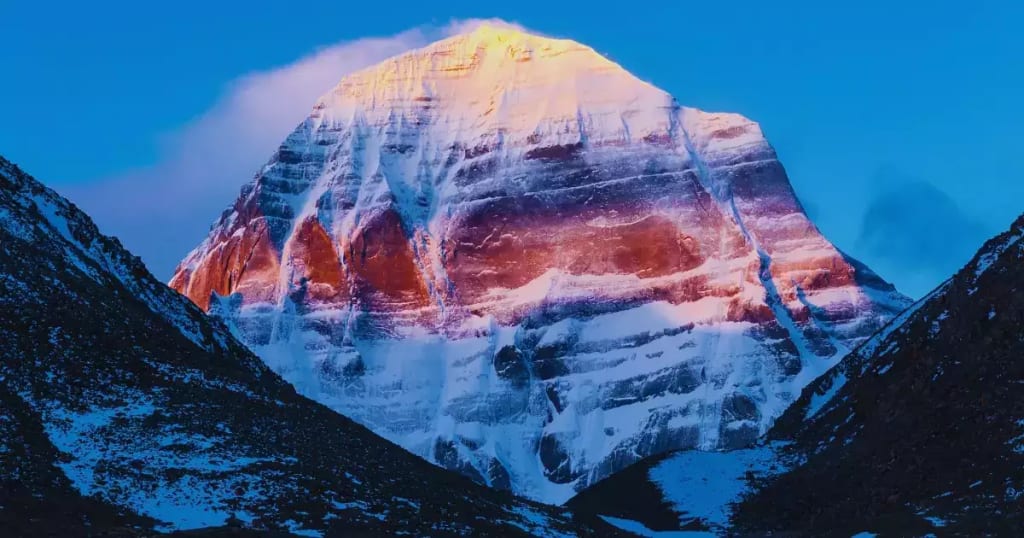
Sacred natural sites are landscapes, mountains, rivers, and other natural formations that hold deep spiritual, cultural, and religious significance for various communities around the world. Many of these sites have been revered for thousands of years and continue to be important places of pilgrimage, worship, and conservation. Two of the most famous sacred natural sites are Uluru in Australia and Mount Kailash in Tibet. Both sites hold profound meaning for indigenous and Religious communities and symbolize the connection between humanity and Nature.
Uluru: The Heart of Australia
Geographical and Cultural Significance
Uluru, also known as Ayers Rock, is a massive sandstone monolith located in the arid landscape of the Northern Territory in Australia. It rises 348 meters (1,142 feet) above the surrounding plain and has a circumference of about 9.4 kilometers (5.8 miles). The rock changes colors throughout the day, displaying hues of deep red, orange, and purple, especially at sunrise and sunset.
For thousands of years, Uluru has been a sacred site for the Anangu people, the Aboriginal custodians of the land. They consider Uluru a living entity that holds the stories of their ancestors. According to Tjukurpa, the traditional law and belief system of the Anangu, Uluru is connected to the Dreamtime, a spiritual era when ancestral beings shaped the world.
Spiritual and Mythological Importance
Uluru is filled with sacred caves, rock paintings, and waterholes, each linked to Anangu legends. One of the most famous myths tells of the battle between two ancestral beings, Kuniya (the woma python) and Liru (the poisonous snake). The marks on the rock’s surface are said to be scars from this ancient conflict.
Certain areas of Uluru are so sacred that they are off-limits for photography and public access, as they are considered spiritually powerful. The Anangu people strongly discourage climbing Uluru out of respect for its sacred nature. In 2019, after decades of debate, the Australian government officially banned climbing Uluru, honoring the wishes of the Anangu people.
Conservation and Tourism
Uluru is part of the Uluru-Kata Tjuta National Park, a UNESCO World Heritage Site. The park is jointly managed by the Anangu people and the Australian government, ensuring the protection of both its cultural and natural significance. Tourists are encouraged to experience the site respectfully, engaging in guided walks to learn about its history, Aboriginal traditions, and the diverse desert ecosystem.
Mount Kailash: The Sacred Mountain of the Himalayas
Geographical and Religious Importance
Mount Kailash, standing at 6,638 meters (21,778 feet) in Tibet, is one of the most revered mountains in the world. Unlike other famous Himalayan peaks, Kailash has never been climbed, as it is considered too sacred to be touched by human feet. Its unique pyramid-like shape and symmetrical ridges make it an awe-inspiring presence in the landscape.
Mount Kailash is sacred in four major Religions:
Hinduism: It is believed to be the abode of Lord Shiva, who sits in deep meditation on its summit. Hindus consider it the center of the universe.
Buddhism: It is associated with Chakrasamvara, an important deity in Tibetan Buddhism. The mountain is also linked to the idea of an axis mundi, or the spiritual center of the world.
Jainism: It is believed that Rishabhadeva, the first Jain Tirthankara, attained enlightenment here.
Bön (Tibetan Indigenous Religion): Followers of the Bön tradition regard it as a holy site and believe it is the seat of Shenrab Miwo, their founder.
Pilgrimage and Rituals
One of the most sacred acts of devotion is the Kailash Kora, a ritual circumambulation of the mountain. Pilgrims walk 52 kilometers (32 miles) around the base of the mountain, a journey that takes about three days on foot. Some devoted pilgrims perform full-body prostrations along the entire route, which can take weeks. It is believed that completing one full circumambulation washes away the sins of a lifetime, while completing 108 circuits leads to enlightenment.
The pilgrimage is physically and spiritually demanding due to the high altitude and rugged terrain. The highest point of the trek, Dolma La Pass (5,630 meters or 18,471 feet), is associated with spiritual rebirth and transformation.
Challenges and Conservation
Despite its sacred status, Mount Kailash faces threats from tourism, environmental changes, and political restrictions. The Chinese government controls access to the region, requiring special permits for foreign pilgrims. Climate change has also affected the surrounding glaciers and ecosystems. Conservation efforts focus on sustainable tourism and respecting the religious traditions of the local communities.
Comparing Uluru and Mount Kailash
Both Uluru and Mount Kailash are deeply sacred natural sites, but they hold different cultural meanings.
Feature Uluru (Australia) Mount Kailash (Tibet)
Sacred to Anangu people (Aboriginal Australians) Hindus, Buddhists, Jains, Bön practitioners
Spiritual Meaning Place of ancestral spirits and Dreamtime stories Abode of Lord Shiva and spiritual center of the universe
Religious Practices Storytelling, rituals, protection of sacred areas Pilgrimage (Kora), meditation, prostrations
Conservation Efforts Ban on climbing, joint management with Indigenous people Controlled tourism, restricted climbing, ecological preservation
Major Threats Tourism, environmental impact, climate change Political restrictions, climate change, growing tourism
IN THE END
Sacred natural sites like Uluru and Mount Kailash demonstrate the deep spiritual connection between people and nature. These sites are not only places of worship and pilgrimage but also symbols of cultural identity, environmental conservation, and historical legacy. Respecting and protecting these sites is crucial to preserving their spiritual, ecological, and cultural significance for future generations.
As globalization and tourism continue to impact these sacred places, it is important to balance accessibility with reverence and conservation. Whether one visits as a pilgrim or an observer, these sites serve as reminders of the profound respect that different cultures have for the natural world.
About the Creator
Badhan Sen
Myself Badhan, I am a professional writer.I like to share some stories with my friends.
Keep reading
More stories from Badhan Sen and writers in Earth and other communities.
Exploration (Age of Discovery, modern expeditions)
Exploration has been a fundamental aspect of human history, driven by curiosity, the desire for trade, and the quest for new territories. The Age of Discovery (also known as the Age of Exploration) and modern expeditions represent two significant eras where exploration shaped global history and brought about transformative cultural, political, and technological changes.
By Badhan Sen12 months ago in Earth
Low Honey Harvest Expected as North Island Beekeepers Grapple With Storm Effects
Beekeepers across New Zealand’s North Island are bracing for one of the weakest honey harvests in years as the lingering impacts of severe storms continue to disrupt flowering cycles, damage hives, and strain an industry already under pressure from rising costs and environmental challenges. Unseasonal rainfall, strong winds, and repeated flooding events over recent months have left many apiarists facing reduced nectar flows and delayed hive recovery. Regions that normally provide abundant manuka and clover blooms have seen flowering patterns thrown off balance, cutting into the peak production period that beekeepers rely on for much of their annual income. “This season has been incredibly difficult,” said one commercial beekeeper operating in Hawke’s Bay. “We lost access to several sites because roads were washed out, and even where hives survived, the bees haven’t had consistent weather to forage properly.” Storm Damage and Disrupted Bloom Cycles The North Island experienced a series of intense storms that damaged farmland, forests, and coastal areas. For beekeepers, the consequences go beyond physical destruction of equipment. Flooding saturated soils and uprooted vegetation, while prolonged cloud cover reduced sunlight necessary for plants to produce nectar. Botanists and agricultural scientists say flowering plants are highly sensitive to weather patterns. When storms arrive during crucial blooming windows, nectar production can drop sharply. “Bees need stable conditions to collect nectar,” explained an environmental researcher at a New Zealand agricultural institute. “If rain washes pollen away or temperatures stay too low, flowers simply don’t provide enough resources.” In areas such as Northland and Waikato, beekeepers report hive productivity down by as much as 30 to 40 percent compared with average seasons. Some smaller operators fear they may not harvest enough honey to cover operational expenses. Economic Pressure on the Industry The beekeeping sector has already been grappling with challenges including fluctuating manuka honey prices, increased biosecurity requirements, and rising fuel and transport costs. A low harvest year adds further strain to businesses that rely heavily on exports. Manuka honey remains one of New Zealand’s most valuable agricultural exports, with international demand particularly strong in Asian and European markets. However, reduced supply could push prices higher, potentially benefiting some producers while limiting access for smaller exporters. “For large companies, there may be ways to absorb the losses,” said an industry representative. “But for family-run operations, this could be a make-or-break season.” Some beekeepers are considering scaling back hive numbers or shifting locations next year to avoid areas more vulnerable to extreme weather. Others are exploring diversification into pollination services for crops such as kiwifruit and apples to offset lost honey revenue. Impact on Bee Health Beyond production losses, bee health has also suffered. Wet conditions increase the risk of fungal diseases inside hives, while weakened colonies are more susceptible to pests such as varroa mites. Veterinary experts warn that stressed bees may struggle to survive winter if they enter the colder months with insufficient food reserves. Beekeepers are now spending more on supplemental feeding using sugar syrup and protein patties to keep colonies alive. “We’re not just losing honey,” one apiarist said. “We’re spending more to keep the bees healthy, and that cuts into any profit we might make.” Climate Change and Long-Term Risks Scientists link the increasing frequency and intensity of storms to broader climate change trends. Warmer oceans and shifting weather patterns are making extreme rainfall events more common in New Zealand, raising concerns about the long-term stability of industries dependent on predictable seasons. Agricultural economists argue that beekeeping is particularly vulnerable because it depends on both plant health and insect behavior, two systems sensitive to environmental stress. “This season may be a warning sign,” said a climate policy analyst. “If storms continue at this pace, the industry will need stronger adaptation strategies, such as moving hives more frequently or planting storm-resistant forage crops.” Government agencies are monitoring the situation closely. Some regional councils are assessing whether emergency assistance or recovery grants may be needed for affected farmers and beekeepers. Community and Environmental Role Beekeepers play a critical role in pollination, supporting food production far beyond honey. Crops such as berries, avocados, and squash rely heavily on bees, and reduced hive numbers could affect yields next year. Local farming communities have already reported lower pollination activity in some storm-hit districts, raising concerns about knock-on effects for the wider agricultural economy. Environmental groups stress that protecting bee populations is essential not only for economic reasons but for biodiversity. Native plants depend on healthy pollinator networks to regenerate after disasters. “Bees are part of the recovery process,” said a conservation spokesperson. “When storms damage ecosystems, pollinators help bring them back to life.” Looking Ahead Despite the grim outlook, many beekeepers remain cautiously hopeful. Weather forecasts suggest more stable conditions in the coming months, which could allow late-season flowering to provide some relief. However, expectations remain low compared with previous years. Industry leaders are urging collaboration between scientists, policymakers, and producers to build resilience against future storms. Ideas include expanding research into climate-resistant plants, improving hive design, and developing early-warning systems for extreme weather.
By Fiaz Ahmed 2 days ago in Earth
Temperatures Plummet With Wind Chills in Single Digits
Winter is showing no mercy as temperatures across many regions have plummeted, with wind chills dropping into single digits. Meteorologists are warning residents to take precautions, citing the risks of frostbite, hypothermia, and other cold-related hazards. This cold snap is shaping up to be one of the most intense of the season, affecting daily routines, travel, and public safety.
By Aarif Lashari6 days ago in Earth
Feelings Never Die
It is Valentine's Day again, and it bought back memories that were over fifty years old. It bought me back to 1971, and I woke up and I knew my baby was due today. I was big and pregnant, and I felt like I was about to burst wide open. Imagine my surprise when the doctor told my I had a due date of February 14. I couldn't believe it, and since my baby was due today, I felt I could indulge myself a bit. I had gained a lot of weight, and chocolate was on the no-no list, but I had came to the end of this pregnancy, and I hoped it would be okay, after all I would deliver this baby today. So I walked across the street to the grocery story, and bought myself, a peppermint patty, covered in chocolate, my favorite. Me and my Valentine's baby would enjoy it together.
By Susan Payton2 days ago in Fiction


Comments (3)
Really this amazing powerful work of olden days and still function till today wow
What a great Human geography lecture. Good job.
I did not know of this site!