
Russia is Pulling Out of the International Space Station
Russia has announced today that they plan to end their 28-year partnership with NASA, bringing a close to a decades-long collaboration between former enemies.

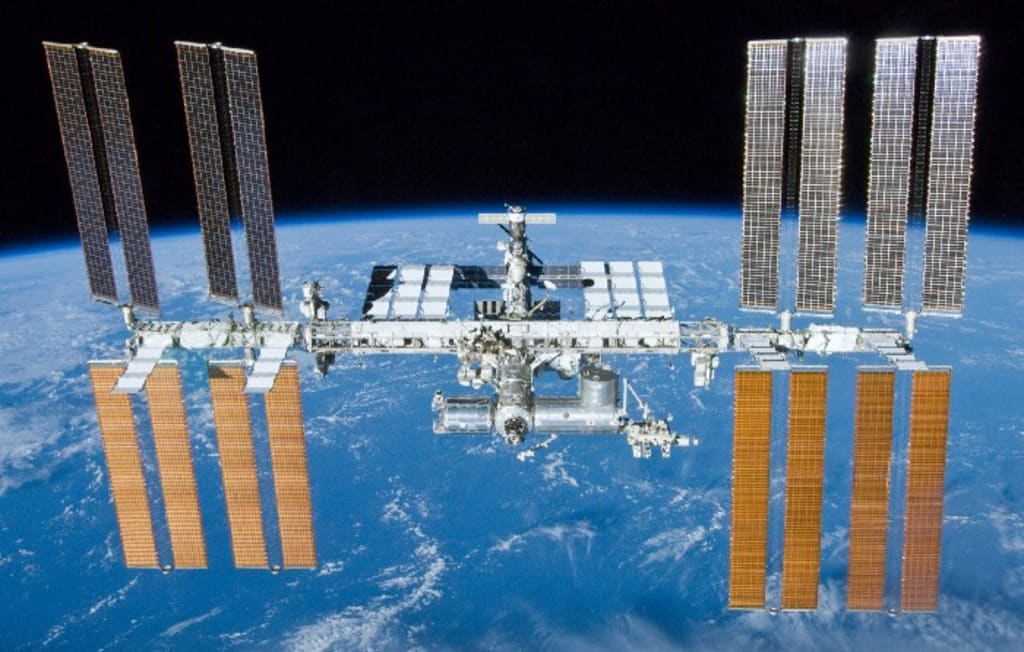
Russia has announced today that they plan to end their 28-year partnership with NASA, bringing a close to a decades-long collaboration between former enemies.
Newly appointed Roscosmos chief Yury Borisov told Russian President Vladimir Putin that “the decision to leave this station after 2024 has been made.”
“You know that we are working within the framework of international cooperation at the International Space Station. Undoubtedly, we will fulfil all our obligations to our partners, but the decision to leave the station after 2024 has been made,” Borisov told Putin in the Kremlin-issued readout.
In the late 20th Century, space was seen as an area of cooperation between rival nations — the last “neutral zone” where real science can happen — and be shared.
Today, however, space is seen as the new “high ground” as countries compete for the vast resources and national prestige that accompany a robust space program.
With Russian satellite-killing robots in orbit, China’s new national space station, and the creation of the U.S. Space Force, it seems clear that humans are destined to take our terrestrial squabbles off-planet.
It should come as no surprise then, that Russia wishes to end their joint operations with the United States on the ISS; especially given the U.S. support of Ukraine’s resistance to Russian aggression.
But this isn’t the first time that Russia has threatened to abandon the ISS. Dmitry Rogozin, former head of Roscosmos, repeatedly threatened to do so before he was ousted.
Unhappy with Western sanctions after Russia’s first Ukraine invasion and annexation of Crimea, Rogozin threatened to leave the ISS numerous times.
But this time, something is different.
This time, Putin signed off on the threat.
According to the transcript of the meeting posted to the Kremlin’s website, Putin said “good” after Borisov told him that Roscosmos will be leaving the ISS and would be building its own space station after 2024 — he added that the new station was his agency’s top priority.
For its part, NASA said it has not yet received any formal notification from Russia.
And some in the space community think this is mere posturing by Russia.
First, they don’t have the money to build their own station, and even if they did, it would take years to construct. In the meantime, they would have no human presence in space.
If Russia is serious and leaves the ISS, it could be problematic for NASA.
The ISS is designed in such a way that the partner nations are dependent on one another. For instance, the U.S. provides the power and Russia provides propulsion.
If Russia leaves, the U.S. will have to approach other partner nations like Canada or Japan as potentially assisting with propulsion — keeping the station from falling out of the sky.
Russia has also recently politicized the ISS — Russian cosmonauts posing with pro-separatist flags for photos and the like.

There’s also the troubling sabotage that took place in 2018 where a hole was drilled in an attached Soyuz capsule.
With continuous, impressive space advances by China, and Russia’s continuous, impressive belligerence here on Earth, it seems increasingly clear that space is to be the newest warfighting domain between China, Russia, and the U.S.
About the Creator
Keep reading
More stories from Alin-B-Hood RO and writers in Earth and other communities.
The End of Social Media
Last week, Meta announced that the Facebook newsfeed would be shifting towards an algorithmic, recommendation-based model of content distribution. This announcement marked the most recent example of a major platform to formally make this shift, while other major platforms, including Meta’s Instagram, have been headed in this direction for a while. Given Facebook’s relevance as the world’s largest social network, this change signals the end of social media as we’ve known it for the past decade and a half.
By Alin-B-Hood RO3 years ago in Fiction
At Least 22 Dead as Crane Collapses Onto Train in Thailand
Thailand has been plunged into mourning after a devastating accident in which a construction crane collapsed onto a moving passenger train, killing at least 22 people and injuring dozens more. The incident, described by officials as one of the deadliest infrastructure-related accidents in recent years, has raised urgent questions about construction safety, urban development, and oversight in the country.
By Aarif Lashari3 days ago in Earth


Comments
There are no comments for this story
Be the first to respond and start the conversation.