
Rising Temperatures
Glacial ice reflects sunlight, helping to cool the Earth's surface. As glaciers melt, they expose darker surfaces like rock and water, which absorb more heat, leading to further warming.


**Title: "The Cooling Blanket"**
In the heart of the Arctic, a wise old polar bear named Nanuk had seen the world change over the years. As he gazed at the vast expanse of ice that stretched before him, he recalled a time when the ice seemed endless, a shimmering kingdom of white that reflected the sun's rays like a cooling blanket.
Nanuk knew that the ice was more than just a beautiful landscape; it played a vital role in keeping the Earth's temperature in check. He often shared stories with the young cubs about the incredible power of this frozen realm.
"You see," he'd tell them, "the ice acts like a giant mirror. When the sun's rays reach the ice, they bounce back into the sky, like a game of catch. This keeps our world cool and comfortable."
The cubs would listen in awe, their imaginations filled with visions of dancing sunlight on the ice.
But as the years passed, Nanuk noticed that something was changing. The ice was disappearing. It was as if the cooling blanket was slowly being pulled away. He watched as the great glaciers crumbled and the icebergs floated away.
One day, Nanuk decided to investigate. He embarked on a journey across the Arctic, speaking with other animals and meeting wise old seals and walruses who had witnessed the changes firsthand.
"What's happening to our ice?" Nanuk asked a friendly walrus named Wally.
Wally sighed heavily. "The ice is melting, my friend," he replied. "It's because of something called global warming. The Earth is getting warmer because of things that humans are doing."
Nanuk's heart sank as he listened to Wally's explanation. He realized that the changes in the Arctic were not just part of a natural cycle; they were driven by human actions, like burning fossil fuels and cutting down forests.
"What can we do?" Nanuk asked.
Wally smiled, revealing his long tusks. "We can spread the word," he said. "We can tell humans about the importance of the ice and how it cools the Earth. Maybe, just maybe, they will listen and change their ways."
Nanuk returned to his home in the Arctic with a newfound determination. He spoke to the other polar bears and the Arctic foxes, and together, they decided to send a message to the world.
They wrote letters and created beautiful drawings of the ice and the animals that depended on it. Nanuk, with his wise words, recorded a heartfelt video message.
"We need your help," he said. "The ice is our cooling blanket, and it's disappearing because of things humans are doing. We ask that you make changes in your lives to reduce global warming. Use less energy, drive less, and protect the forests. Together, we can keep our world cool and beautiful for generations to come."
Nanuk's message traveled far and wide, reaching children and adults alike. People began to understand the importance of the cooling blanket of ice and the role they played in protecting it.
Slowly but surely, humans started to make changes in their lives. They reduced their carbon emissions, supported renewable energy, and took steps to protect the environment. As a result, the Earth began to cool once more, and the ice began to recover.
Nanuk watched with pride as the Arctic once again became a kingdom of ice, reflecting the sun's rays like a cooling blanket. And he knew that as long as animals and humans worked together to protect the Earth, the ice would remain, a symbol of hope and the power of collective action.
And so, the wise old polar bear and his friends continued to spread the message, teaching the world that by working together, they could keep the Earth cool and beautiful for generations to come.
About the Creator
Julian Evans
1.knowledge and learning 2.Empathy and understanding
3.personal enjoyment
Keep reading
More stories from Julian Evans and writers in Earth and other communities.
Farewell to Home
The small coastal village of Harbor Haven had been a haven for generations. The azure waters of the ocean kissed the shores, and the salty breeze was a constant companion. The Garcia family, consisting of Manuel, Maria, and their two children, Sofia and Diego, had lived in Harbor Haven for as long as they could remember. But now, the place they had called home for so long was slipping away beneath the relentless waves.
By Julian Evans2 years ago in Earth
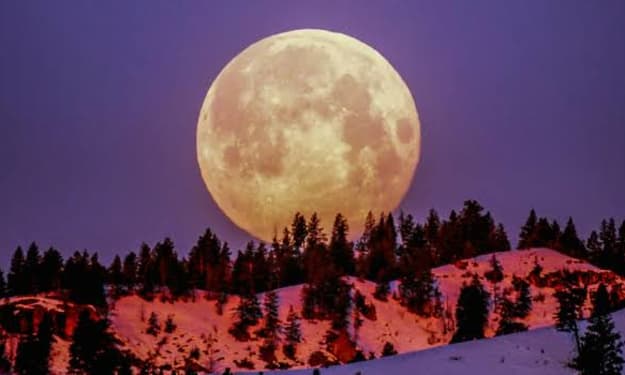
Full Moon Snow Moon
On cold winter nights, when the air feels sharper and the sky appears unusually clear, the Moon often seems brighter and more commanding than at any other time of year. One of the most evocative lunar events of winter is the full moon Snow Moon, a name that carries both astronomical meaning and deep cultural history. Beyond its poetic title, the Snow Moon invites people to look up, reflect on the rhythms of nature, and ask timeless questions—like what planet is next to the moon tonight?
By Saboor Brohi 8 days ago in Earth



Comments
There are no comments for this story
Be the first to respond and start the conversation.