

Until the 1850s, only nine known dinosaurs were found and identified as prehistoric versions of the reptiles. The bones found during this time were mixed with no clear definition of specific species. The first whole dinosaur was found by a man named Foulke who worked for Edward Cope in 1858. They were digging in the Marl Pits in New Jersey and found a whole Hadrosaurus. Unknown to Cope, two men who were working for him were also collecting specimens and selling them to Yale’s Peabody Natural Museum system. Charles Marsh of the Peabody Natural Museum was miserly in sharing information about his finds. This beginning of Paleontology also started the Bone Wars and a race to collect as many new specimens as possible. It also created a problem because no one was comparing notes to see if specific species could be identified. It was almost a decade before the classification system was set in place for dinosaurs.
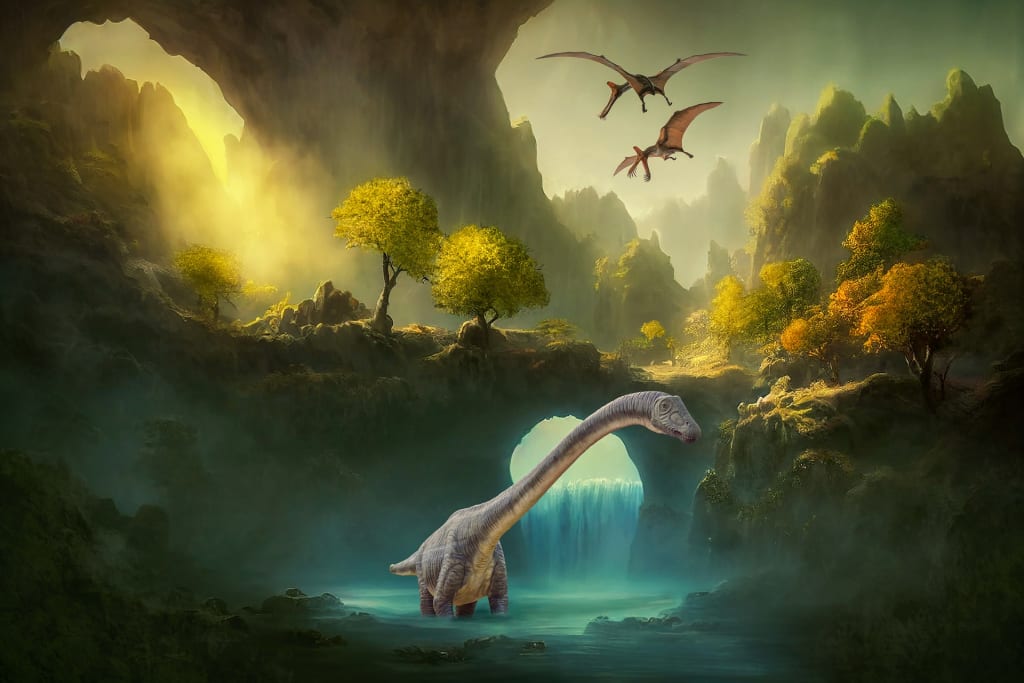
One of the species that was caught up in the middle of these Bone Wars was the Brontosaurus or the Thunder Lizard. Marsh had been looking for dinosaur bones on his own, but the expeditions were getting expensive. Yale funded most of his expeditions when he took along students, but he was funding a lot of it on his own or had his students pay their way. He occasionally hired other men to look for the dinosaur bone sites for him. One of these men, Arthur Lakes, was a geologist working for the Colorado School of mines. He would often sketch the sites of the dinosaur digs. Marsh would hire him to sketch individual bones as well. It was one of these times that the large Saurian bone was found in the Morrison Ridgeback.
Charles Marsh was considered an expert of his time in classification and was well respected for his ability to name them. However, this Brontosaurus would be the challenge of his lifetime. He discovered the bones at a site where there were other dinosaurs known to be in the area. He placed bones from another skeleton along with this Saurian bone. It later caused a man by the name of Elmer Riggs in 1903 to think the Brontosaurus and the Apatosaurus were the same. It was assumed that the Apatosaurus and the Brontosaurus were the same. The scientific community dropped the term Brontosaurs. By this time, the term Brontosaurus was so well known by the general public that sauropods were often called Brontosaurus in cartoons and illustrations. No scientist of the time would even think of them as anymore more than an Apatosaurus.
Bob Bakker of the Houston Natural History Museum challenged this theory in the 1990s. He had already challenged the modern theory of dinosaurs in his book, The Dinosaur Heresies: New theories unlocking the mystery of dinosaurs and their extinction. He was beloved by most of his fans and consulted for information on the Jurassic Park Movie. They liked him so much, the character Robert Burke was based on him according to the Houston Museum of Natural History! However, even he couldn’t change the current view of the science world and have the Brontosaurus declared a separate species. In 2004, the Natural Science Museum monographs concluded that the Brontosaurus and Apatosaurus were the same.
Fast forward to April 7, 2015! A specimen-level phylogenetic analysis and taxonomic revision of the Diplodocidea (Dinosauria, Sauropod) by Emanual Tschopp, Octavio Mateus, and Roger B.J. Benson was published in the Natural library of Medicine! Emanual and his team spent the last few years going over several examples of specimens from many different collections all over the world! He created a computer program designed to categorize them by bones and create a database for this type of dinosaur. Over 81 specimens were examined with 477 bones collectively according to National Geographic. Emanuel wasn’t trying to prove or disprove anything! He was just building a database for comparisons, but the bones that were collected told their own story. There was a noted difference in the sauropods. The Brontosaurus was not only a separate species, but the differences were so stark that they had their own genus designation as well! Specifically, it was the placement of the hip bone and ankle bone!
The Brontosaurus is actually referred to as the Dachshund of the sauropods. They are shorter than a Titanosaurus but longer than the Apatosaurus! It has shorter legs, but is longer from head to tail! Even though it is shorter, it is estimated to weigh 30 tons and is 90 feet long making it long for a dinosaur in any time period. Its smaller size meant it could only eat from the smaller conifers or from growth around the marshes. Its only defense was the whiplike action of its tail. Other dinosaurs from the same family of sauropods had nodes on the spine giving the tail a nasty smacking action. It was not as helpless as it is portrayed.
In the first season of Clash of the Dinosaurs, it was mentioned that the hardest part of being a sauropod was as a youth growing up. Its mother literally laid the eggs and left them. Often it would be several hundred in a nest so that the chance of survival would be greater. Being shorter, it didn’t have much whip to its tail as it began to grow. It didn’t help to have the adult herds move away before they were hatched. The Brontosaurus has weathered a lot down through the years…from struggling to grow up alone and getting finished off with the asteroid. The struggle to survive the Bone Wars drama and keeping its own genus/species designated was just another challenge. As one scientist put it, they put the Thunder back into the Dinosaur!
About the Creator
Jennifer Allen
Hello. I like writing about interesting and unique facts about science and history like four-tusked Mastodons and droughts from the Bronze Age. Check out my website at historyscorner.weebly.com
Keep reading
More stories from Jennifer Allen and writers in Earth and other communities.
Recycling along the Subduction Zone!
Looking out over flat the prairie or a savannah, one might not realize that the earth beneath is moving but it actually is. The land is always moving. Supercontinents have formed over the last billion years and broken apart. Tectonic plates have moved around. Some have been lifted like the Colorado plateau and others were shoved under like the subduction zones along the coast. It’s at these subduction zones that the magic happens, earth recycles the seawater and makes diamonds.
By Jennifer Allen3 years ago in Earth
Trump’s Posturing Over Greenland Has Changed the Transatlantic Alliance Forever
In recent weeks, U.S. President Donald Trump’s aggressive stance on Greenland has sent shockwaves through Europe, prompting officials to warn that the transatlantic alliance may never return to its previous equilibrium. What began as heated discussions over Arctic strategy and territorial influence quickly escalated into a diplomatic standoff that tested the foundations of NATO, revealing tensions that European leaders say could have long-term consequences.
By Muhammad Hassanabout 15 hours ago in Earth
Antarctic Penguin Breeding Is Heating Up Sooner — and That’s a Big Problem
Scientists have discovered that penguins in Antarctica are starting their breeding season earlier than ever before — a change that might sound harmless but is actually raising alarms among researchers. As temperatures in the Southern Hemisphere rise and sea ice patterns shift, these iconic birds are facing challenges that could ripple through the entire Antarctic ecosystem. The finding, based on decades of field observations, highlights how climate change is not just melting glaciers or warming oceans — it is directly affecting wildlife behaviors in ways that could have long-term consequences. For communities of scientists, conservationists, and even eco-tourists who value Antarctica’s unique wildlife, the implications are serious. Why Penguin Breeding Is Happening Sooner For decades, researchers have tracked the Adélie and emperor penguin populations across Antarctica. By comparing breeding dates with historical data, they noticed a clear trend: penguins are laying eggs and hatching chicks earlier than in previous decades. Dr. Samantha Hughes, a marine biologist studying Antarctic ecosystems, explained: “Penguins are highly sensitive to environmental cues. Warmer temperatures and earlier ice melt mean that the conditions they rely on for breeding are coming sooner, so they adjust their reproductive cycles.” At first glance, this might seem like an adaptive behavior. After all, responding to environmental changes is part of survival. But scientists warn that earlier breeding can create new problems, particularly when it comes to food availability and weather patterns. The Challenges of Earlier Breeding Penguins depend on a delicate balance between breeding timing, ice coverage, and food supply. Fish and krill, which are the primary food sources for chicks, follow their own seasonal patterns. If penguins hatch too early, they may face a mismatch between the peak food supply and the period when chicks need it most. This phenomenon, known as phenological mismatch, can have serious consequences: Chick starvation: Chicks may hatch before food sources are abundant enough to sustain them. Increased predation: Younger, weaker chicks are more vulnerable to predators. Colony instability: Uneven survival rates can disrupt social structures and breeding success within colonies. Dr. Hughes adds: “Even a difference of a few weeks in hatching times can affect survival rates. In an environment as extreme as Antarctica, timing is everything.” Climate Change Is the Driving Force Scientists point to rising temperatures, changing sea ice patterns, and shifting winds as the main factors behind earlier breeding. Over the past 50 years, Antarctic regions have warmed at rates faster than the global average, leading to earlier ice melt in spring. Sea ice is critical because it provides stable platforms for penguins to nest and raise their chicks. When ice melts too early, penguins may be forced to nest in less secure locations, increasing the risk of flooding and chick loss. Additionally, the warming waters affect the abundance of krill, tiny crustaceans that are the foundation of the Antarctic food web. Less krill means less food for penguins, further exacerbating the effects of early breeding. Why This Matters Beyond Penguins Penguins are often seen as indicator species, meaning that changes in their populations can signal broader environmental shifts. If penguin breeding and survival are disrupted, it could indicate that the entire Antarctic ecosystem is under stress, including seals, seabirds, and even fish populations that humans rely on. Communities involved in Antarctic research are particularly concerned because this disruption can affect long-term conservation strategies. Protecting species like penguins isn’t just about preserving wildlife; it’s about maintaining ecosystem health in a region that plays a critical role in regulating global climate. Observing the Changes Researchers have been using a combination of satellite imaging, on-the-ground observation, and drones to monitor penguin colonies. These methods allow scientists to track: Egg-laying dates Chick hatching and growth Colony sizes and survival rates Data collected over decades show a clear pattern: in some regions, penguins are breeding up to two weeks earlier than 50 years ago. While that might seem minor, in the fragile Antarctic environment, even small changes can have cascading effects. What Can Be Done Addressing this problem requires both local and global action. On a local level, conservationists are working to protect key breeding grounds and monitor populations for signs of stress. International cooperation is crucial, because Antarctica is governed by treaties that involve multiple countries. On a broader scale, tackling the root cause — climate change — is essential. Scientists emphasize reducing greenhouse gas emissions to slow warming trends and protect fragile ecosystems. As Dr. Hughes notes: “If we don’t address climate change, these changes aren’t just a temporary anomaly. They could lead to permanent shifts in penguin populations and Antarctic ecosystems.” The Human Connection This issue isn’t just about penguins. Communities of researchers, scientists, and environmental advocates rely on a stable Antarctic ecosystem for studies that inform global climate policy. Eco-tourism communities also depend on healthy penguin populations for responsible tourism, which can be a source of income and education. In other words, the timing of penguin breeding may seem like a small, isolated detail, but it has broader implications for science, conservation, and global awareness. Looking Ahead The discovery that Antarctic penguins are breeding earlier is a wake-up call. It highlights how climate change can subtly, yet profoundly, alter animal behavior. Scientists, conservationists, and policymakers must collaborate to understand these changes and implement strategies to mitigate their impact. For communities around the world who care about wildlife, this is a reminder that even remote ecosystems are interconnected with human actions. Protecting penguins and their habitats isn’t just about saving a species — it’s about protecting the health of the planet and our shared future.
By Muhammad Hassan4 days ago in Earth
The Blue Ridge Stalker
Tom had left the Ford down the way, its spark plugs finally exhausted and no mechanics for a dozen miles back through the foothills to Strossburg. No matter, he had worn his boots—almost as if he planned for this to happen. The puzzle he sought to solve emanated from the woods clinging to the slopes above; the valley behind held no mysteries.
By Stephen A. Roddewig2 days ago in Fiction


Comments
There are no comments for this story
Be the first to respond and start the conversation.