
Rethinking Fisheries Management
Could Capacity Development be the Game Changer?
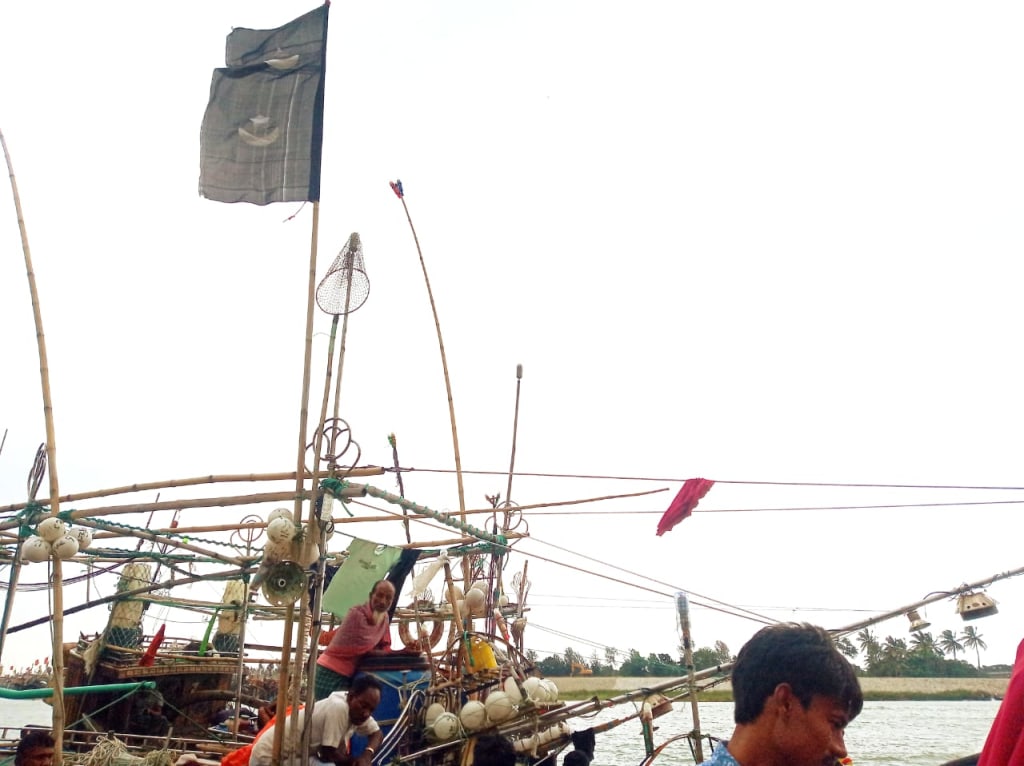
Sustainable fisheries are not only a conservation challenge, they are the lifeblood of coastal and indigenous fishing communities, a source of livelihood, food security, and cultural identity. Too often, fisheries management relies on top-down approach overlooking the opinions, voices, knowledge of the people who are intimately engaged with the fisheries. Excluding communities from policy and decision-making will ultimately result in non-compliance, mismatch between policy goals and community needs, distrust in governing bodies, and increased conflicts over resource-use. As a result, most of the management initiatives often fail to be effective and bring long-term changes.
Beyond Science: Why people matter in Fisheries management?
Conventional fisheries management often prioritize regulating fishing efforts, setting catch limits, establishing protected areas, monitoring species and enforcing compliance. These are indeed important elements, but these often fall short because communities are often treated as subjects of regulations rather than agents of stewardship. Capacity Development can perfectly shift that paradigm as it emphasizes equipping individuals, communities, organizations with the tools, practical knowledge, and confidence they need to actively participate in protecting and managing fisheries resources. It can include training sessions in sustainable harvesting techniques, enhancing digital literacy, strengthening leadership, and participatory decision-making.
Community Knowledge isn’t Optional, It’s Foundational
Local fisherfolk and indigenous communities inhabiting coastal areas often possess intricate knowledge about fisheries resources, developed over generations. But their insights are rarely integrated into official fisheries policies and management initiatives. A capacity development approach recognizes local and indigenous knowledge as essential, not anecdotal. If scientific methods are combined with traditional knowledge, it will create more accurate, effective, context-sensitive, and sustainable solutions. In addition, it ensures trust and cooperation between communities and governing bodies, which will ultimately result in better compliance to regulations.
Where Capacity Development Makes a difference
Active Participation: Communities with knowledge, trained leadership are more likely to participate actively in decision-making.
Equitable resource and benefits sharing: Focusing on marginalized and underrepresented groups, especially women and indigenous communities and ensuring that benefits and resources are shared fairly.
Sustainability: When people have the capacity to understand, monitor, and manage resources, they are more likely to protect them.
Adaptability: Capacity-building encourages local innovation, enabling communities to be resilient to the changing environmental and economic conditions.
Rethinking What ‘Management’ Means
Fisheries resource management is not just about managing fish, it’s about managing interrelations between people and ecosystems, between science and local knowledge, and between policy and experiences. In management, investing in communities is as much as important as investing in data or law enforcement. Accepting that sustainable outcomes come from collaboration, not control – should be the core of Management.
Looking Ahead: The Future of Fisheries is Community-Led
I believe only science cannot solve the complex social and ecological changes aquatic ecosystems and fishing communities are facing. Capacity development when integrated with traditional knowledge of the local people is the game changer and can turn any depleted resource into sustainable, shared wealth. True sustainability can only be achieved when communities possess the knowledge, adaptation, leadership, and authority to manage the resources and without building the capacity of the people, long-lasting change is not possible. I believe, investing in capacity building is investing in a future where communities lead the way to a healthy ocean and resilient livelihoods.
About the Creator
Keep reading
More stories from KEYA CHAKMA and writers in Earth and other communities.
The Hidden Cost of Hilsa Fishing: Bycatch and Why We Must Save It
Hilsa is the cornerstone of Bangladesh’s fisheries sector. It is one of the leading countries producing Hilsa with a large percentage of the total Hilsa production originating from Bangladesh every year. It is the national fish of our country, but it is not just a source of protein, it is intertwined with the ecology, economy, society and tradition of our country. However, beneath the surface of Hilsa Gillnet fishing, there is an urgent environmental concern: bycatch in Hilsa gillnet fishing.
By KEYA CHAKMA12 months ago in Earth
What might an extraterrestrial invasion of Earth look like?
The author used artificial intelligence in the crafting of this article. Although Hollywood depicts visits by aliens as horrifying experiences where humans die or even are eaten alive, scientists and philosophers say that’s probably not what an invasion would like.
By David Heitzabout 5 hours ago in Earth
No Written Document Memorializes the Future Deal Framework for Greenland, Sources Say
In a development that has caught global attention, sources close to the matter confirm that no formal written document currently exists to memorialize any deal framework concerning Greenland between the United States, Denmark, and NATO partners. Although discussions between U.S. President Donald Trump and NATO Secretary-General Mark Rutte focused on Arctic security and strategic cooperation, officials acknowledge that what emerged from the talks is strictly a verbal understanding, not a signed treaty or legally binding text. This lack of documentation has generated confusion and speculation among allies and observers. Without a formal written record, questions remain about what was actually agreed upon, what commitments have been made, and how this impacts sovereignty, defense coordination, and international trust. For Greenland, Denmark, and NATO members, clarity is critical, given the island’s growing strategic significance in the Arctic. Diplomatic Discussions Without a Document The discussions at the center of this story involved President Trump and NATO Secretary-General Rutte and were reportedly aimed at updating the 1951 U.S.–Denmark agreement governing U.S. military presence in Greenland. This meeting followed earlier tensions, when Trump’s comments suggested a desire for increased access — and even partial control — over the territory. Officials say the talks resulted in a verbal understanding of the next steps for cooperation but did not produce a written or signed framework. According to insiders, the leaders agreed to explore updates to the 1951 agreement, particularly in response to modern Arctic security concerns and the need to coordinate NATO efforts in the region. The verbal agreement reportedly touched on several broad points, including potential measures to limit Russian and Chinese investment in Greenland and the reinforcement of NATO’s role in Arctic security. While these points outline the direction of discussions, the lack of formal documentation has left key details ambiguous. Allies are unsure how far agreements extend, whether all parties fully concur, and how such understandings might be interpreted internationally. Why No Document Was Produced Sources indicate that confidentiality and caution were major reasons for avoiding a written record. Secretary-General Rutte reportedly preferred not to create formal documentation at the meeting, fearing leaks or public exposure. Past experience, including incidents where private diplomatic messages were shared publicly by President Trump, likely heightened these concerns. This scenario highlights a recurring dynamic in diplomacy: preliminary negotiations often begin verbally, with written agreements drafted only after parties are confident in mutual understanding. However, this approach carries risks, especially in matters involving national sovereignty and strategic defense, where clear records are essential to avoid misunderstandings. Historical Context: The 1951 U.S.–Denmark Agreement The Greenland discussions are grounded in a decades-old framework. Since 1951, the United States and Denmark have maintained an agreement permitting U.S. military access to Greenland, primarily to support NATO operations and regional defense. The recent talks were framed as a potential update to this longstanding agreement rather than a replacement or attempt to transfer sovereignty. Denmark and Greenland have consistently emphasized that their sovereignty is non-negotiable, and any discussions on security or investment must involve Greenlandic authorities. This principle is central to the diplomatic balance and was reiterated throughout recent negotiations. Uncertainty About Commitments Despite the verbal understanding, the specifics of the agreement remain undefined. Sources confirm that discussions included: Modernizing the 1951 defense agreement to reflect contemporary Arctic security needs. Addressing the potential influence of Russia and China in Greenland. Strengthening NATO roles in Arctic defense coordination. Potential U.S. strategic access to Greenland’s natural resources, including minerals. Without a signed document, these points are subject to interpretation, leaving allies and observers uncertain about future obligations. Analysts note that while verbal understandings can guide diplomacy, formal documentation is critical for legal, political, and strategic clarity. Responses From Allies and Greenlandic Authorities The absence of formal documentation has raised concerns across NATO and European capitals. Written agreements are foundational to diplomacy, providing clarity, accountability, and mutual reassurance. Without them, coordination between allies becomes more challenging, and misunderstandings are more likely. Danish and Greenlandic authorities have been particularly vocal about the importance of sovereignty. Both have stated that any future deal must explicitly involve Greenland and cannot compromise its authority or democratic processes. Greenland’s leadership has emphasized that it will not be treated as a bargaining chip, and Denmark has reinforced that sovereignty remains non-negotiable. Strategic Importance of Greenland Greenland’s significance extends far beyond its size. The Arctic is becoming increasingly central to global strategy due to climate change, emerging shipping routes, and natural resources. Russia and China have increased their presence in the region, making cooperation between the U.S., Denmark, and NATO allies more crucial than ever. Without a written framework, the alliance faces challenges in presenting a unified stance on Arctic security. Formal agreements are not only legal instruments but also symbols of political commitment, demonstrating the seriousness of cooperation to allies and potential rivals alike. Next Steps in Negotiations Officials indicate that the next step is a working-group meeting involving the U.S., Denmark, and Greenland. At this session, negotiators aim to draft a formal document that will memorialize discussions and define the scope of cooperation on defense, investment, and strategic operations. As negotiations continue, allied governments will watch closely. Ensuring that Greenlandic sovereignty and local participation are respected will be paramount. For NATO, the priority will be clarity and coordination, ensuring that all member nations understand the commitments and strategic direction emerging from these talks. Conclusion The fact that no written document currently memorializes the Greenland framework highlights both the fluidity and complexity of high-level diplomacy. While President Trump and Secretary-General Rutte may have reached a verbal understanding, the absence of a formal record leaves uncertainties that will need to be resolved through future meetings and eventual documentation. For the world, Greenland remains a critical strategic territory. The upcoming working-group discussions and eventual formal agreement will define not only the future of Arctic security but also the nature of cooperation between the U.S., Denmark, Greenland, and NATO members. Diplomacy in the 21st century often begins verbally, but clarity, legality, and trust depend on what is ultimately written down.
By Muhammad Hassan7 days ago in Earth



Comments (1)
You're right. Involving communities in fisheries management is key. Ignoring them leads to problems. Combining scientific and traditional knowledge in fisheries management makes sense. It's more effective.