
REACH with 251 SVHC
What You Need to Know About DBDPE

The European Chemicals Agency (ECHA) continues to strengthen chemical safety across the European Union through its regulatory framework, REACH (Registration, Evaluation, Authorisation, and Restriction of Chemicals). One of the essential tools under REACH is the Candidate List of Substances of Very High Concern (SVHCs), which identifies chemicals that pose serious risks to human health and the environment.
As of now, REACH with 251 SVHC includes a new proposal:
1,1'-(ethane-1,2-diyl)bis[pentabromobenzene], commonly known as DBDPE or Decabromodiphenyl ethane.
What Is DBDPE?
DBDPE is a brominated flame retardant, primarily used in the manufacturing of plastics, textiles, and particularly in electrical and electronic equipment. Its flame-retardant properties make it appealing for use in high-temperature applications such as:
- Circuit boards
- Wire insulation
- Connectors and housings
- Television and computer casings
- Automotive interiors
Despite its usefulness in fire prevention, DBDPE has raised alarms due to its persistence in the environment and its potential health hazards.
Why Is DBDPE a Concern?
DBDPE has been proposed as an Opens a new window due to its classification as vPvB – very persistent and very bioaccumulative – under Article 57e of REACH. These properties mean that the substance does not easily degrade in the environment and can build up in living organisms over time.
Key Concerns:
Environmental accumulation: DBDPE resists natural breakdown, resulting in long-term pollution.
Wildlife exposure: It has been detected in soil, sediment, and aquatic life, showing clear signs of bioaccumulation.
Potential for long-range transport: DBDPE can spread through air or water, making it a global concern.
Recycling issues: During shredding and recycling processes, DBDPE can be released into the environment, posing exposure risks to workers and nearby communities.
Although DBDPE is not yet classified as carcinogenic under the official REACH hazard criteria, scientific studies suggest potential links to endocrine disruption and other toxic effects.
Industry Impact: Why Should You Care?
For manufacturers, importers, and downstream users in the electronics, automotive, and plastics sectors, the proposed inclusion of DBDPE as the 251st SVHC could lead to significant compliance implications.
If officially added to the SVHC list, companies may be required to:
Notify the ECHA if articles contain DBDPE above 0.1% weight by weight
Communicate information to customers and supply chain partners
Assess substitution possibilities for safer alternatives
Update technical documentation and Safety Data Sheets (SDS)
Ignoring such obligations could result in regulatory penalties, lost market access, and reputational damage.
Next Steps and Recommendations
As DBDPE awaits final inclusion on the SVHC Candidate List, businesses should act proactively:
Review your supply chain: Identify materials and parts that may contain DBDPE.
Engage suppliers: Request clear documentation and substance declarations.
Evaluate alternatives: Look into flame retardants with lower environmental impact.
Stay informed: Monitor REACH updates from ECHA and consult regulatory experts.
Taking these steps now will not only help with future compliance but also demonstrate your company's commitment to environmental responsibility.
Final Thoughts
With REACH now including 251 SVHCs, the proposed addition of DBDPE reflects the EU’s growing effort to phase out chemicals that threaten ecological and human health. While DBDPE plays a significant role in flame retardancy, its environmental footprint has become too large to ignore.
Companies relying on DBDPE in their production processes must prepare for change. By staying informed and aligning with regulatory best practices, you can safeguard your supply chain, protect your customers, and contribute to a safer world.
#REACH #SVHC #DBDPE #ChemicalSafety #ECHA #Sustainability #Compliance #EnvironmentalHealth
About the Creator
Keep reading
More stories from Mahgol Nikpayam and writers in Earth and other communities.
REACH Candidate List Reaches 251 SVHCs
The European Chemicals Agency (ECHA) has once again updated its Substances of Very High Concern (SVHC) Candidate List. On June 25, 2025, the list officially grew to include 251 substances, following the addition of 1,4-dioxane due to its carcinogenic properties.
By Mahgol Nikpayam6 months ago in Earth
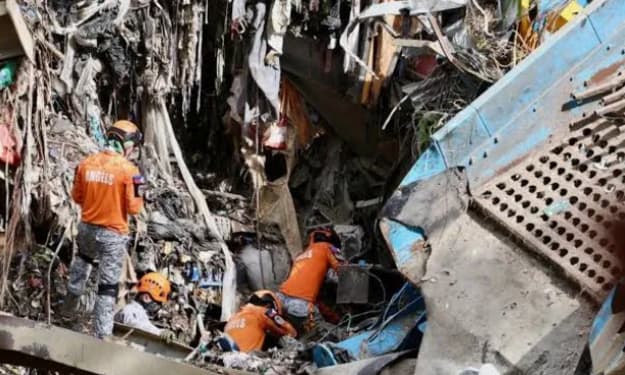
Filipino Rescuers Detect “Signs of Life” in Garbage Avalanche That Killed 4 and Left Dozens Missing
In the early hours following a devastating garbage avalanche in the Philippines, rescuers reported detecting “signs of life” beneath tons of waste, igniting a fragile sense of hope amid widespread grief and uncertainty. The deadly incident, which claimed at least four lives and left dozens missing, has drawn national attention to the dangers faced by communities living near massive waste disposal sites.
By Aqib Hussain3 days ago in Earth
Cement's Quiet Pivot
Why this is under-the-radar progress Cement and concrete account for a sizable slice of global CO₂, but the fastest cuts right now aren’t headline-grabbing moonshots — they’re practical shifts already filtering through specifications, standards, and procurement. Three forces are converging: (1) modern cement standards that enable big clinker reductions with reliable performance; (2) rapid market adoption of Portland-limestone cement (PLC) and new ternary blends such as limestone–calcined clay cements (LC3); and (3) public buyers setting embodied-carbon requirements that move the market. Together, these are driving real-world emission declines from the most-used construction material on earth — often without changing how structures are designed or built [8].
By Futoshi Tachinoa day ago in Earth
The steps to losing a child
Step One: Lose a child. Not what anyone wants to happen and nothing you can do to change it, but you can go through steps to becoming happy again. You can go through steps to loving again. You can go through steps to become a new you because after losing a child you will never be the same person you once were.
By Tabitha Hinkley4 days ago in Fiction



Comments
There are no comments for this story
Be the first to respond and start the conversation.