
Prehistoric Horrors: Creatures That Outscared the Dinosaurs Part 2
A Journey Through Time to Meet Earth’s Most Ferocious Prehistoric Beasts


Our prehistoric planet was a brutal and terrifying place—a world where rampaging reptiles like the dinosaurs might be the poster children for ancient terror, but they were far from the only monstrous inhabitants. For nearly 160 million years, dinosaurs dominated the land. Yet, other equally formidable creatures roamed our planet, both before and after the age of dinosaurs. These beasts, ranging from colossal predators that stalked the forests to massive marine monsters that lurked beneath ancient waves, could have given even the mightiest dinosaurs a serious run for their money.
The Giant Short-Faced Bear: Arctodus
Imagine coming face-to-face with a grizzly bear weighing around 700 pounds; now, picture a bear almost three times that size. Enter Arctodus, the giant short-faced bear that roamed North America about 2.5 million years ago. Towering over early humans—who averaged just four feet in height—Arctodus stood roughly five feet tall at the shoulder and over 12 feet tall when rearing up on its hind legs. Weighing more than 2,000 pounds, this enormous bear wasn’t just large; it was built for speed and power. With long, specially evolved limbs that allowed it to chase down prey at speeds of up to 40 miles per hour, Arctodus was a formidable hunter. Its impressive canines, measuring over 4.5 inches, would sink deep into the flesh of giant bison and ground sloths, while a bite force of around 2,000 pounds per square inch—nearly twice that of a modern grizzly—made short work of crushing bone to access the nutritious marrow within. Imagine the terror early humans must have felt encountering such a beast in the wild!
Megalania: Australia’s Colossal Lizard
While modern lizards might send a shiver down your spine, none compare to the prehistoric terror of Megalania. Roaming Australia during the Pleistocene era, this gigantic terrestrial lizard stretched up to an astonishing 23 feet in length and weighed roughly 4,300 pounds—about the same as an average car. Fossils indicate that Megalania might have even encountered the first Australian settlers, a thought that is both awe-inspiring and horrifying. With serrated, blade-like teeth and powerful, heavy-set limbs, this beast wasn’t a picky eater; it could take down large marsupials, ground-nesting birds, eggs, and chicks with ease. Moreover, recent studies suggest that Megalania might have possessed potent venom in its jaw glands—comparable to the toxic arsenal of today’s Komodo Dragons—adding a dangerous twist to its already fearsome reputation. A huge, fast, venom-injecting lizard? It’s a creature that redefines what it means to be terrifying.
Rulers of the Sky: Argentavis and the Monster Birds
Not all prehistoric nightmares lurked on the ground—some ruled the skies. Argentavis, native to what is now Argentina, is believed to be the largest bird ever to take flight. Weighing about 154 pounds with a staggering wingspan of 22 feet, this colossal glider dominated the air. Its enormous skull—longer than the average human forearm—and razor-sharp beak made it a fearsome aerial predator. Argentavis belonged to a group of birds known as teratorns, or “monster birds,” which could cruise at speeds of up to 43 miles per hour. Imagine a massive silhouette gliding overhead, casting a shadow so vast it would send chills down your spine—an omen that something deadly might be about to swoop down on its next meal.
The Tiny but Terrifying Doryaspis
In the Devonian Period, over 350 million years ago, even the smallest creatures could be death incarnate. Doryaspis, a jawless fish from this era, might seem unassuming at only about a foot long and weighing around one pound, but don’t let its size fool you. This fish sported an elongated, spiked snout known as a rostrum—an adaptation it used to root out crustaceans from the sea floor. Additionally, spines lined along its fins acted like tiny blades, capable of slicing through anything unfortunate enough to come close. Though diminutive, Doryaspis’s stealth and agility made it a master of surprise attacks in the ancient underwater world.
Mesosaurus: The Slim Reptilian Hunter
Turning our gaze to the water, the Early Permian period (around 299 million years ago) gave rise to Mesosaurus, one of the first marine reptiles. Despite its sickeningly slim and elongated body, Mesosaurus was a fearsome predator in its own right. Its narrow jaws were lined with rows of razor-sharp, needle-like teeth perfectly adapted to pierce the scaly skin of its prey. With a long, narrow tail and webbed feet that allowed for sudden, agile movements, Mesosaurus could dart through the water in pursuit of unsuspecting prey. Although it rarely grew beyond three feet in length and eventually disappeared during the Permian extinction, its legacy as an early and effective marine hunter endures.
Megatherium: The Giant Ground Sloth
Not every giant from prehistory was a meat-eater. Megatherium, a colossal ground sloth native to South America, was an herbivore of truly epic proportions. Living from the Early Pliocene until the end of the Pleistocene (approximately 5 million to 2.5 million years ago), Megatherium could weigh up to 8,800 pounds, stretch 20 feet from head to tail, and stand nearly seven feet tall at the shoulder. As the largest bipedal mammal ever known, it was roughly 800 times the size of modern sloths. Despite its gentle, plant-eating nature, the sheer size and power of Megatherium meant that it could easily crush any obstacles in its path. Over time, evolution favored smaller, tree-climbing sloths, sparing them from extinction, but the giant Megatherium remains a symbol of prehistoric might and a reminder of nature’s tendency to produce extremes.
Gorgonops: The Demonic Predator
Some of the most terrifying predators weren’t massive reptiles or giant mammals—they were early mammalian hunters with a demonic appearance. Gorgonops, a therapsid predator from the Late Permian period (around 254 million years ago), was one such creature. Despite measuring only about six feet in length and standing roughly two feet tall at the shoulder, Gorgonops boasted enormous, saber-like canine teeth—each nearly five inches long—that jutted out in a menacing display. These fangs were perfect for tearing through the tough hides of its prey and even puncturing vital areas such as windpipes. Its semi-erect gait allowed for swift movements, ensuring that any creature caught in its path would be swiftly overwhelmed. With a visage that seems to merge features of a dog, lizard, and sabre-toothed tiger, Gorgonops remains one of prehistory’s most fearsome and iconic predators.
Thalattoarchon: The Fin Reaper of the Seas
In the Middle Triassic period, around 240 million years ago, the seas were ruled by formidable predators. One such apex hunter was Thalattoarchon, an ichthyosaur whose name fittingly means “Fin Reaper.” Thalattoarchon featured enormous, double-edged blade-like teeth—each measuring about four inches—that were designed not to simply pierce, but to slice through the muscle of marine prey. Weighing almost five tons, this giant marine reptile sported a skull so massive that it was nearly twice the size of its intended prey. As the undisputed apex predator of its era, Thalattoarchon dominated the waters long before the age of dinosaurs, its fearsome dental arsenal earning it a reputation that still resonates with modern paleontologists.
Megapiranha: Nature’s Ultimate Bite
Freshwater ecosystems had their own share of prehistoric terrors, none more vicious than the ancient ancestor of modern piranhas: the Megapiranha. While today’s piranhas are known for their serrated teeth and powerful jaws, the Megapiranha was on another level entirely. This 10-million-year-old fish measured around 28 inches in length and weighed roughly 22 pounds—with some evidence suggesting individuals could reach up to 50 inches long. Capable of delivering a bite force of up to 1,000 pounds per square inch—about fifty times its body weight—its zig-zag arranged teeth could effortlessly crush bone and tear through flesh. Whether preying on hard-shelled turtles or armored catfish, the Megapiranha’s ferocious bite ensured it was a dominant force in its freshwater habitat.
Liopleurodon: The Apex Predator of the Jurassic Seas
Above the waves during the Middle to Late Jurassic period, a colossal marine reptile reigned supreme: Liopleurodon. This carnivorous giant could grow up to 30 feet long and tip the scales at around 10 tons. Its massive skull, which made up roughly one-fifth of its total body length, housed a bite that modern scientists believe was even stronger than that of a T. Rex. Equipped with robust, paddle-like limbs, Liopleurodon could accelerate rapidly through the water, leaving little time for any prey to escape. Although it was air-breathing and had to surface for oxygen like whales today, Liopleurodon was an unstoppable force in the ocean, its very presence a reminder of the prehistoric terror that once lurked beneath the waves.
Dimetrodon: The Sail-Back Predator
Long before dinosaurs walked the Earth, Dimetrodon ruled parts of prehistoric North America. Often mistaken for a dinosaur, this primitive synapsid is more closely related to mammals than to reptiles. Living between 286 and 270 million years ago, Dimetrodon grew to over 11 feet in length and sported a dramatic sail on its back—a structure formed by elongated bony spines draped in skin. This sail likely helped regulate its body temperature in a fluctuating climate. Over time, its jagged array of teeth grew ever sharper, transforming its jaws into a veritable cavern of deadly weaponry. With such a fearsome appearance, Dimetrodon earned its place as one of the most formidable predators of its time.
Hyaenodon: The Canine Carnivore
For an astonishing 25 million years, land ecosystems were terrorized by Hyaenodon, a group of carnivorous mammals that roamed Eurasia and North America between 40 and 20 million years ago. These dog-like predators, with some species such as H. gigas weighing up to 830 pounds and stretching over 10 feet in length, boasted massive, robust jaws supported by powerful neck muscles. Their enormous jaws could snap the necks of their prey in a single, decisive bite, while rows of sharp, slicing teeth reduced their meals to manageable chunks. Preying on everything from primitive horses and early camels to even other large carnivores, Hyaenodon was a relentless killer whose legacy remains etched in the fossil record.
Gigantopithecus: The Giant Ape That Haunts Legends
Not all prehistoric giants were reptilian or piscine—some were colossal primates. Gigantopithecus Blacki, the largest hominid ever known, roamed the Earth during the Pleistocene Epoch around 2.6 million years ago. When standing upright, this massive ape could reach up to 10 feet tall and weigh approximately 1,100 pounds. However, due to its enormous size, Gigantopithecus likely spent much of its time on all fours, much like modern apes. Although it was herbivorous, its powerful jaws and enormous teeth were built to grind down tough vegetation. Believed to have inhabited ancient China until as recently as 300,000 years ago—and possibly even until 100,000 years ago—this giant ape may have inspired legends of Bigfoot or the Yeti, making it one of the most enduring symbols of prehistoric terror.
Sarcosuchus: The Dino Destroyer
When it comes to prehistoric reptiles, few can rival the sheer size and ferocity of Sarcosuchus imperator, known as the Flesh Crocodile Emperor. Native to West Africa around 113 million years ago, this behemoth wasn’t a true crocodile but rather a distant relative—a second cousin of modern crocs. Sarcosuchus could grow up to an incredible 40 feet long and weigh as much as nine tons, dwarfing even today’s largest saltwater crocodiles. Its massive, backward-facing teeth were perfectly adapted for grasping and tearing apart prey, ranging from large fish to unsuspecting dinosaurs that ventured too close to its watery domain. With decades required to reach its full size, Sarcosuchus was an unstoppable predator that ruled its environment with an iron fist.
Megalodon: The Colossal Shark
No discussion of prehistoric predators would be complete without mentioning Megalodon—the giant shark whose very name means “giant tooth.” Ruling the seas from the Miocene to the Pliocene, Megalodon was a marine monster unlike any other. Fossilized teeth from this colossal predator have been found measuring up to seven inches in length, and its bite force is estimated to have been over 10 times that of a Great White Shark, and three times that of a T. Rex. With some individuals reaching lengths of up to 60 feet—perhaps even 80 feet—and a body mass of around 70 tons, Megalodon made modern sharks appear minuscule in comparison. Found in fossil deposits on every continent except Antarctica, this apex predator feasted on everything from fish and seals to whales, dominating the ancient oceans until changing conditions and increased competition led to its extinction.
Estemmenosuchus: Mother Nature’s Mistake?
Rounding out our tour of prehistoric nightmares is Estemmenosuchus, whose name means “crowned crocodile” in Greek. This unusual omnivorous therapsid roamed the woodlands of what is now Eastern Europe during the Middle Permian period, around 267 million years ago. Sporting a pair of striking horns that framed its face, Estemmenosuchus looked like a bizarre hybrid between a moose, a wolf, and a lizard. With a squat, hulking body that could reach over 10 feet in length and a massive skull measuring up to 26 inches, it presented an imposing sight to any creature it encountered. Despite its terrifying appearance, Estemmenosuchus was an omnivore—feeding on both plants and smaller animals—which makes it a fascinating example of nature’s unpredictable experiments.
A Legacy of Prehistoric Terror
From the towering, muscle-bound Arctodus to the venomous lizard Megalania; from the sky-dominating Argentavis to the stealthy, spined Doryaspis; and from the aquatic terror of Liopleurodon to the jaw-crushing might of Megalodon, these prehistoric creatures remind us that our planet’s ancient past was a realm of extremes. Each of these animals, in its own unique way, played a role in a wild, untamed world where survival was a daily battle against nature’s fiercest hunters.
Even as dinosaurs often capture our collective imagination, the legacy of these other prehistoric nightmares shows that the ancient Earth was home to a dazzling array of predators—each more terrifying and awe-inspiring than the last. Their fossils, scattered across continents, continue to tell a story of a world where might and adaptation ruled, and where even the most formidable modern predators pale in comparison to these giants of the past.
Which of these ancient terrors sends the shivers down your spine? Share your thoughts, and let the echoes of these prehistoric nightmares remind us that our world was once far more savage—and infinitely more fascinating—than we might ever imagine.
About the Creator
Lisa Ann Bastiaan
Fueled by curiosity and a passion for truth, I delve into mysteries, science, and human psychology. Through storytelling, I uncover the unknown, spark discovery, and ignite meaningful conversations about the fascinating.
Keep reading
More stories from Lisa Ann Bastiaan and writers in Earth and other communities.
Unleashing the Fury of Earth’s Fiery Heart
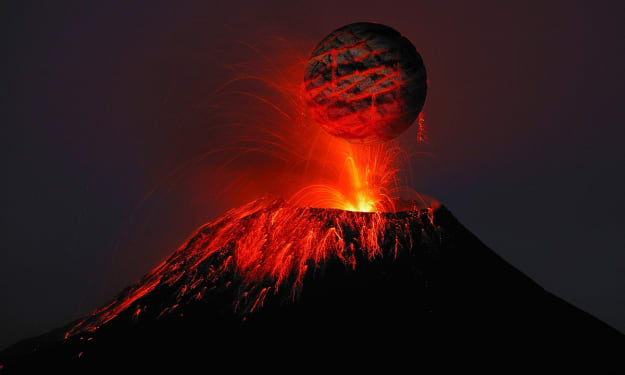
Beneath our feet, Earth is not the static, lifeless ball it might seem to be. Instead, it is a colossal sphere of semi-molten rock, a planet still very much alive with energy. Deep in its core lies a heart of iron that burns as hot as the surface of the Sun. This incredible heat—left over from our planet’s formation and continuously generated by the radioactive decay of countless tons of unstable elements—fuels powerful upwellings of rock. These colossal currents, spanning thousands of kilometers, strive to reach the surface, but they must first overcome the Earth’s outermost shield: the crust.
By Lisa Ann Bastiaan11 months ago in Earth
Mother of Elon Musk’s Child Sues xAI Over Grok Deepfakes
Imagine waking up one day to find realistic, sexually explicit images of yourself circulating online—and you never agreed to them. For Ashley St. Clair, the mother of one of Elon Musk’s children, this nightmare became reality. She is now suing xAI, Elon Musk’s AI company, alleging that its chatbot Grok generated harmful deepfake images of her, including depictions of her as a minor and in sexualized contexts.
By Aarif Lashari4 days ago in Earth
Blue Origin Introduces TeraWave: A 6 Tbps Space-Based Network for Global Connectivity
Blue Origin, the space exploration company founded by Jeff Bezos, has unveiled its latest ambitious project: TeraWave, a space-based network designed to deliver ultra-fast internet connectivity around the globe. With a staggering capacity of 6 terabits per second (Tbps), TeraWave promises to redefine how people and businesses connect, particularly in remote and underserved areas. The announcement marks a significant step forward in the growing competition among private space companies to provide global satellite internet.
By Muhammad Hassana day ago in Earth
Smart phones, Humans and Aliens.
WARNING. I will be tapping into one of your favorite creative tensions: The absurdity of humans worshipping their glowing rectangles as if they were tiny oracles. There’s something deliciously poetic about that contradiction, and it lends itself beautifully to an instructive proviso.
By Novel Allen7 days ago in Poets



Comments
There are no comments for this story
Be the first to respond and start the conversation.