
Population in Europe: A Mosaic of Diversity and Transformation
Navigating Aging, Migration, and Innovation in 2025

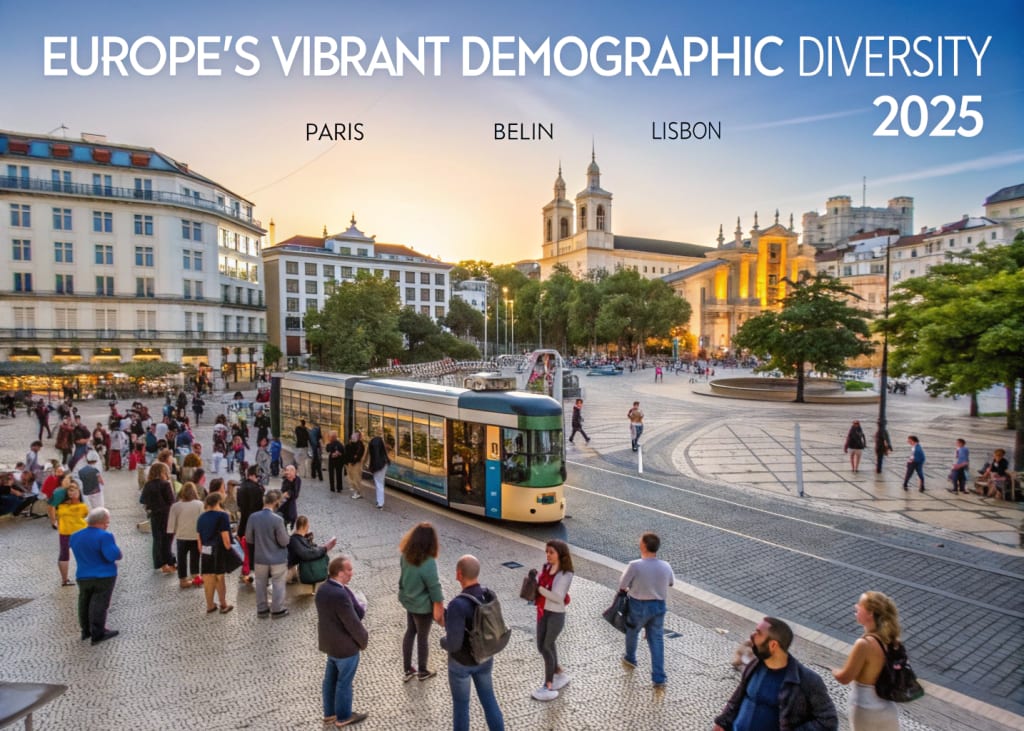
Introduction: Europe’s Demographic Tapestry
In 2025, Europe’s population of approximately 750 million reflects a complex blend of aging societies, vibrant diversity, and dynamic migration patterns. As the continent navigates a declining birth rate, an aging workforce, and increasing cultural pluralism, its demographic landscape shapes global trends in innovation, policy, and sustainability. With a fertility rate of 1.6 births per woman and a median age of 44, Europe faces unique challenges and opportunities. This post explores Europe’s population dynamics, regional variations, and their profound implications, highlighting the continent’s resilience in a rapidly changing world.
Western Europe: Aging and Urbanization
Western Europe, home to 400 million people, includes powerhouses like Germany (84 million), France (68 million), and the UK (67 million). Low fertility rates (1.5–1.7) and high life expectancy (82 years) drive an aging population, with 20% over 65 in 2025, per Eurostat. By 2050, 15% will be over 80, straining pension and healthcare systems costing €1.5 trillion annually. Urbanization is rampant, with 75% of residents in cities like Paris and Berlin, fostering innovation in AI and green tech. However, rural depopulation in regions like northern Spain challenges local economies, requiring targeted revitalization policies.
Eastern Europe: Decline and Migration
Eastern Europe, with 200 million people, faces population decline. Countries like Poland (38 million) and Romania (19 million) see fertility rates below 1.4, with populations shrinking by 0.5% annually. Emigration to Western Europe, particularly among youth, exacerbates this, with 2 million leaving since 2010. The region’s median age of 41 is rising, but economic growth in tech hubs like Warsaw offers hope. Governments are countering decline with incentives like Hungary’s family subsidies, though effectiveness remains limited. Migration from Ukraine, spurred by conflict, adds 5 million people, reshaping demographics and integration policies.
Southern Europe: Balancing Tradition and Change
Southern Europe, including Italy (59 million) and Spain (47 million), grapples with low fertility (1.3–1.5) and aging populations. Italy’s 25% elderly share, the highest in Europe, strains resources, with healthcare costs rising 10% annually. Tourism-driven economies benefit from cultural vibrancy, but youth unemployment (15% in Spain) pushes migration to northern Europe. Mediterranean nations are diversifying, with 10% of their population now non-European, per a 2024 UN report. Policies promoting renewable energy and digital skills aim to retain youth and modernize economies.
Northern Europe: Innovation and Inclusion
Northern Europe, with 100 million across Sweden, Denmark, and Finland, boasts high living standards and fertility rates near 1.7. The region’s progressive policies, like Sweden’s parental leave, support families, while immigration from Asia and Africa adds diversity—12% of residents are foreign-born. Urban centers like Stockholm lead in green tech, with 90% renewable energy usage. However, aging populations (18% over 65) demand automation, with Denmark deploying 20,000 caregiving robots in 2025, per a Nordic Council report. Integration of migrants remains a challenge, requiring inclusive education systems.
Challenges: Sustainability and Cohesion
Europe’s demographic challenges include a shrinking workforce, with 30 million fewer workers projected by 2050, and rising dependency ratios (50% in Germany). Migration, contributing 80% of population growth, sparks debates over cultural cohesion, with 15% of Europeans reporting integration tensions, per a 2024 Eurobarometer survey. Climate change threatens coastal populations, with 10 million at risk of flooding by 2050. The EU’s €100 billion Horizon Europe program and green initiatives aim to address these, but equitable resource distribution across diverse nations remains critical.
Conclusion: A Resilient Demographic Future
Europe’s 750 million people in 2025 form a vibrant mosaic of aging societies, youthful migrants, and innovative policies. From Western Europe’s urban hubs to Eastern Europe’s challenges, the continent navigates decline with resilience. As it embraces diversity and invests in technology—€1 trillion in digital transformation by 2030—Europe is poised to balance demographic shifts with sustainability. Its journey reflects a commitment to inclusivity and progress, shaping a future where diversity and innovation drive global impact.
About the Creator
Arjun. S. Gaikwad
Truth Writing unveils reality beyond illusion, power, and propaganda words that awaken conscience and challenge comfort. Fearless, honest, and thought-provoking, it explores politics, humanity, and spirit to inspire awareness and change.
Keep reading
More stories from Arjun. S. Gaikwad and writers in Earth and other communities.
Population in Asia: The Heartbeat of Global Demographics
Introduction: Asia’s Demographic Dominance In 2025, Asia remains the world’s demographic powerhouse, housing 4.8 billion people—nearly 60% of the global population of 8.2 billion. Stretching from India’s bustling cities to Japan’s aging towns, Asia’s population trends shape global economies, cultures, and policies. With India overtaking China as the most populous nation and Southeast Asia’s youthful surge, the continent is a dynamic mosaic of growth, decline, and transformation. This post explores Asia’s population dynamics, key trends, and challenges, revealing why it’s the heartbeat of global demographics.
By Arjun. S. Gaikwad6 months ago in Earth
Without Democracy, Donald Trump’s Venezuelan Oil Quest Will Fail
Donald Trump’s renewed interest in Venezuelan oil may seem, on the surface, like a hard-nosed geopolitical calculation. Venezuela holds the world’s largest proven oil reserves, and amid global energy uncertainty, access to those resources is undeniably tempting. But history, economics, and politics all point to the same conclusion: without democratic reform in Venezuela, any attempt by a Trump-led US administration to secure reliable Venezuelan oil will ultimately fail.
By Aarif Lashari5 days ago in Earth
So You Decided To Become a Nurse Practitioner:
So you decided to become an "Advanced Practice" nurse. Congratulations!... is what I would say if this was a good idea. Grad school? In this economy? What were you thinking? Likely it was something along the lines of either 1) “I've seen these other chucklefucks do it— Why can't I?” or even 2) “I've got a nice career, I should shake it up. I miss feeling like I have no clue what I'm doing.”
By Sandor Szabo2 days ago in Fiction



Comments
There are no comments for this story
Be the first to respond and start the conversation.