
Population in China: A 1.42 Billion-Strong Nation in Transition
Navigating Decline, Aging, and Innovation in 2025

Introduction: China’s Demographic Crossroads
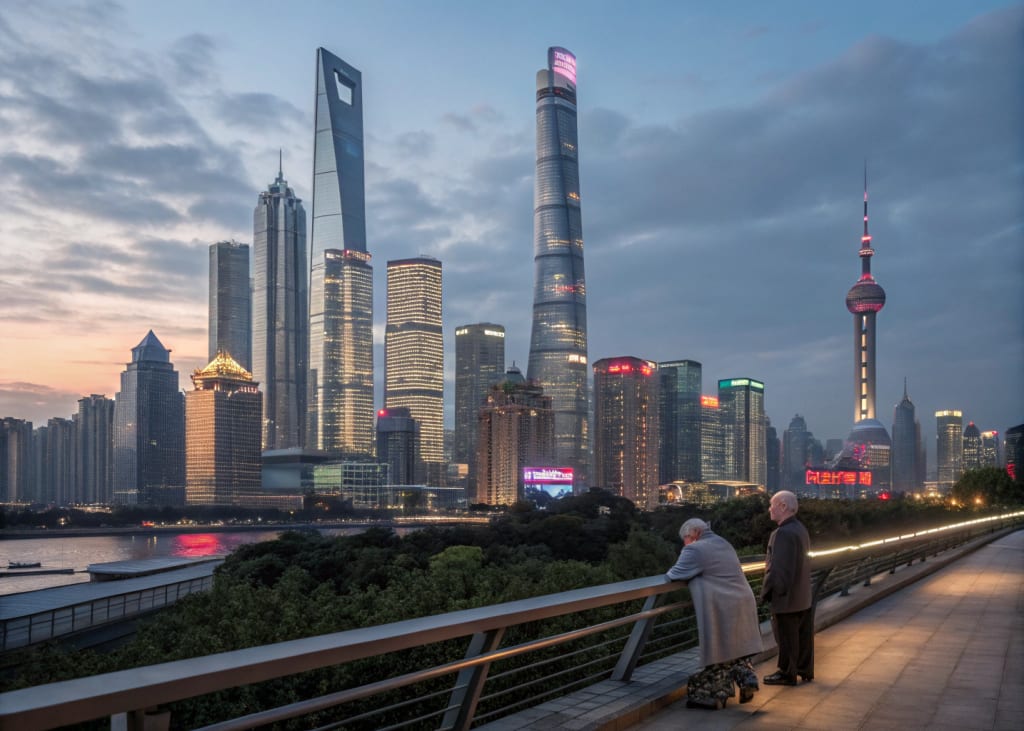
In 2025, China’s population stands at 1.42 billion, making it the world’s second most populous nation after India, per United Nations estimates. Representing 17.3% of the global 8.2 billion population, China is at a pivotal moment, grappling with a declining birth rate, rapid aging, and urban transformation. With a growth rate of -0.2% annually, China faces unique demographic challenges that shape its economic and social policies. This post explores China’s population dynamics, regional shifts, and innovative responses, highlighting its resilience as a global powerhouse.
Declining Births and Aging Society
China’s population peaked at 1.43 billion in 2020 and is now shrinking due to a fertility rate of 1.3 births per woman, well below the replacement level of 2.1. The one-child policy (1979–2015) accelerated this trend, creating a demographic imbalance with a median age of 39. By 2035, 20% of the population (280 million) will be over 65, straining pension systems costing $500 billion annually, per a 2024 World Bank report. Urban areas like Shanghai and Beijing, home to 24 million and 22 million respectively, face labor shortages, prompting policies like the three-child initiative and extended maternity leave to boost births, though uptake remains low.
Urbanization and Regional Disparities
China is one of the most urbanized nations, with 65% of its population (920 million) living in cities, projected to reach 75% by 2050. Mega-cities like Shenzhen and Guangzhou drive tech and manufacturing, with 80% of China’s $1 trillion tech market concentrated in urban hubs. Rural areas, home to 500 million, face depopulation as youth migrate to cities, leaving villages with aging populations. Western provinces like Xinjiang and Tibet, with 26 million and 3.7 million, have higher fertility rates (1.8–2.0) but lag in infrastructure, with 30% lacking reliable internet, per a 2024 government report. Bridging this urban-rural divide is critical for balanced growth.
Migration and Cultural Dynamics
Internal migration fuels China’s urban boom, with 300 million rural workers moving to cities since 2000, creating a “floating population” that powers industries like construction and tech. This migration, however, strains urban infrastructure, with 15% of urban dwellers in substandard housing. Internationally, 10 million Chinese live abroad, contributing $70 billion in remittances. China’s ethnic diversity, with 55 minority groups like the Uyghurs and Tibetans (8% of the population), adds cultural richness but raises integration challenges, particularly in autonomous regions where policies spark debate.
Challenges: Aging and Resource Strain
China’s aging population poses significant challenges, with a dependency ratio of 45% in 2025, projected to hit 60% by 2050. Healthcare costs for the elderly, rising 12% annually, pressure the $400 billion medical system. Low fertility limits workforce growth, with 10 million fewer workers by 2030, per a 2024 OECD study. Urban overcrowding exacerbates pollution, costing Beijing $20 billion yearly in health impacts. Climate change threatens 100 million in coastal cities like Shanghai, while food security for 1.42 billion demands sustainable agriculture. Addressing these requires bold policy reforms and technological innovation.
Opportunities: Technology and Policy Innovation
China leverages its $400 billion tech investments to tackle demographic challenges. AI and robotics, with 500,000 caregiving robots deployed by 2025, support the elderly, reducing healthcare burdens by 10%. The Digital China initiative expands internet access to 95% of the population, empowering rural economies. Education reforms aim to skill 200 million workers by 2030, while green tech, like 450 GW of renewable energy, aligns with China’s 2060 net-zero goal. Urban planning initiatives, housing 50 million in smart cities, enhance sustainability and livability.
Conclusion: A Future of Resilience
China’s 1.42 billion people in 2025 navigate a complex demographic transition, marked by aging, urban growth, and innovation. From mega-cities to rural heartlands, the nation balances challenges with technological and policy advancements. As it invests $600 billion in tech and sustainability, China is poised to redefine its demographic destiny. This journey reflects not just numbers but a commitment to resilience, shaping a future where innovation and tradition drive global progress.
About the Creator
Arjun. S. Gaikwad
Curious mind exploring technology, society, and global change. I write on education, innovation, justice, and the future of humanity— blending science, philosophy, and real-world insights to spark awareness, critical thinking, and hope.
Keep reading
More stories from Arjun. S. Gaikwad and writers in Earth and other communities.
Population in India: The Pulse of a 1.46 Billion-Strong Nation
Introduction: India’s Demographic Dynamo In 2025, India stands as the world’s most populous nation, with 1.46 billion people, surpassing China in 2023, according to the United Nations. Accounting for 17.8% of the global population of 8.2 billion, India’s demographic landscape is a vibrant tapestry of youth, diversity, and rapid transformation. With a growth rate of 0.9% annually and a median age of 28, India’s population fuels its economic and technological rise. This post explores India’s demographic trends, regional dynamics, and challenges, showcasing how this populous nation is shaping a global future.
By Arjun. S. Gaikwad8 months ago in Earth
The Sky Adorned with Stars: Nature’s Most Beautiful Crown
On a clear night, when the lights of cities fade and the air grows still, the sky reveals one of nature’s most breathtaking sights — a vast canvas filled with shining stars. The phrase “the sky adorned with stars” perfectly captures the beauty of this moment, as if the heavens themselves are wearing a glittering crown. For thousands of years, humans have gazed upward in awe, wondering about the countless lights scattered across the darkness.
By Irshad Abbasi 7 days ago in Earth


Comments
There are no comments for this story
Be the first to respond and start the conversation.